
JBPH

Journal of Biosciences
and Public Health

RSS Feed
Openopen-access logoaccess
Published by: www.4grs.org
eISSN 3104-8749

Comparative Effectiveness of Self-Management, Telemonitoring, and Multicomponent Interventions on Blood Pressure Control in Hypertension: A Systematic Review

J. Biosci. Public Health. 2026; 2(3)

Review article | Open access | J. Biosci. Public Health. 2026; 2(3) : 215-237 | doi: 10.5455/JBPH.2026.09

Comparative Effectiveness of Self-Management, Telemonitoring, and Multicomponent Interventions on Blood Pressure Control in Hypertension: A Systematic Review

Heriviyatno Julika Siagian orcid green 'id' icon

First Author

Heriviyatno Julika Siagian

heri@gmail.com

orcid green 'id' icon https://orcid.org/0000-0002-8916-3046

Affiliations:

Department of Medical Surgical Nursing, College of Science and Technology, University of Sembilanbelas November, Kolaka, Indonesia

, Tukatman orcid green 'id' icon

Coauthor

Tukatman

ns.tuke@gmail.com

orcid green 'id' icon https://orcid.org/0000-0001-8950-355X

Affiliations:

Department of Emergency Nursing, College of Science and Technology, University of Sembilanbelas November, Kolaka, Indonesia

, Dewi Nopiska Lilis orcid green 'id' icon

Coauthor

Dewi Nopiska Lilis

nopiska@gmail.com

orcid green 'id' icon https://orcid.org/0000-0001-5255-0969

Affiliations:

Department of Midwifery, Health Polytechnic of the Ministry of Health Jambi, Jambi, Indonesia

, La Ode Alifariki *

Corresponding Author *

La Ode Alifariki

ners_riki@yahoo.co.id

orcid green 'id' icon https://orcid.org/0000-0003-4120-7465

Affiliations:

Department of Nursing, Faculty of Medicine, Halu Oleo University, Kendari, Sulawesi Tenggara, Indonesia

orcid green 'id' icon

Corresponding Author *

La Ode Alifariki

ners_riki@yahoo.co.id

orcid green 'id' icon https://orcid.org/0000-0003-4120-7465

Affiliations:

Department of Nursing, Faculty of Medicine, Halu Oleo University, Kendari, Sulawesi Tenggara, Indonesia

Download PDF
Cite this article

Abstract

Background: Hypertension remains a major global risk factor for cardiovascular disease, yet blood pressure (BP) control rates are suboptimal. Self-management, telemonitoring, and combined multicomponent interventions have emerged as promising strategies, but their relative effectiveness and mechanisms require synthesis. Objective: This systematic review compared the effectiveness of self-management, telemonitoring, and multicomponent interventions on BP control in adults with hypertension and explored their behavioral and clinical mechanisms. Methods: Following PRISMA 2020 guidelines, PubMed, Scopus, CINAHL, ScienceDirect, and ProQuest were searched from inception to December 2025. Eligible studies were randomized controlled trials and quasi-experimental studies evaluating self-management, telemonitoring, or combined interventions in hypertensive adults. Primary outcome was systolic blood pressure (SBP). Methodological quality and risk of bias were assessed using JBI tools, RoB 2, and ROBINS-I. Narrative synthesis with visual summaries was conducted due to heterogeneity. Results: Nineteen studies (16 RCTs, 3 quasi-experimental; total participants ≈5,000) were included. Self-management interventions (n=11) consistently improved behavioral outcomes (adherence, self-efficacy, self-care) with variable SBP reductions. Telemonitoring interventions (n=4) showed more consistent and clinically meaningful SBP reductions through enhanced clinical feedback. Combined multicomponent interventions (n=4), integrating self-monitoring, behavioral support, and treatment adjustment, produced the largest and most sustained BP improvements (typically 5–9 mmHg SBP reduction) and highest control rates. Visual syntheses confirmed superior consistency and magnitude of effects in combined and telemonitoring approaches. Conclusion: Multicomponent interventions integrating self-management with telemonitoring and clinical support yield the greatest BP control benefits. Future programs should prioritize integrated, patient-centered strategies.

1. INTRODUCTION

Hypertension remains one of the leading global risk factors for cardiovascular morbidity and mortality, contributing substantially to the burden of stroke, coronary artery disease, heart failure, and chronic kidney disease [1,2]. Despite the availability of effective pharmacological treatments, global rates of blood pressure (BP) control remain suboptimal, particularly in low- and middle-income countries, where healthcare access, adherence, and continuity of care are often limited [37]. Recent global estimates indicate that fewer than half of individuals with hypertension achieve adequate BP control, highlighting a persistent gap between treatment availability and real-world effectiveness [8].

In response to this challenge, non-pharmacological and supportive strategies have gained increasing attention, particularly those targeting patient behavior and long-term disease management [9]. Self-management interventions, including patient education, lifestyle modification, medication adherence support, and home blood pressure monitoring, have been widely promoted as essential components of hypertension care [1013]. Previous systematic reviews have shown that self-management can improve adherence and lifestyle behaviors and may lead to modest reductions in BP, particularly when combined with structured support [1416]. However, the effectiveness of self-management interventions remains heterogeneous, with considerable variability in intervention intensity, patient engagement, and clinical outcomes. Parallel to the development of self-management strategies, advances in digital health have led to the increasing use of telemonitoring interventions [17,18]. These approaches enable patients to measure BP at home and transmit data to healthcare providers or automated systems, facilitating timely feedback and treatment adjustment. Prior evidence suggests that telemonitoring can improve BP control, especially when combined with professional support or clinical decision-making pathways [19]. Nevertheless, the effectiveness of telemonitoring appears to depend on the degree of integration with healthcare systems, and questions remain regarding its scalability, resource requirements, and long-term sustainability.

More recently, attention has shifted toward multicomponent or combined interventions that integrate self-management, home BP monitoring, telemonitoring, and treatment adjustment [20,21]. These approaches reflect a more comprehensive model of hypertension care, recognizing that BP control is influenced by multiple interacting factors, including patient adherence, behavioral change, monitoring practices, and therapeutic inertia. Emerging evidence suggests that such integrated strategies may produce greater and more sustained BP reductions than single-component interventions [22]. However, previous reviews have often examined these intervention types separately, limiting understanding of their relative effectiveness and the mechanisms through which they operate [23,24].

An important limitation in the existing literature is the tendency to treat self-management, telemonitoring, and digital health interventions as relatively homogeneous categories, without adequately accounting for differences in intervention components, intensity, and context. In addition, many studies have focused primarily on BP outcomes while giving less attention to behavioral pathways, such as adherence, self-efficacy, and self-care, which may mediate long-term clinical effects [25,26]. Furthermore, there is limited comparative synthesis examining how these intervention approaches perform relative to one another across different populations and healthcare settings.

Despite the growing body of evidence on self-management and telemonitoring interventions, important gaps remain in the literature. First, prior systematic reviews have typically examined these interventions in isolation, limiting direct comparison of their relative effectiveness. Second, existing studies often treat intervention categories as homogeneous, without adequately accounting for variations in intensity, integration, and contextual delivery. Third, while behavioral outcomes such as adherence and self-efficacy are frequently reported, their role as potential mechanisms underlying blood pressure reduction remains insufficiently synthesized. Finally, limited attention has been given to how multicomponent interventions integrate behavioral and clinical pathways to produce sustained outcomes, particularly in diverse and resource-constrained settings.

Therefore, this review provides a comparative and mechanism-oriented synthesis of self-management, telemonitoring, and combined interventions, aiming to bridge these gaps and offer a more integrated understanding of hypertension management strategies. Specifically, this review seeks to (i) evaluate the effects of different intervention types on BP outcomes, (ii) examine their influence on behavioral and self-care outcomes, and (iii) identify patterns of effectiveness and underlying mechanisms across intervention categories. 

2. METHODOLOGY

2.1. Study design

This study was conducted as a systematic review to synthesize evidence on the effectiveness of self-management, telemonitoring, and combined interventions for blood pressure control in patients with hypertension. The review was designed and reported in accordance with the Preferred Reporting Items for Systematic Reviews and Meta-Analyses (PRISMA 2020) guidelines [27].

2.2. Eligibility criteria

Eligibility criteria were defined using the Population, Intervention, Comparator, Outcome, and Study design (PICOS) framework. The population of interest included adult patients diagnosed with hypertension, encompassing both community-dwelling individuals and patients receiving care in primary or secondary healthcare settings, including those with comorbid conditions such as diabetes or coronary artery disease. The interventions of interest consisted of self-management strategies, telemonitoring approaches, and combined interventions integrating behavioral and monitoring components. 

For clarity, self-management was operationally defined as patient-centered interventions aimed at improving self-care behaviors, including medication adherence, lifestyle modification, and home blood pressure monitoring, with or without digital support. Telemonitoring was defined as remote transmission of patient-generated blood pressure data to healthcare providers or automated systems with feedback mechanisms. Combined interventions were defined as multicomponent strategies integrating behavioral support with monitoring and/or clinical management, including treatment adjustment or telehealth-based feedback.

Comparators included usual care, standard care, or alternative intervention groups. The primary outcome of interest was systolic blood pressure, while secondary outcomes included diastolic blood pressure, blood pressure control rates, medication adherence, self-efficacy, lifestyle behaviors, and other self-care outcomes. Eligible study designs included randomized controlled trials as well as quasi-experimental or nonrandomized comparative studies. Studies were excluded if they did not involve hypertensive populations, did not evaluate relevant interventions, did not report blood pressure-related outcomes, or were published as reviews, editorials, protocols, or conference abstracts without full data.

2.3. Information sources and search strategy

A comprehensive literature search was conducted across multiple electronic databases, including PubMed, CINAHL, Scopus, ScienceDirect, and ProQuest (Table 1). The search was conducted from database inception to December 2025. No initial date restrictions were applied to maximize study retrieval. Only English-language articles were included due to feasibility constraints, which may introduce language bias. Grey literature sources and trial registries were not systematically searched, and this may increase the risk of publication bias. This review was not registered in PROSPERO. The search strategy combined controlled vocabulary terms and free-text keywords related to hypertension, self-management, telemonitoring, home blood pressure monitoring, mobile health, and blood pressure control. Boolean operators such as “AND” and “OR” were used to refine the search and ensure comprehensive retrieval of relevant studies. The search was limited to articles published in English. In addition, the reference lists of included studies were manually screened to identify any additional relevant publications that may not have been captured through the database search. 


Table 1. Detailed search strategy across electronic databases used to identify studies on self-management, telemonitoring, and combined interventions for hypertension.

DatabaseSearch String
PubMed("Hypertension"[Mesh] OR "high blood pressure" OR hypertension) AND ("self-management" OR "self-care" OR "self-monitoring" OR "self-monitoring") AND ("telemonitoring" OR "telemedicine" OR "telehealth" OR "remote monitoring" OR "mHealth" OR "mobile health") AND ("blood pressure" OR "BP control")
ScopusTITLE-ABS-KEY (hypertension OR "high blood pressure") AND TITLE-ABS-KEY ("self-management" OR "self-care" OR "self-monitoring") AND TITLE-ABS-KEY ("telemonitoring" OR "telehealth" OR "telemedicine" OR "mHealth" OR "mobile health" OR "remote monitoring") AND TITLE-ABS-KEY ("blood pressure" OR "BP control")
CINAHL (EBSCOhost)(MH "Hypertension" OR "high blood pressure") AND ("self-management" OR "self-care" OR "self-monitoring") AND ("telemonitoring" OR "telehealth" OR "telemedicine" OR "mobile health" OR "remote monitoring") AND ("blood pressure" OR "BP control")
ScienceDirect("hypertension" OR "high blood pressure") AND ("self-management" OR "self-care" OR "self-monitoring") AND ("telemonitoring" OR "telehealth" OR "mHealth" OR "mobile health") AND ("blood pressure" OR "BP control")
ProQuest(hypertension OR "high blood pressure") AND ("self-management" OR "self-care" OR "self-monitoring") AND ("telemonitoring" OR "telehealth" OR "telemedicine" OR "mobile health") AND ("blood pressure" OR "BP control")


2.4. Study selection

All retrieved records were imported into reference management software to facilitate the removal of duplicate entries. Study selection was performed in two stages. In the first stage, titles and abstracts were screened to identify potentially relevant studies. In the second stage, full-text articles were assessed for eligibility based on the predefined inclusion and exclusion criteria. The selection process was conducted systematically to ensure consistency, and any discrepancies in study eligibility were resolved through discussion.


2.5. Data extraction

Data extraction was conducted using a structured and standardized form to ensure consistency across studies. Information extracted from each study included study characteristics such as author and country of origin, as well as methodological features including study design, sample size, and population characteristics. Detailed information on intervention components, comparator conditions, duration of follow-up, and outcomes related to blood pressure and behavioral measures was also collected. The extracted data were subsequently synthesized and presented in a structured table of study characteristics. The characteristics of the included studies are summarized in Table 2.


2.6. Quality assessment

The methodological quality of the included studies was assessed using the Joanna Briggs Institute (JBI) critical appraisal tools. Randomized controlled trials were evaluated using the JBI checklist for RCTs, while quasi-experimental and nonrandomized studies were assessed using the corresponding JBI appraisal tool. Each study was evaluated across multiple domains, and the overall methodological quality was categorized as high or moderate based on the appraisal results. Particular attention was given to issues such as randomization procedures, baseline comparability, completeness of follow-up, and appropriateness of statistical analysis.


2.7. Risk of bias assessment

Risk of bias was assessed using established tools appropriate to study design. Randomized studies were evaluated using the Cochrane Risk of Bias tool (RoB 2), while nonrandomized studies were assessed using the ROBINS-I framework. The assessment considered key domains including the randomization process, deviations from intended interventions, missing outcome data, outcome measurement, and selective reporting. Based on these domains, studies were categorized as having low risk of bias, some concerns, or high or serious risk of bias.


2.8. Data synthesis

Due to heterogeneity in study designs, intervention characteristics, and outcome reporting, a narrative synthesis approach was employed. The included studies were grouped into three main categories, namely self-management interventions, telemonitoring interventions, and combined interventions. Comparative analysis across these categories was conducted to identify patterns of effectiveness and differences in intervention mechanisms.

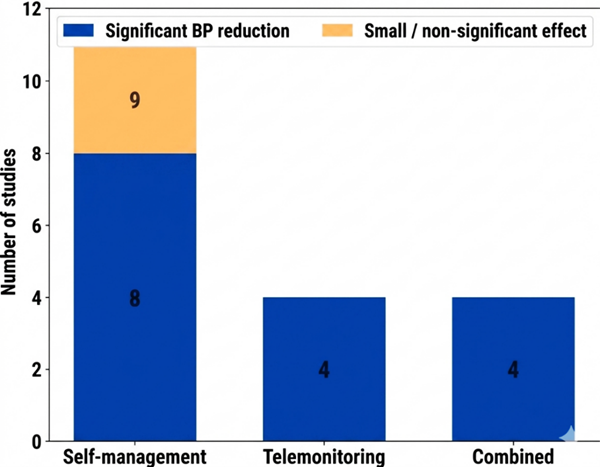
In addition to narrative synthesis, visual synthesis techniques were applied to enhance interpretability. These included a harvest plot to illustrate the direction and consistency of intervention effects, a bar chart summarizing the proportion of studies demonstrating significant blood pressure reductions across intervention categories, and an effect size plot based on studies with available quantitative data. These visualizations were used to support the comparative interpretation of findings and to highlight differences in effectiveness across intervention types.

3. RESULTS

3.1. Selection of studies

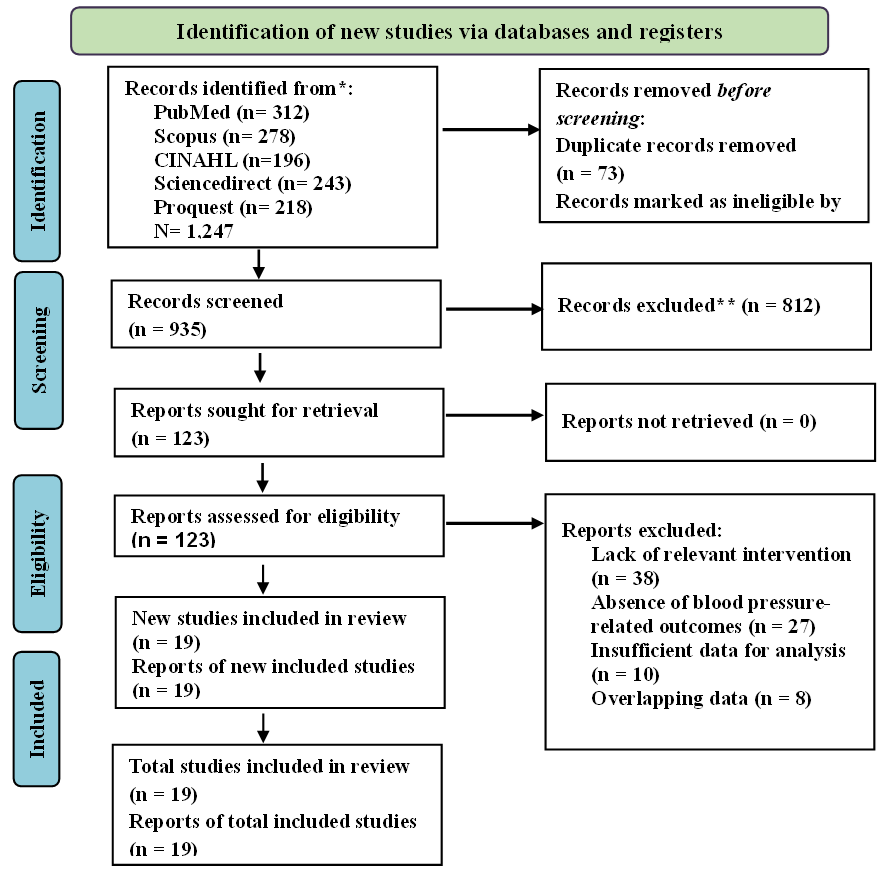
A total of 1,247 records were identified across databases. After removal of duplicates and ineligible studies by automation tool (n = 312), 935 records remained for screening. During title and abstract screening, 812 records were excluded. A total of 123 reports were sought for retrieval, all of which were successfully retrieved and assessed for eligibility. Of these, 104 reports were excluded due to irrelevant interventions (n = 38), absence of BP-related outcomes (n = 27), ineligible study design (n = 21), insufficient data (n = 10), and overlapping data (n = 8). Finally, 19 studies (from 19 reports) were included in the review. The study selection process is illustrated in Figure 1.


Figure 1. PRISMA 2020 flow diagram illustrating the study selection process for the systematic review, including identification, screening, eligibility, and inclusion stages (total records identified = 1,247; studies included = 19).


3.2. Characteristics of included studies

A total of 19 studies were included in this systematic review, comprising 16 randomized studies and 3 quasi-experimental or nonrandomized comparative studies. The studies were conducted across China, the United States, Iran, Canada, the United Kingdom, Japan, South Korea, Indonesia, Spain, and Vietnam, indicating broad geographic and health-system diversity [2846]. Eleven studies evaluated self-management interventions, four evaluated telemonitoring interventions, and four evaluated combined (multicomponent) interventions.

In addition, self-management interventions (n = 11) primarily involved digital platforms (e.g., WeChat, smartphone apps), community health worker support, home blood pressure monitoring (HBPM), or nurse-led home visits [28,3036,39,44,45]. Telemonitoring interventions (n = 4) focused on remote transmission of home BP data linked to clinician feedback or telehealth support [37,38,40,41]. Combined interventions (n = 4) integrated self-management elements with HBPM, telemonitoring, medication self-titration, and/or lifestyle support [29,42,43,46].

Furthermore, sample sizes ranged from 54 to 1,114 participants. Follow-up durations varied from 2 weeks [45] to 24 months [29]. The primary outcome was systolic blood pressure (SBP) in nearly all studies, with secondary outcomes including diastolic blood pressure (DBP), BP control rates, medication adherence, self-efficacy, and lifestyle behaviors. Detailed characteristics are presented in Table 2.


Table 2. Characteristics of included studies evaluating self-management, telemonitoring, and combined interventions for blood pressure control in patients with hypertension (n = 19).

Study

Ref.

CountryDesignSamplePopulation / settingInterventionComparatorFollow-upMain BP findingsIntervention type
Li et al., 2019 [28]ChinaCluster-randomized controlled trial464 recruited; 253 analyzedCommunity middle-aged and elderly adults with hypertensionWeChat-based self-management: health education, health promotion, group chat, and BP monitoringUsual care / control community center6 monthsAdjusted mean difference: SBP −6.9 mmHg and DBP −3.1 mmHg vs control; self-management, knowledge, and self-efficacy also improvedDigital self-management
Bosworth et al., 2009 [29]USA2×2 randomized trial636 randomizedHypertensive patients in 2 university-affiliated primary care clinicsBehavioral telephone self-management, home BP monitoring, or bothUsual care24 monthsGreatest benefit in the combined arm; BP control improved by 11.0% relative to usual care, with SBP difference of 3.9 mmHgBehavioral self-management + HBPM
Boulware et al., 2020 [30]USARandomized comparative effectiveness trial159Socially disadvantaged African American adults with uncontrolled hypertension in an urban primary care clinicCHW-based hypertension self-management, with added shared decision-making or problem-solving componentsCHW arm as reference comparator across 3 groups12 monthsBP control improved in all groups from 36% to 52%; no clear between-group BP superiority, but problem-solving improved self-care and self-efficacyContext-adapted self-management
Bozorgi et al., 2021 [31]IranRandomized controlled trial120Adults with primary hypertension attending a tertiary heart centerMobile “blood pressure management application” to support self-managementRoutine treatment / control24 weeksImproved treatment adherence, low-fat and low-salt diet adherence, and physical activity; app supported self-management enhancementApp-based self-management
Chandler et al., 2019 [32]USATwo-arm efficacy trial54Hispanic adults with uncontrolled hypertension and poor medication adherenceSMASH smartphone-enabled medical regimen self-management with Bluetooth BP monitor and electronic medication trayEnhanced standard care9 monthsSBP was significantly lower in the SMASH group at 1, 3, 6, and 9 months; BP control rates also higherCulturally tailored digital self-management
Ghavami et al., 2024 [33]IranRandomized clinical trial1114 hypertensive CAD patientsCAD patients with hypertension in a tertiary cardiac centerGreen Heart smartphone application for BP self-monitoring, education, reminders, and feedbackPaper-based education / conventional group6 monthsSuccessful BP management was higher in the app group (88.6% vs 78.5%; OR 2.13)App-based self-management
Gong et al., 2020 [34]ChinaMulticenter randomized controlled trial480Adults with primary hypertension from 38 hospitals“Yan Fu” mobile health app for BP management, reminders, and educationNo mHealth app; paper recording6 monthsSBP and DBP were reduced more in the intervention group; BP control and medication adherence were also higherApp-based self-management
Gu et al., 2020 [35]China2×2 factorial randomized clinical trial180Community-dwelling older adults with hypertension and diabetesPedometer, HBPM, or pedometer+HBPM plus health educationHealth education alone12 monthsLargest benefit in combined pedometer+HBPM arm: SBP −8.1 mmHg and DBP −3.6 mmHg vs controlSelf-management / HBPM
Jung & Lee, 2017 [36]South KoreaQuasi-experimental study64Elderly people living alone with hypertension in the communityCommunity-based eHealth self-management: education, eHealth monitoring, and monthly telephone counselingControl group24 weeksSBP fell from 133.9 to 122.5 mmHg; self-efficacy, self-care behavior, and social support improvedCommunity eHealth self-management
Lee et al., 2019 [37]Vietnam / KoreaComparative telehealth study234 registeredOverseas Koreans with high blood pressure in a medically underserved settingTelehealth counseling plus mobile self-monitoring applicationNon-monitoring comparison within telehealth program3 monthsMean SBP change was greater in the monitoring group than in the non-monitoring group (16.0 vs 5.7 mmHg, p=0.008)Telehealth + mobile self-monitoring

Yatabe 

et al., 2021 [38]

JapanRandomized controlled trial97 randomized (99 screened)Adults with uncomplicated hypertensionHome BP telemonitoring through a 3G device plus web-based video visits and mailed prescriptionsUsual care using self-recorded BP and office visits12 monthsFinal weekly average SBP was lower in telemedicine than usual care (125 vs 131 mmHg, p=0.02); BP control also betterTelemonitoring / telemedicine
Liu et al., 2023 [39]China2-arm randomized controlled trial297Adults with hypertension in Ningxia“Blood Pressure Assistant” mHealth app with recording, reminders, education, and provider feedbackUsual care6 monthsBP control rate was higher in the intervention group (90.1% vs 65.2%); SBP and DBP reductions were significantly greaterApp-based self-management
Logan et al., 2012 [40]CanadaRandomized controlled trial110 randomizedDiabetic patients with uncontrolled systolic hypertensionHome BP telemonitoring with automated self-care support via smartphoneHome BP monitoring alone12 monthsMean daytime ambulatory SBP decreased significantly only in the intervention group; between-group difference 7.1 mmHg; target BP achieved by 51% vs 31%Telemonitoring + automated self-care support
McKinstry et al., 2013 [41]UKMulticentre randomized controlled trial401Adults with uncontrolled hypertension in primary careTelemonitoring with transmission of home BP readings and optional automated patient decision supportUsual care6 monthsAdjusted difference vs usual care: daytime ambulatory SBP 4.3 mmHg and DBP 2.3 mmHg lower in intervention armTelemonitoring
McManus et al., 2010 (TASMINH2) [42]UKRandomized controlled trial527 randomizedTreated adults with poorly controlled hypertension in general practiceSelf-management: self-monitoring, self-titration of antihypertensives, and telemonitoringUsual care12 monthsBetween-group SBP difference favored intervention at 6 months (3.7 mmHg) and 12 months (5.4 mmHg)Combined self-management + telemonitoring
McManus et al., 2018 (TASMINH4) [43]UKParallel randomized controlled trial1182 randomizedAdults with treated but inadequately controlled hypertension in primary careSelf-monitoring alone or self-monitoring with telemonitoring for antihypertensive titrationUsual care12 monthsBoth intervention groups had lower systolic BP than usual care; adjusted mean difference −3.5 mmHg for self-monitoring and −4.7 mmHg for telemonitoringSelf-monitoring ± telemonitoring
Muldoon et al., 2021 [44]USARandomized feasibility trial62Community-dwelling adults ≥55 years with hypertensionMyBP digital intervention: video education + automated SMS prompts for HBPMTreatment-as-usual with BP cuff aloneMedian 22.9 weeksEngagement was sustained; overall BP difference between groups was not significant, but those with higher baseline SBP showed greater decline with MyBPDigital self-management / HBPM
Putri et al., 2021 [45]IndonesiaQuasi-experimental pre-post study with control group134Elderly people with hypertension in community health centersFour-session self-management home-visit intervention with caregiver involvementHealth center care / control group2 weeks interventionSignificant positive effects on adherence to self-care and health status (both p<0.001)Nurse-led self-management
Villafuerte et al., 2024 (MEDICHY) [46]SpainRandomized multicenter parallel single-blind controlled trial153 randomizedAdults 35–75 years with poorly controlled hypertension in primary careSelf-monitoring of BP, self-management of medication, dietary intervention, and physical activityUsual care6 monthsIntervention group had lower SBP and DBP; adjusted mean SBP difference 8.7 mmHg and DBP difference 5.4 mmHg; BP control 54.4% vs 32.9%Multicomponent self-management


3.3. Methodological quality and risk of bias

Overall methodological quality was moderate to high (Tables 3 and 4). Among randomized trials, six studies were rated high quality [29,30,40,41,43,46], while the remainder were moderate, primarily due to challenges with allocation concealment, blinding (inherent in behavioral/digital interventions), and handling of attrition. For nonrandomized studies, two were rated high quality [36, 45] and one moderate [37].


Table 3. Methodological quality assessment of randomized controlled trials using the Joanna Briggs Institute (JBI) critical appraisal checklist.

NoStudyQ1Q2Q3Q4Q5Q6Q7Q8Q9Q10Q11Q12Q13Category
1Li et al., 2019YUYNNUYNNYYYYModerate
2Bosworth et al., 2009YYYNNUYYYYYYYHigh
3Boulware et al., 2020YUYNNUYYYYYYYHigh
4Bozorgi et al., 2021YUYNNUYYUYYYYModerate
5Chandler et al., 2019YUYNNUYYUYYYYModerate
6Ghavami et al., 2024YUYNUUYYUYYYYModerate
7Gong et al., 2020YUYNNUYYUYYYYModerate
8Gu et al., 2019YUYNNUYYUYYYYModerate
9Yatabe et al., 2021YNYNNNYYUYYYYModerate
10Liu et al., 2023YUYNNUYNUYYYYModerate
11Logan et al., 2012YYYNNYYYYYYYYHigh
12McKinstry et al., 2013YYYNNYYYYYYYYHigh
13McManus et al., 2010 (TASMINH2)YYYNNNYYNYYYYModerate
14McManus et al., 2018 (TASMINH4)YYYNNUYYYYYYYHigh
15Muldoon et al., 2021YYYNNUYYUYYYYModerate
16Villafuerte et al., 2024YYYNNYYYUYYYYHigh


Table 4. Methodological quality assessment of quasi-experimental and nonrandomized studies using the Joanna Briggs Institute (JBI) appraisal tool.

NoStudyQ1Q2Q3Q4Q5Q6Q7Q8Q9Category
17Jung & Lee, 2017YYYYYYYYYHigh
18Lee et al., 2019YNYYYNYYYModerate
19Putri et al., 2021YYYYYYYYYHigh


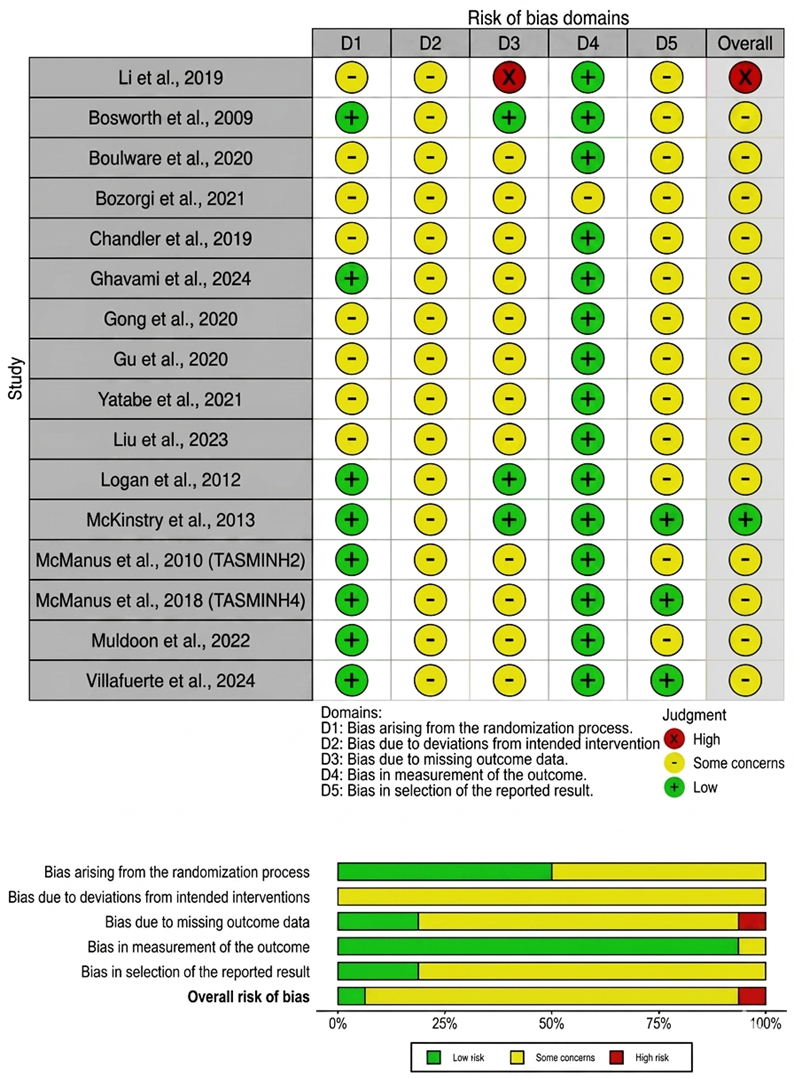
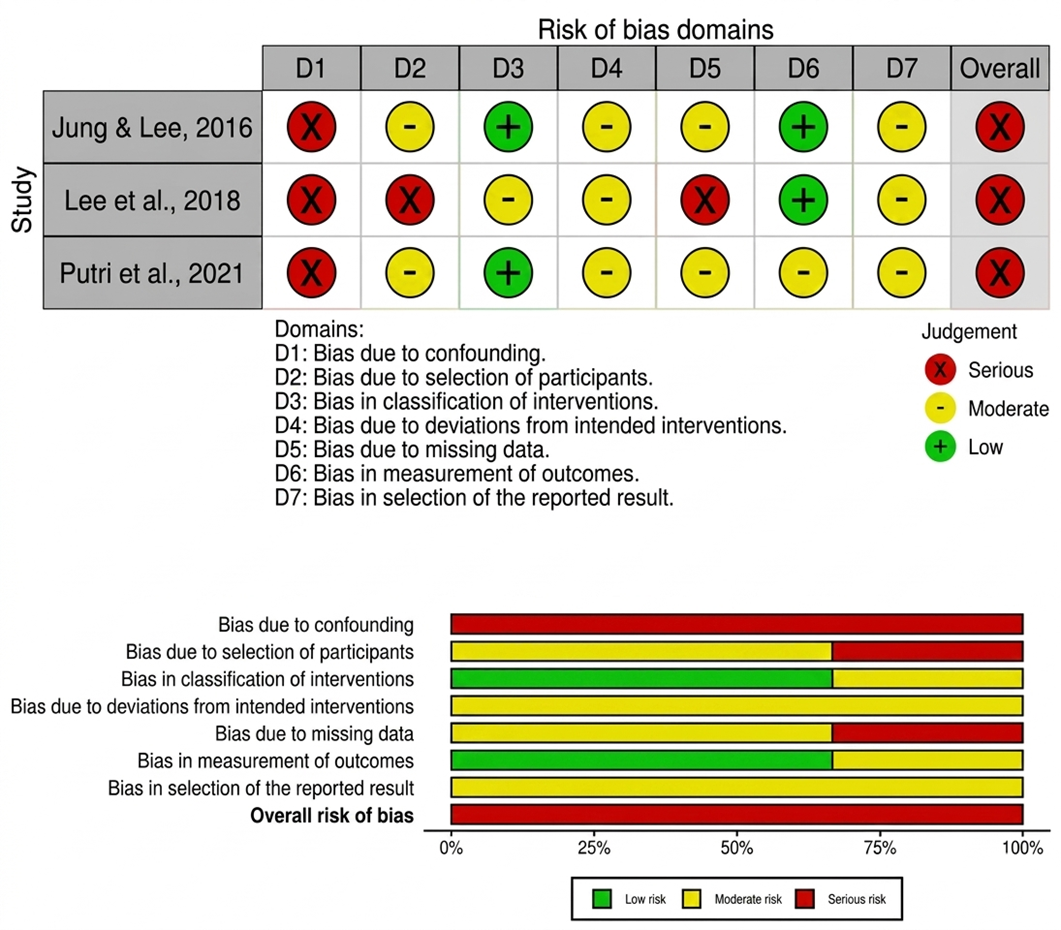
Risk of bias assessments (Figures 2 and 3) indicated that most randomized trials had low risk or some concerns overall. One trial was at high risk due to substantial attrition and missing outcome data [28], while McKinstry et al. [41] was the only study judged at overall low risk. Nonrandomized studies were rated at serious risk of bias, largely attributable to potential confounding and selection bias. Strengths across the evidence base included the use of objective BP measurements (often via validated devices or ambulatory monitoring), which minimized detection bias.

Figure 2. Risk of bias assessment of randomized controlled trials using the Cochrane RoB 2 tool across five domains, including randomization process, deviations from intended interventions, missing outcome data, outcome measurement, and selection of reported results (n = 16 studies).

Figure 3. Risk of bias assessment of nonrandomized studies using the ROBINS-I tool across key domains, including confounding, participant selection, intervention classification, deviations from intended interventions, missing data, outcome measurement, and selection of reported results (n = 3 studies).


3.4. Effects of self-management interventions

Eleven studies examined self-management interventions. These consistently improved behavioral outcomes, including medication adherence, self-care behaviors, self-efficacy, disease knowledge, and lifestyle modifications (e.g., diet and physical activity) [28,3036,39,44,45]. Effects on BP were positive but heterogeneous. Significant SBP reductions were reported in several digital and HBPM-supported trials (e.g., adjusted mean differences of −6.9 mmHg in Li et al. [28] and sustained reductions across multiple time points in Chandler et al. [32]). BP control rates also improved in app-based interventions [33,34,39]. However, some studies showed smaller or non-significant overall BP differences, with greater benefits observed in subgroups with higher baseline SBP [44] or when combined with additional supports [35].

3.5. Effects of telemonitoring interventions

Four studies evaluated telemonitoring approaches. These demonstrated more consistent BP reductions compared with self-management-only strategies. Significant improvements in SBP were observed when home readings were linked to clinician feedback, automated support, or telehealth consultation (e.g., between-group differences of 7.1 mmHg [40] and 4.3 mmHg daytime ambulatory SBP [41]; greater reductions in monitoring vs. non-monitoring groups, p = 0.008 [37]). BP control rates were also higher in the telemonitoring arms [38,40]. These interventions appeared to operate primarily through enhanced clinical responsiveness rather than behavioral change alone.

3.6. Effects of combined interventions

Four studies assessed multicomponent interventions integrating self-management, monitoring, and clinical support. These produced the largest and most sustained BP reductions. Notable findings included superior long-term BP control in the combined behavioral + HBPM arm (11.0% absolute improvement) compared with single components [29], and clinically meaningful SBP reductions with self-titration plus telemonitoring (e.g., −5.4 mmHg at 12 months [42]; −4.7 mmHg with telemonitoring support [43]. A multicomponent primary care intervention also achieved an adjusted SBP difference of 8.7 mmHg and higher control rates (54.4% vs. 32.9%) [46]. These approaches consistently outperformed usual care and single-component strategies.

3.7. Comparative synthesis across intervention types

When the 19 included studies were synthesized, three clear patterns emerged. Self-management interventions (n = 11) consistently enhanced behavioral outcomes, including medication adherence, self-care behaviors, disease knowledge, and self-efficacy, with variable but generally positive effects on blood pressure [28,3036,39,44,45]. Telemonitoring interventions (n = 4) produced more uniform and clinically meaningful reductions in systolic blood pressure, attributable to the integration of home monitoring with structured feedback and clinical or automated decision support [37,38,40,41]. Combined interventions (n = 4) demonstrated the strongest and most consistent effectiveness, with the largest and most sustained blood pressure reductions observed when self-monitoring, behavioral support, medication self-titration, and lifestyle components were integrated [29,42,43,46].

Interventions that combined monitoring with clinical feedback (telemonitoring and combined strategies) yielded more consistent BP improvements than behavioral-only approaches. Higher-intensity and multicomponent interventions also tended to produce larger effects than lower-intensity or single-component strategies. Although formal meta-analysis was precluded by substantial heterogeneity in intervention design, populations, and outcome reporting, descriptive synthesis indicated that combined interventions achieved the greatest systolic blood pressure reductions overall.


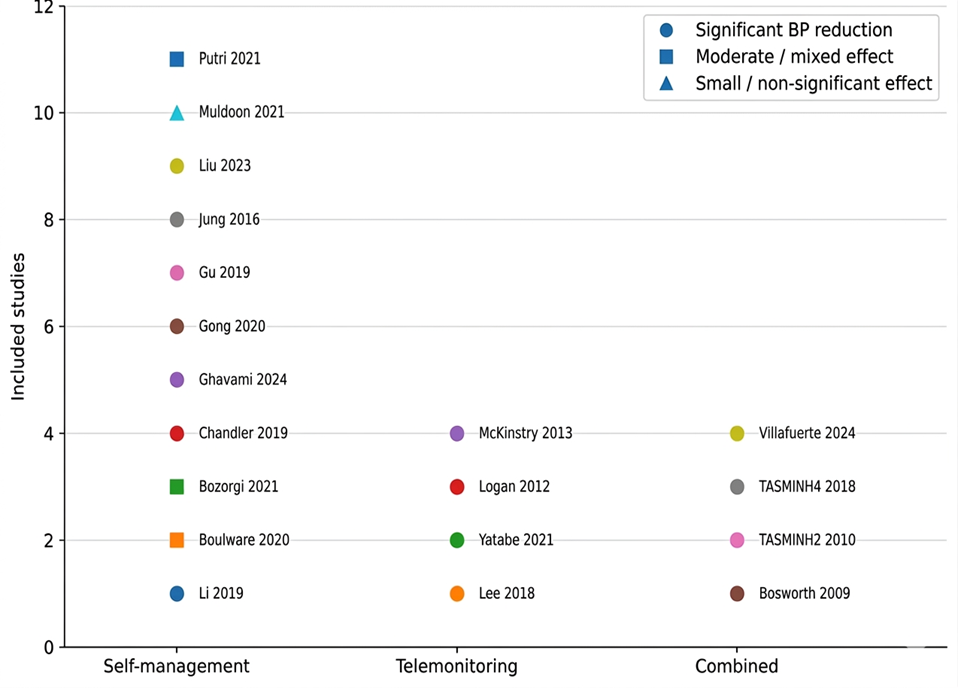
Figure 4. Harvest plot summarizing the direction and consistency of systolic blood pressure (SBP) outcomes across included studies (n = 19), categorized into self-management (n = 11), telemonitoring (n = 4), and combined interventions (n = 4). Circles indicate statistically significant reductions, squares indicate moderate or mixed effects, and triangles indicate small or non-significant effects.


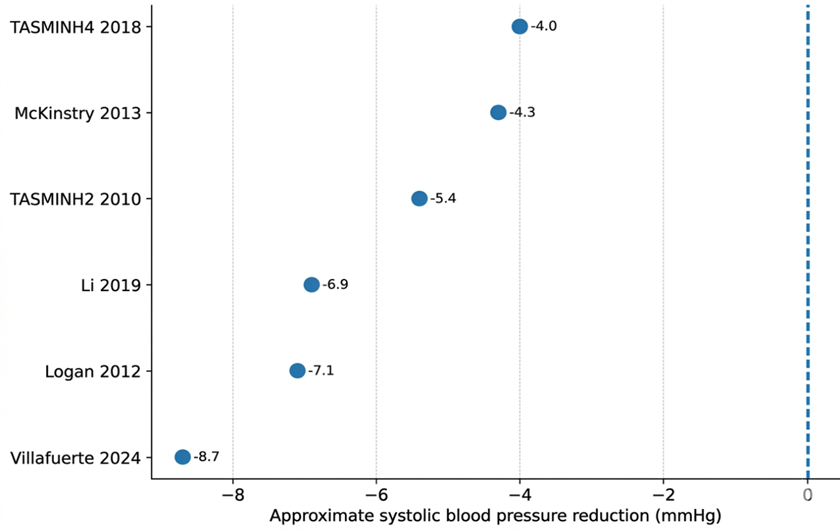
Visual synthesis reinforced these findings. The harvest plot (Figure 4) illustrated greater consistency of statistically significant SBP reductions in telemonitoring and combined intervention studies compared with the more variable results in self-management trials. Figure 5 further highlights that all telemonitoring and combined intervention studies reported significant BP improvements, whereas self-management studies showed greater heterogeneity in the proportion of significant versus non-significant effects. Approximate magnitude of SBP reductions across studies with quantitative data was generally largest in combined interventions, followed by telemonitoring, with more heterogeneous effects in self-management approaches (Figure 6). 

Figure 5. Distribution of studies reporting significant versus non-significant reductions in systolic blood pressure (SBP) across intervention types, including self-management (n = 11), telemonitoring (n = 4), and combined interventions (n = 4).


Overall, while both self-management and telemonitoring interventions improved hypertension outcomes, the most robust clinical benefits were achieved through multicomponent strategies that synergistically combined behavioral self-management with structured monitoring and treatment support.

Figure 6. Approximate reductions in systolic blood pressure (SBP) across selected studies with available quantitative data, comparing self-management, telemonitoring, and combined interventions.

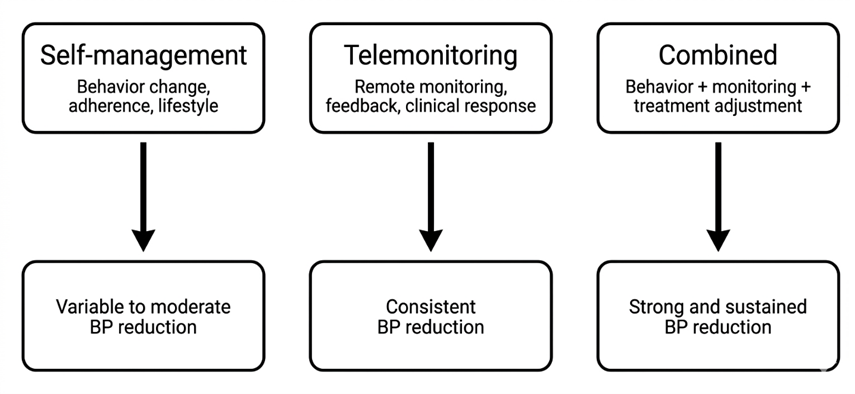
A conceptual framework (Figure 7) illustrates the underlying mechanisms: self-management interventions primarily strengthen behavioral pathways (adherence, self-efficacy, lifestyle change); telemonitoring enhances clinical responsiveness via data feedback loops; and combined interventions synergistically integrate both, yielding the most robust and sustained BP improvements. All telemonitoring and combined intervention studies reported significant BP benefits, reinforcing the added value of integrating monitoring with behavioral and clinical support.

Figure 7. Conceptual framework illustrating the pathways linking self-management, telemonitoring, and combined interventions to behavioral and clinical outcomes in hypertension management, highlighting the integration of adherence, monitoring, and treatment adjustment.

4. DISCUSSION

This systematic review of 19 studies provides a comparative synthesis of self-management, telemonitoring, and combined interventions for blood pressure control in patients with hypertension. The findings demonstrate that while all three approaches improve hypertension outcomes, their effectiveness varies substantially in magnitude, consistency, and underlying mechanisms. Self-management interventions primarily strengthened behavioral domains, telemonitoring enhanced clinical responsiveness, and combined (multicomponent) interventions produced the largest and most sustained blood pressure reductions.


Self-management interventions: beneficial but not uniformly effective

A central finding of this review is that self-management interventions were generally beneficial, particularly in improving medication adherence, self-care behavior, and self-efficacy, although their effects on systolic blood pressure (SBP) were more variable across studies. Interventions delivered through digital platforms, community-based programs, and nurse-led approaches consistently enhanced behavioral outcomes and, in many cases, contributed to clinically meaningful BP reductions, although effect sizes differed depending on intervention intensity, patient engagement, and integration with clinical support [51].

This pattern aligns with previous evidence showing that self-management can improve BP control, but with heterogeneous effect sizes [52]. Importantly, the present review highlights that self-management is not a uniform intervention category; rather, its effectiveness appears to depend on whether behavioral activation is supported by structured reinforcement mechanisms such as feedback, monitoring, or treatment adjustment. This may explain why interventions limited to reminders or education alone showed smaller effects compared with multicomponent or culturally tailored programs integrating behavioral and clinical pathways [31,32,39].


Telemonitoring interventions: consistent bp reduction through feedback

Telemonitoring interventions demonstrated more consistent BP-lowering effects than self-management-only approaches, particularly when home BP monitoring was integrated with clinician feedback, telehealth consultation, or automated decision support. This finding is consistent with prior evidence suggesting that telemonitoring is most effective when linked to active clinical response rather than functioning as passive data collection [53,54]. However, these interventions improve clinical responsiveness and BP control, they often require increased healthcare utilization, digital infrastructure, and patient engagement capacity. This suggests that telemonitoring should be understood not merely as a technological enhancement, but as a service model that links measurement to clinical action, raising important considerations regarding scalability and sustainability.


Combined interventions: strongest evidence and the clearest added value

The most robust and sustained BP reductions in this review were observed in combined interventions integrating behavioral self-management with home BP monitoring, telemonitoring, or structured lifestyle support. These findings reinforce prior evidence that multicomponent strategies outperform single-component approaches in chronic disease management [55,56].

Importantly, this review provides more specific insight into the mechanisms underlying this effect. The strongest outcomes were observed when self-monitoring was directly linked to actionable treatment pathways, such as medication titration or structured feedback loops. This suggests that effective hypertension control depends not only on patient engagement but also on the integration of behavioral and clinical processes within a coordinated care pathway.

Behavioral pathways: an important mechanism often under-discussed in earlier reviews

Another important finding is that many interventions improved proximal behavioral outcomes, including medication adherence, self-care, self-efficacy, social support, lifestyle behavior, and disease knowledge [28,30,31,36,39,44,45]. This is consistent with behavioral and nursing literature emphasizing that adherence, self-efficacy, and patient engagement are major determinants of chronic disease outcomes [5761]. Yet many earlier hypertension reviews treated these outcomes as secondary or peripheral, focusing primarily on SBP and DBP change [6264].

In several studies, improvements in self-care or adherence were more consistent than immediate BP reductions, particularly in short-term or community-based interventions [30,31,45]. This raises the possibility that behavioral improvements may function as intermediate pathways that precede more stable clinical benefit. The findings suggest a potential pathway in which behavioral improvements may contribute to clinical outcomes; however, direct causal mechanisms cannot be confirmed due to the absence of mediation analysis and longitudinal pathway testing. This interpretation is supported by chronic disease self-management theory and by evidence from nursing interventions. [65-67].

Population context and health equity

The included studies also demonstrate that intervention effectiveness is strongly shaped by population context. Effectiveness was context-dependent, with promising results observed in diverse populations, including older adults, ethnic minorities, socially disadvantaged groups, and patients in low-resource settings [30,32,36,37,45]. Culturally tailored and community-based delivery models appeared particularly valuable [30,32]. 

These findings are particularly relevant for low- and middle-income settings, where resource constraints may limit the implementation of high-intensity digital or telemonitoring interventions. Adaptation to local context, including simplified monitoring strategies, community-based support, and culturally tailored approaches, is essential to ensure feasibility and sustainability of hypertension management interventions.


Methodological considerations and limitations

The overall methodological quality was moderate to high, with objective BP measurements representing a key strength. However, limitations include the inherent challenges of blinding in behavioral and digital interventions, variable allocation concealment, and occasional attrition issues [28]. Substantial heterogeneity in intervention components, follow-up duration, and outcome reporting precluded meta-analysis. Most studies were limited to 6–12 months, leaving questions about long-term sustainability. Restriction to English-language publications may have introduced language bias. Nonrandomized studies carried serious risk of bias, primarily from confounding [36,37,45].

Implications for practice and future research

From a practice perspective, this review suggests that home BP monitoring should be embedded within a broader management strategy rather than treated as an isolated act of measurement. Self-management interventions are especially valuable for improving adherence and self-care, telemonitoring improves responsiveness and BP consistency, and combined interventions most effectively link these mechanisms into clinically meaningful BP control [68-72].

From a research perspective, future work should address three major gaps. First, trials should identify the active ingredients of successful interventions, including the separate contributions of monitoring frequency, behavioral reinforcement, clinician feedback, lifestyle support, and medication titration. Second, more direct comparisons are needed between self-management-only, telemonitoring-only, and combined strategies within similar populations and health systems. Third, studies should incorporate longer follow-up and more standardized outcome reporting to improve comparability and enable stronger quantitative synthesis.

5. CONCLUSION

Overall, self-management, telemonitoring, and multicomponent interventions were generally associated with improvements in blood pressure and behavioral outcomes, although effects were not consistent across all studies. Self-management primarily enhances adherence and behavioral change, with variable effects on blood pressure, whereas telemonitoring provides more consistent reductions through feedback-driven clinical responsiveness. The greatest and most sustained effects are observed in combined interventions integrating monitoring, behavioral support, and treatment adjustment. These findings suggest that effective hypertension control depends on linking self-monitoring to actionable care pathways. Future strategies should prioritize integrated, patient-centered models while addressing heterogeneity in reporting and limited long-term evidence.

ACKNOWLEDGEMENTS

The authors acknowledge the contributions of all co-authors to the conceptualization, drafting, and revising of this study. Grateful to the authority of the university for supporting the conducting of this study. The authors also note that limited AI-assisted tools (about 10%) were used primarily for language editing and referencing, in accordance with the journal’s editorial policy.

FUNDING SOURCES

There were no funding sources for this study.

CONFLICTS OF INTEREST

The authors have no competing interests.

ETHICS STATEMENT

This study did not involve any experiments on human participants or animals.

References

  1. Boateng EB, Ampofo AG. A glimpse into the future: modelling global prevalence of hypertension. BMC Public Health. 2023;23(1):1906. doi:10.1186/s12889-023-16662-z
  2. Wu X, Sha J, Yin Q, Gu Y, He X. Global burden of hypertensive heart disease and attributable risk factors, 1990–2021: insights from the global burden of disease study 2021. Sci Rep. 2025;15(1):14594. doi:10.1038/s41598-025-99358-1
  3. Mills KT, Stefanescu A, He J. The global epidemiology of hypertension. Nat Rev Nephrol. 2020;16(4):223–37. doi:10.1038/s41581-019-0244-2
  4. O’Connell SS, Whelton PK, Li F, Allouch F, Shapiro L, Vandenburg M, et al. Global Hypertension 2000 to 2020: Trends, Disparities, and Progress in Awareness, Treatment, and Control. JACC. 2026. doi: https://doi.org/10.1016/j.jacc.2025.12.091
  5. Geldsetzer P, Manne-Goehler J, Marcus ME, Ebert C, Zhumadilov Z, Wesseh CS, et al. The state of hypertension care in 44 low-income and middle-income countries: a cross-sectional study of nationally representative individual-level data from 1&#xb7;1 million adults. The Lancet. 2019 Aug 24;394(10199):652–62. doi:10.1016/S0140-6736(19)30955-9
  6. World Health Organization. Global report on hypertension: the race against a silent killer. World Health Organization; 2023.
  7. Burnier M, Egan BM. Adherence in Hypertension. Circ Res. 2019 Mar 29;124(7):1124–40. doi:10.1161/CIRCRESAHA.118.313220
  8. Zhou B, Carrillo-Larco RM, Danaei G, Riley LM, Paciorek CJ, Stevens GA, et al. Worldwide trends in hypertension prevalence and progress in treatment and control from 1990 to 2019: a pooled analysis of 1201 population-representative studies with 104 million participants. The Lancet. 2021 Sep 11;398(10304):957–80. doi:10.1016/S0140-6736(21)01330-1
  9. Whelton PK, Robert MC, S AW, E CD, J CK, Cheryl DH, et al. 2017 ACC/AHA/AAPA/ABC/ACPM/AGS/APhA/ASH/ASPC/NMA/PCNA Guideline for the Prevention, Detection, Evaluation, and Management of High Blood Pressure in Adults. JACC. 2018 May 15;71(19): e127–248. doi: 10.1016/j.jacc.2017.11.006
  10. Boima V, Doku A, Agyekum F, Tuglo LS, Agyemang C. Effectiveness of digital health interventions on blood pressure control, lifestyle behaviours and adherence to medication in patients with hypertension in low-income and middle-income countries: a systematic review and meta-analysis of randomised controlled trials. EClinicalMedicine. 2024 Mar 1;69. doi: 10.1016/j.eclinm.2024.102432
  11. Ogedegbe G, Schoenthaler A. A Systematic Review of the Effects of Home Blood Pressure Monitoring on Medication Adherence. The Journal of Clinical Hypertension. 2006 Mar 1;8(3):174–80. doi: https://doi.org/10.1111/j.1524-6175.2006.04872.x
  12. Hwang M, Chang AK. The effect of nurse-led digital health interventions on blood pressure control for people with hypertension: A systematic review and meta-analysis. Journal of Nursing Scholarship. 2023 Sep 1;55(5):1020–35. doi: https://doi.org/10.1111/jnu.12882
  13. Choudhry NK, Kronish IM, Vongpatanasin W, Ferdinand KC, Pavlik VN, Egan BM, et al. Medication Adherence and Blood Pressure Control: A Scientific Statement from the American Heart Association. Hypertension. 2022 Jan 1;79(1):e1–14. doi:10.1161/HYP.0000000000000203
  14. Alzahrani SA, Bin Muammar MF, Bin Muammar AF, Alolah A, Almutawa M. The Adoption and Acceptance of mHealth Interventions for Self-Management of Hypertension Among Adult Patients: A Systematic Review. Cureus. 2022 Nov 16. doi:10.7759/cureus.31584 PubMed PMID: 36540533.
  15. Kassavou A, Wang M, Mirzaei V, Shpendi S, Hasan R. The Association Between Smartphone App–Based Self-monitoring of Hypertension-Related Behaviors and Reductions in High Blood Pressure: Systematic Review and Meta-analysis. JMIR Mhealth Uhealth. 2022;10(7): e34767. doi:10.2196/34767
  16. Barzegar H, Sodagar S, Seirafi M, Farahbakhsh M, Hashemi T. Blood pressure management protocol based on transtheoretical model effectiveness on self- care: A systematic review. Health Promot Perspect. 2024;14(3):207–20. doi:10.34172/hpp.42814
  17. Vegesna Ashok, Tran Melody, Angelaccio Michele, Arcona Steve. Remote Patient Monitoring via Non-Invasive Digital Technologies: A Systematic Review. Telemedicine and e-Health. 2017 Jan 1;23(1):3–17. doi:10.1089/tmj.2016.0051
  18. Masotta V, Dante A, Caponnetto V, Marcotullio A, Ferraiuolo F, Bertocchi L, et al. Telehealth care and remote monitoring strategies in heart failure patients: A systematic review and meta-analysis. Heart & Lung. 2024; 64:149–67. doi: https://doi.org/10.1016/j.hrtlng.2024.01.003
  19. Zhang Wenhang, Cheng Bo, Zhu Wei, Huang Xiaoxia, Shen Changyin. Effect of Telemedicine on Quality of Care in Patients with Coexisting Hypertension and Diabetes: A Systematic Review and Meta-Analysis. Telemedicine and e-Health. 2021 Jun 1;27(6):603–14. doi:10.1089/tmj.2020.0122
  20. Parati G, Dolan E, McManus RJ, Omboni S. Home blood pressure telemonitoring in the 21st century. The Journal of Clinical Hypertension. 2018 Jul 1;20(7):1128–32. doi: https://doi.org/10.1111/jch.13305
  21. Kario K. Management of Hypertension in the Digital Era. Hypertension. 2020 Sep 1;76(3):640–50. doi:10.1161/HYPERTENSIONAHA.120.14742
  22. Ma Y, Olendzki BC, Wang J, Persuitte GM, Li W, Fang H, et al. Single-Component Versus Multicomponent Dietary Goals for the Metabolic Syndrome. Ann Intern Med. 2015 Feb 17;162(4):248–57. doi:10.7326/M14-0611
  23. Jaén-Extremera J, Afanador-Restrepo DF, Rivas-Campo Y, Gómez-Rodas A, Aibar-Almazán A, Hita-Contreras F, et al. Effectiveness of Telemedicine for Reducing Cardiovascular Risk: A Systematic Review and Meta-Analysis. Journal of Clinical Medicine. MDPI; 2023. doi:10.3390/jcm12030841
  24. Dones III V, Velasquez AAG, Dacuya MG, Ignacio KET, Cavite ETM, Ibuna II RS, et al. The Effectiveness of Telemedicine in Hypertension Management of Adults in Rural Communities: A Systematic Review and Meta-Analysis. Physiotherapy Research International. 2025 Jan 1;30(1): e70014. doi: https://doi.org/10.1002/pri.70014
  25. Band R, Bradbury K, Morton K, May C, Michie S, Mair FS, et al. Intervention planning for a digital intervention for self-management of hypertension: a theory-, evidence- and person-based approach. Implementation Science. 2017;12(1):25. doi:10.1186/s13012-017-0553-4
  26. Band R, Morton K, Stuart B, Raftery J, Bradbury K, Yao GL, et al. Home and Online Management and Evaluation of Blood Pressure (HOME BP) digital intervention for self-management of uncontrolled, essential hypertension: a protocol for the randomised controlled HOME BP trial. BMJ Open. 2016 Nov 1;6(11): e012684. doi:10.1136/bmjopen-2016-012684
  27. Page MJ, McKenzie JE, Bossuyt PM, Boutron I, Hoffmann TC, Mulrow CD, et al. The PRISMA 2020 statement: An updated guideline for reporting systematic reviews. The BMJ. 2021 Mar 29;372. doi:10.1136/bmj. n71 PubMed PMID: 33782057.
  28. Li X, Li T, Chen J, Xie Y, An X, Lv Y, et al. A wechat-based self-management intervention for community middle-aged and elderly adults with hypertension in Guangzhou, China: A cluster-randomized controlled trial. Int J Environ Res Public Health. 2019 Nov 1;16(21). doi:10.3390/ijerph16214058 PubMed PMID: 31652688.
  29. Bosworth HB, Olsen MK, Grubber JM, Neary AM, Orr MM, Powers BJ, et al. Two Self-management Interventions to Improve Hypertension Control A Randomized Trial. Ann Intern Med [Internet]. 2009 Oct 6; 151:687–95. Available from: www.annals.org
  30. Boulware LE, Ephraim PL, Hill-Briggs F, Roter DL, Bone LR, Wolff JL, et al. Hypertension Self-management in Socially Disadvantaged African Americans: the Achieving Blood Pressure Control Together (ACT) Randomized Comparative Effectiveness Trial. J Gen Intern Med. 2020 Jan 1;35(1):142–52. doi:10.1007/s11606-019-05396-7 PubMed PMID: 31705466.
  31. Bozorgi A, Hosseini H, Eftekhar H, Majdzadeh R, Yoonessi A, Ramezankhani A, et al. The effect of the mobile “blood pressure management application” on hypertension self-management enhancement: a randomized controlled trial. Trials. 2021 Dec 1;22(1). doi:10.1186/s13063-021-05270-0 PubMed PMID: 34167566.
  32. Chandler J, Sox L, Kellam K, Feder L, Nemeth L, Treiber F. Impact of a culturally tailored mhealth medication regimen self-management program upon blood pressure among hypertensive hispanic adults. Int J Environ Res Public Health. 2019 Apr 1;16(7). doi:10.3390/ijerph16071226 PubMed PMID: 30959858.
  33. Ghavami M, Abdshah A, Sadeghian S, Ahmadi A, Jolani MS, Akbarzadeh D, et al. Effectiveness of the Green Heart Smartphone Application as a Self-Management Intervention for Hypertension and Dyslipidemia: A Randomized Clinical Trial. Arch Iran Med. 2024 Jun 1;27(6):313–22. doi:10.34172/aim.28501 PubMed PMID: 38855801.
  34. Gong K, Yan YL, Li Y, Du J, Wang J, Han Y, et al. Mobile health applications for the management of primary hypertension: A multicenter, randomized, controlled trial. Medicine (United States). 2020 Apr 30;99(16):E19715. doi:10.1097/MD.0000000000019715 PubMed PMID: 32311957.
  35. Gu Y, Bao X, Wang Y, Meng G, Wu H, Zhang Q, et al. Effects of self-monitoring devices on blood pressure in older adults with hypertension and diabetes: A randomised controlled trial. J Epidemiol Community Health (1978). 2020 Feb 1;74(2):137–43. doi:10.1136/jech-2019-212531 PubMed PMID: 31678965.
  36. Jung H, Lee JE. The impact of community-based eHealth self-management intervention among elderly living alone with hypertension. J Telemed Telecare. 2017 Jan 1;23(1):167–73. doi:10.1177/1357633X15621467 PubMed PMID: 26678063.
  37. Lee HY, Kim JY, Na KY, Park HY, Han J, Pak Y, et al. The role of telehealth counselling with mobile self-monitoring on blood pressure reduction among overseas Koreans with high blood pressure in Vietnam. J Telemed Telecare. 2019 May 1;25(4):241–8. doi:10.1177/1357633X18780559 PubMed PMID: 29933721.
  38. Yatabe J, Yatabe MS, Okada R, Ichihara A. Efficacy of Telemedicine in Hypertension Care through Home Blood Pressure Monitoring and Videoconferencing: Randomized Controlled Trial. JMIR Cardio. 2021 Jul 1;5(2). doi:10.2196/27347 PubMed PMID: 34321194.
  39. Liu F, Song T, Yu P, Deng N, Guan Y, Yang Y, et al. Efficacy of an mHealth App to Support Patients’ Self-Management of Hypertension: Randomized Controlled Trial. J Med Internet Res. 2023;25(1). doi:10.2196/43809 PubMed PMID: 38113071.
  40. Logan AG, Irvine MJ, Mcisaac WJ, Tisler A, Rossos PG, Easty A, et al. Effect of Home Blood Pressure Telemonitoring with Self-Care Support on Uncontrolled Systolic Hypertension in Diabetics. Hypertension. 2012 Jul;60(2012):51–7. doi:10.1161/HYPERTENSIONAHA
  41. McKinstry B, Hanley J, Wild S, Pagliari C, Paterson M, Lewis S, et al. Telemonitoring based service redesign for the management of uncontrolled hypertension: Multicentre randomised controlled trial. BMJ (Online). 2013 Jun 22;346(7913). doi:10.1136/bmj. f3030 PubMed PMID: 23709583.
  42. Mcmanus RJ, Mant J, Bray EP, Jones MI, Kaambwa B, Phd B, et al. Telemonitoring and self-management in the control of hypertension (TASMINH2): a randomised controlled trial. Lancet. 2010; 376:163–72. doi:10.1016/S0140
  43. McManus RJ, Mant J, Franssen M, Nickless A, Schwartz C, Hodgkinson J, et al. Efficacy of self-monitored blood pressure, with or without telemonitoring, for titration of antihypertensive medication (TASMINH4): an unmasked randomised controlled trial. The Lancet. 2018 Mar 10;391(10124):949–59. doi:10.1016/S0140-6736(18)30309-X PubMed PMID: 29499873.
  44. Muldoon MF, Einhorn J, Yabes JG, Burton D, Irizarry T, Basse J, et al. Randomized feasibility trial of a digital intervention for hypertension self-management. J Hum Hypertens. 2022 Aug 1;36(8):718–25. doi:10.1038/s41371-021-00574-9 PubMed PMID: 34239050.
  45. Putri SE, Rekawati E, Nurviyandari D, Wati K. Effectiveness of self-management on adherence to self-care and on health status among elderly people with hypertension. Journal of Public Health Research. 2021.
  46. Villafuerte FU, Cànaves JL, Mantolan AE, Flores PB, Carratalà FR, Hernández AR, et al. Effectiveness of medication self-management, self-monitoring and a lifestyle intervention on hypertension in poorly controlled patients: The MEDICHY randomized trial. Front Cardiovasc Med. 2024 May 21;11. doi:10.3389/fcvm.2024.1355037
  47. Bludorn J, Railey K. Hypertension Guidelines and Interventions. Primary Care - Clinics in Office Practice. W.B. Saunders; 2024. p. 41–52. doi: 10.1016/j.pop.2023.07.002 PubMed PMID: 38278572.
  48. Wang Y, Liu Y, Liu L, Hong L, Chen H. Comparative Analysis of Hypertension Guidelines: Unveiling Consensus and Discrepancies in Lifestyle Modifications for Blood Pressure Control. Cardiol Res Pract. 2023 Jan 1;2023(1):5586403. doi: https://doi.org/10.1155/2023/5586403
  49. Flack JM, Adekola B. Blood pressure and the new ACC/AHA hypertension guidelines. Trends Cardiovasc Med. 2020;30(3):160–4. doi: https://doi.org/10.1016/j.tcm.2019.05.003
  50. McCarthy CP, Bruno RM, Rahimi K, Touyz RM, McEvoy JW. Global and European landscape of major hypertension guidelines. The Lancet. 2025 Mar 15;405(10482):874–6. doi:10.1016/S0140-6736(24)02795-8
  51. Tucker KL, Sheppard JP, Stevens R, Bosworth HB, Bove A, Bray EP, et al. Self-monitoring of blood pressure in hypertension: A systematic review and individual patient data meta-analysis. PLoS Med [Internet]. 2017 Sep 19;14(9):e1002389-. Available from: https://doi.org/10.1371/journal.pmed.1002389
  52. Uhlig K, Patel K, Ip S, Kitsios GD, Balk EM. Self-Measured Blood Pressure Monitoring in the Management of Hypertension. Ann Intern Med. 2013 Aug 6;159(3):185–94. doi:10.7326/0003-4819-159-3-201308060-00008
  53. Omboni S, Gazzola T, Carabelli G, Parati G. Clinical usefulness and cost effectiveness of home blood pressure telemonitoring: meta-analysis of randomized controlled studies. J Hypertens [Internet]. 2013;31(3). Available from: https://journals.lww.com/jhypertension/fulltext/2013/03000/clinical_usefulness_and_cost_effectiveness_of_home.4.aspx
  54. Sakima A, Akagi Y, Akasaki Y, Fujii T, Haze T, Kawakami-Mori F, et al. Effectiveness of digital health interventions for telemedicine/telehealth for managing blood pressure in adults: a systematic review and meta-analysis. Hypertension Research. 2025;48(2):478–91. doi:10.1038/s41440-024-01792-7
  55. Villarino RT, Resti T, Villarino DED. Upgrading Global Hypertension Management through Self-Monitoring and a Culturally Adapted BASNEF Model: A Mixed-method Study in a Resource-Limited Setting. SSRN. 2024 Jul 31. doi:Villarino,RestiTito, UpgradingGlobalHypertensionManagementthroughSelf-MonitoringandaCulturallyAdaptedBASNEFModel: AMixed-MethodStudyinaResource-LimitedSetting(July31,2024). AvailableatSSRN: https://ssrn.com/abstract=4912590orhttp://dx.doi.org/10.2139/ssrn.4912590
  56. Doogue R, Hayes P, Tucker K, Fahey T, Sheikhi A, Koshiaris C, et al. Self-monitoring for improving control of blood pressure in patients with hypertension. Cochrane Database of Systematic Reviews. 2021 Jan 19;2021(1). doi: 10.1002/14651858.CD010311.pub2
  57. Mohamadian H, Changizi M, Salehi J, Moridi M. Patient Health Engagement Model (PHE) in Affecting Patient Activation and Self-efficacy Among Cardiac Patients. Jundishapur J Chronic Dis Care. 2024;13(4):1–11. doi: https://doi.org/10.5812/jjcdc-138727
  58. Chen J, Tian Y, Yin M, Lin W, Tuersun Y, Li L, et al. Relationship between self-efficacy and adherence to self-management and medication among patients with chronic diseases in China: A multicentre cross-sectional study. J Psychosom Res. 2023; 164:111105. doi: https://doi.org/10.1016/j.jpsychores.2022.111105
  59. Zanatta F, Nissanova E, Świątoniowska-Lonc N, Pierobon A, Callegari G, Olmetti F, et al. Psychosocial Predictors of Self-Efficacy Related to Self-Reported Adherence in Older Chronic Patients Dealing with Hypertension: A European Study. Patient Prefer Adherence. 2020 Sep 25;14(null):1709–18. doi:10.2147/PPA.S258999
  60. Simmons LA, Wolever RQ, Bechard EM, Snyderman R. Patient engagement as a risk factor in personalized health care: a systematic review of the literature on chronic disease. Genome Med. 2014;6(2):16. doi:10.1186/gm533
  61. Roncoroni J, Tucker CM, Wall W, Wippold G, Ratchford J. Associations of Health Self-efficacy With Engagement in Health-Promoting Behaviors and Treatment Adherence in Rural Patients. Fam Community Health [Internet]. 2019;42(2). Available from: https://journals.lww.com/familyandcommunityhealth/fulltext/2019/04000/associations_of_health_self_efficacy_with.4.aspx
  62. Xia T, Zhao F, Nianogo RA. Interventions in hypertension: systematic review and meta-analysis of natural and quasi-experiments. Clin Hypertens. 2022;28(1):13. doi:10.1186/s40885-022-00198-2
  63. Carey RM, Moran AE, Whelton PK. Treatment of Hypertension: A Review. JAMA. 2022 Nov 8;328(18):1849–61. doi:10.1001/jama.2022.19590
  64. Kappes M, Espinoza P, Jara V, Hall A. Nurse-led telehealth intervention effectiveness on reducing hypertension: a systematic review. BMC Nurs. 2023;22(1):19. doi:10.1186/s12912-022-01170-z
  65. Franklin Marika, Willis Karen, Lewis Sophie, Smith Lorraine. Chronic condition self-management is a social practice. Journal of Sociology. 2023 Mar 1;59(1):215–31. doi:10.1177/14407833211038059
  66. Arbi M, Jamil Q, Sidiq SS, Jamil MN, Iqbal SM. Diabetes, corticosteroids, and mortality outcomes in covid-19-associated rhino-orbital-cerebral mucormycosis. J. Biosci. Public Health. 2026;2(2):139-151. doi:10.5455/JBPH.2026.05
  67. Meng F, Jiang Y, Yu P, Song Y, Zhou L, Xu Y, et al. Effect of health coaching on blood pressure control and behavioral modification among patients with hypertension: A systematic review and meta-analysis of randomized controlled trials. Int J Nurs Stud. 2023; 138:104406. doi: https://doi.org/10.1016/j.ijnurstu.2022.104406
  68. Alifariki LO. Various determinants influencing the implementation of occupational health and safety (ohs) in hospitals. J. Biosci. Public Health. 2026;2(1):14-29. doi:10.5455/JBPH.2025.19
  69. Williams B, Mancia G, Spiering W, Agabiti Rosei E, Azizi M, Burnier M, et al. 2018 ESC/ESH Guidelines for the management of arterial hypertension: The Task Force for the management of arterial hypertension of the European Society of Cardiology (ESC) and the European Society of Hypertension (ESH). Eur Heart J. 2018 Sep 1;39(33):3021–104. doi:10.1093/eurheartj/ehy339
  70. K WP, M CR, S AW, E CD, J CK, Cheryl DH, et al. 2017 ACC/AHA/AAPA/ABC/ACPM/AGS/APhA/ASH/ASPC/NMA/PCNA Guideline for the Prevention, Detection, Evaluation, and Management of High Blood Pressure in Adults. JACC. 2018 May 15;71(19): e127–248. doi: 10.1016/j.jacc.2017.11.006
  71. Elg M, Kabel D, Gremyr I, Olsson J, Martin J, Smith F. Identification and Categorization of the Distinct Purposes Underpinning the Use of Digital Health Care Self-Monitoring: Qualitative Study of Stakeholders in the Health Care Ecosystem. J Med Internet Res. 2025;27: e58264. doi:10.2196/58264
  72. Martinengo L, Ha NHL, Tay E, Tong SC, Sevdalis N. Implementation of a Digital Health Intervention (CHAMP) for Self-Monitoring of Hypertension: Protocol for 3 Interlinked Implementation Studies. JMIR Res Protoc. 2025;14: e72942. doi:10.2196/72942
Views
136
Downloads
14
Metrics
Share
License

Creative Commons License
This work is licensed under a Creative Commons Attribution 4.0 International License .

You are free to share and adapt this material for any purpose, even commercially, as long as you give appropriate credit.