

JBPH

Journal of Biosciences
and Public Health

RSS Feed
Openopen-access logoaccess
Published by: www.4grs.org
eISSN 3104-8749

Laccase as a Potential Biological Catalyst in Green Circular Bioeconomy and Public Health: From Mechanistic Insights to Sustainable Applications

J. Biosci. Public Health. 2026; 2(2)

Review article | Open access | J. Biosci. Public Health. 2026; 2(2) : 190-214 | doi: 10.5455/JBPH.2026.08

Laccase as a Potential Biological Catalyst in Green Circular Bioeconomy and Public Health: From Mechanistic Insights to Sustainable Applications

Tupura Khatun orcid green 'id' icon

First Author

Tupura Khatun

tupurakhatun098@gmail.com

orcid green 'id' icon https://orcid.org/0009-0003-9229-8659

Affiliations:

Department of Mathematics, Chittagong College, National University, Chittagong, Bangladesh

, Md. Asaduzzaman *

Corresponding Author *

Md. Asaduzzaman

mzaman@sub.edu.bd

orcid green 'id' icon https://orcid.org/0000-0001-7202-961X

Affiliations:

Department of Food Engineering and Nutrition Science, State University of Bangladesh, Dhaka, Bangladesh

orcid green 'id' icon

Corresponding Author *

Md. Asaduzzaman

mzaman@sub.edu.bd

orcid green 'id' icon https://orcid.org/0000-0001-7202-961X

Affiliations:

Department of Food Engineering and Nutrition Science, State University of Bangladesh, Dhaka, Bangladesh

Download PDF
Cite this article

Abstract

Laccase, a multicopper oxidase, has emerged as a promising biocatalyst in advancing the green circular bioeconomy and sustainable public health solutions. This review critically synthesizes current knowledge on laccase, integrating mechanistic insights with emerging applications. Its capacity to oxidize substrates such as phenols, anilines, and lignin, while reducing molecular oxygen to water, enables eco-friendly applications in paper pulp bleaching, textile dyeing, nanobiotechnology, woodworking, food processing, biorefining, wastewater treatment, organic synthesis, and biofuel production. Their structural complexity, including a multicopper catalytic core and variable glycosylation, underpins their catalytic versatility and stability across diverse conditions. This review advances beyond descriptive summaries by providing (i) a comparative evaluation of production platforms, including microbial, recombinant, and waste-derived systems; (ii) a critical assessment of natural versus synthetic mediator systems; and (iii) roles of laccase in green and circular bioeconomy applications in bioremediation, industrial processing, biosensing, and medical diagnostics are discussed with emphasis on pollutant degradation and risk reduction. Emerging trends (2023–2026), such as laccase-like nanozymes and circular production strategies, are highlighted. Despite significant progress, challenges related to enzyme stability, scalability, and cost remain. Addressing these limitations will be crucial for translating laccase-based technologies into large-scale sustainable and public health applications.

1. INTRODUCTION

Over the past few decades, enzymes have emerged as indispensable tools in advancing sustainable technologies, particularly within the framework of the green circular bioeconomy, where waste valorization, resource efficiency, and environmental protection are central priorities. Among these biocatalysts, oxidoreductases have gained significant prominence due to their ability to catalyze redox reactions under mild conditions while minimizing toxic by-products [1]. In this context, laccase (benzenediol: oxygen oxidoreductase; EC 1.10.3.2) has attracted considerable attention as a versatile and eco-friendly enzyme with wide-ranging applications across environmental, industrial, and public health domains [2, 3]. First identified in 1883 from the Japanese lacquer tree (Rhus vernicifera) and later found to occur in fungi, this copper-ligated polyphenol oxidase belongs to the family of blue oxidases, which is the largest class of multinuclear copper oxidases found in plants, fungi, insects, bacteria, lichens, and sponges [2]. Fungal laccases, particularly those from Basidiomycetes, have been extensively studied and are the primary producers compared to bacterial laccases [3]. Laccase research, initiated in the 19th century, has focused on its oxidative capabilities, including its ability to oxidize both phenolic and non-phenolic compounds, including environmental pollutants, as well as its applications in other sectors [4]. Laccase genes comprise a multigene family that encodes ionic isozymes with distinct functions under various conditions [5]. Laccases oxidize substrates such as phenols and anilines, reducing molecular oxygen to water as the primary by-product, making them environmentally friendly catalysts [6, 7]. Laccases are tetrameric or dimeric glycoproteins with four copper atoms in the monomer disposed around a catalytic core at three centers: T1 (Blue copper), T2 (standard copper), and T3 (binuclear copper), with electronic paramagnetic resonance signals [2]. The substrates donate electrons to the T1 center, which then transfers them to the T2/T3 cluster, 13 Å away from the cysteine-histidine complex, where oxygen is reduced to water [8]. High glycosylation of laccases shields them against proteases, and they are selective toward substrates such as p-diphenols, o-diphenols, aryldiamines, and aminophenols [9]. In addition to bioremediation, laccases catalyse polymerisation and depolymerisation, supporting reactions such as lignin formation in plants and breakdown in fungi and bacteria [4]. This evoked further interest in structural and functional research. Their application in the degradation of pollutants is a primary use, alongside applications in the pulp, food, textile, and paper industries, especially in delignification and bleaching of paper and pulp [10-12]. 

The broad substrate specificity and catalytic versatility of laccases have positioned them as key biocatalysts in multiple industrial sectors. Their applications span bioremediation (degradation of dyes, pesticides, pharmaceuticals, and endocrine-disrupting compounds), pulp and paper processing (biobleaching and delignification), textile treatment, food processing, and biosensor development [911, 13]. In environmental contexts, laccases play a crucial role in detoxifying hazardous pollutants, thereby contributing to ecosystem restoration and reducing human health risks associated with contaminated air, soil, and water [3, 13]. Recent advances have expanded the scope of laccase applications beyond traditional uses. Emerging areas include biofuel cells, nanobiotechnology, and medical diagnostics, where laccase-based biosensors enable sensitive detection of toxins and biomarkers [4]. Additionally, the integration of laccases into nanozyme systems and waste-derived production platforms has opened new avenues for cost-effective and scalable applications, aligning with circular economy principles [14, 15]. 

Despite these advancements, challenges such as enzyme stability, variability in optimal operating conditions, and dependency on mediators continue to limit large-scale implementation. Due to their ability to polymerize phenols, these compounds are used in various cosmetic products, including hair dyes, deodorants, and mouthwashes. One of the more recent applications is in nanoparticle-based biosensors for medical and pharmaceutical use [4]. Although excellent reviews exist, they remain largely descriptive. The present review differentiates itself by (i) quantitative comparison of production platforms, (ii) side-by-side evaluation of synthetic vs natural mediators, (iii) critical discussion of conflicting optimal pH/temperature data, and (iv) emphasis on emerging 2023–2026 trends such as laccase-like nanozymes and waste-derived production. Collectively, this review aims to bridge mechanistic understanding with translational applications in green bioeconomy and public health.

2. ENZYME FUNDAMENTALS, CATALYTIC MECHANISM, AND QUANTITATIVE COMPARISONS

2.1. Structural topology of laccase

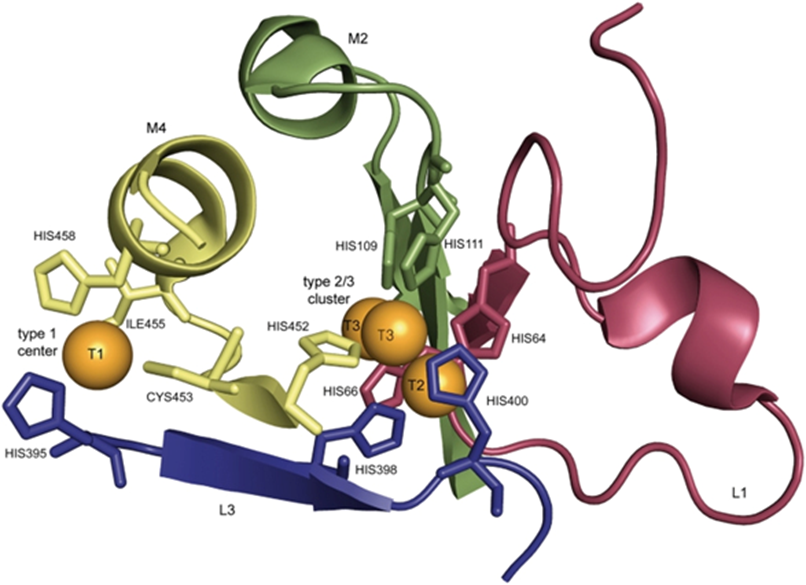
The structural and physicochemical properties of laccase, including its molecular organization and glycosylation, have been characterized through spectroscopic and crystallographic studies of purified enzymes (Figure 1). Laccases differ in their biochemical characteristics and molecular organizations. They are usually glycoproteins with molecular masses ranging from 50 to 130 kDa, for which carbohydrates constitute 10-45% of the total mass. Carbohydrates play different roles, including stability, copper binding, secretion, and resistance to proteolytic degradation [12, 16]. While laccase’s core structure is genetically regulated, the degree and composition of glycosylation, which influences enzyme stability and activity, can be modulated by the growth medium’s composition [17]. Laccases occur as monomeric, dimeric, and polymeric forms. They contain several copper atoms and are called blue oxidases [18]. The optimal pH for laccase activity varies (typically 3-8) depending on the substrate type and the enzyme’s source, such as fungal or bacterial laccases [19 ]. The optimal temperature also varies significantly among strains, most often reported as 30–50°C. Kinetic constants of the enzyme (Km and Vmax) also differ based on substrate, enzyme type, and conditions, with Km ranging most often between 2 and 5000 μm [18, 20]. 

Figure 1. Structural topology and catalytic mechanism of laccase (Laccases, EC 1.10.3.2) (C66H109N19O25). (A) The three-dimensional schematic representation of the laccase monomer, highlighting the Greek-key fold structure. (B) The active site architecture, depicting the three distinct copper centers: Type 1 (T1, blue), Type 2 (T2, green), and the binuclear Type 3 (T3, orange). (C) Schematic illustration of the electron transfer pathway, showing the distance (13 Å) between the T1 copper site (substrate oxidation site) and the trinuclear T2/T3 cluster (oxygen reduction site).


2.2. Catalytic mechanism of laccase

Laccases are glycosylated broad-spectrum oxidases catalyzing single-electron oxidation of a wide variety of organic and inorganic substrates e.g., phenolics, polyphenols, methoxy-monophenols, aromatic amines, lignin, ascorbic acid, and certain inorganics while molecular oxygen is reduced to water [21]. Their catalytic site consists of four copper ions: one Type 1 (T1), one Type 2 (T2), and two Type 3 (T3). Characterized by UV/visible and EPR spectroscopy, the blue color of the oxidized enzyme arises from the EPR-detectable T1 copper at 610 nm. T2 is colorless, but EPR-detectable, and T3 is weakly UV-absorbed and is EPR-silent. Substrate is bound at the T1 site, while the T2/T3 coppers form a trinuclear cluster to reduce O₂. Two histidine nitrogens and an oxygen ligate T2, while three histidine nitrogens ligate each T3. Structural analysis of most variants confirms that these copper-binding sites are well conserved in multicopper oxidases [22].

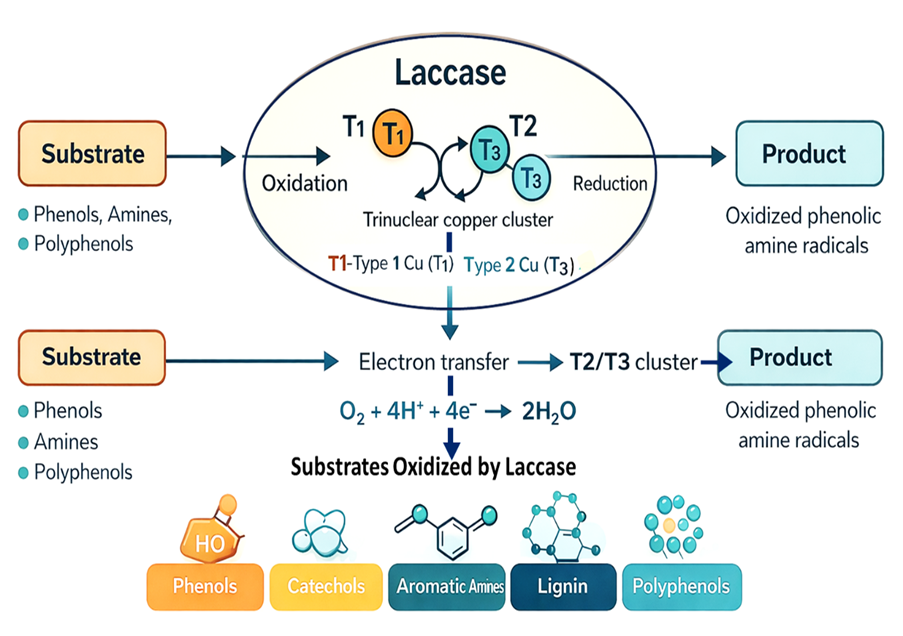
As illustrate in Figure 2, the catalysis process of the enzyme includes three key steps: copper T1 oxidizes by accepting electrons from a reducing substrate, the electrons are transferred from copper T1 to a ternary complex of T2 and T3, and an oxygen molecule is coordinated to the ternary complex, where it becomes reduced to H2O by accepting electrons from copper T2. A single-electron oxidation process enables the laccase enzyme to oxidize substrates. The enzymes can be used to treat a variety of substrates, such as monophenols, aromatic compounds, methoxyphenols, para- and ortho-phenols, aminophenols, lignins, nonphenolic aromatic compounds, inorganic compounds, oxides, aromatic amines, ascorbic acid, and polyphenols, simultaneously reducing the molecular oxygen to water [15, 16]. For instance, oxidation of different types of organic and inorganic pollutants by laccase are discussed briefly in the following section. 


Figure 2. Catalytic mechanism of laccase and substrate oxidation pathway. Laccase catalyzes the oxidation of phenolic and aromatic substrates at the Type 1 (T1) copper site via single-electron transfer. Electrons are transferred to the trinuclear T2/T3 copper cluster, where molecular oxygen (O₂) is reduced to water (H₂O), generating oxidized radical intermediates. The electrons are then transferred to the T2/T3 cluster, where molecular oxygen (O₂) is reduced to water (H₂O), as the only by-product.


2.3. Microbial sources of laccase production with quantitative comparisons

Laccases are multicopper oxidases produced by various types of organisms, including fungi, bacteria, actinomycetes, plants, and even certain insects. Table 1 provides a concise, analytical overview of the variability in optimal pH and temperature across different laccase sources. It lists typical ranges for fungal, bacterial, and thermostable variants, as well as emerging laccase-like nanozymes. Each entry includes the organism/source, optimal pH and temperature ranges, commonly used substrate in assays, and implications for industrial applications, addressing a key gap in prior descriptive reviews.


Table 1. Comparative overview of optimal pH and temperature ranges among major laccase sources.

SourceOrganismOptimal pHOptimal Temperature (°C)Substrate usedReference
Fungal Trametes versicolor3.0–5.030–50ABTS, guaiacol[19]
BacterialBacillus subtilis CotA6.0–8.060–80SGZ, ABTS[20]
Thermostable variantsStreptomyces spp.7.0–9.070–90ABTS[21]
Nanozyme mimicsCu-based nanozymes3.5–8.025–80Various[22]


Table 2 presents a quantitative comparison of typical laccase production yields across major heterologous systems (bacteria such as E. coli, yeast such as Pichia pastoris, filamentous fungi such as Aspergillus oryzae/niger, and waste-based solid-state fermentation (SSF)). Columns include the host system, typical yield range (in U/mL or U/kg substrate, with mg/L where available), fermentation time, and relative cost level. It highlights trade-offs: yeast systems often achieve the highest volumetric yields (up to ~15,000 U/mL), while waste-based SSF offers very low-cost, high per-substrate yields (50,000–300,000 U/kg on olive mill waste). 

Table 2. Recombinant production yields.

Host SystemTypical YieldTime

Cost 

Level

Recent research findingsRef.
E. coli

50–500 U/mL 

(1–20 mg/L)

24–48 hoursLow

CotA variants, 

~300 U/mL

[23, 24]


Pichia pastoris

500–15,000 U/mL 

(20–300 mg/L)

96–144 hoursMediumUp to 12 g/L [25, 26]
Aspergillus oryzae/niger100–3,000 U/mL5–10 daysMedium-High2.6 g/L [ 27, 28]
Waste-based fungal SSF50,000–300,000 U/kg substrate7–14 daysVery lowOlive mill waste [29-31]


Fungal laccases' unparalleled capacity to oxidize a wide variety of aromatic, phenolic, and nonphenolic molecules, lignin, mineral substances, and other compounds has attracted significant interest for their application across various industries [2, 3]. Mass production is required to make them available for commercial applications. The inability to meet this objective, primarily due to poor enzyme yields from natural sources, hinders their widespread use. Different ways to enhance laccase production include reducing costs by identifying appropriate fungal strains, optimizing fermentation medium formulations, implementing new, more effective fermentation processes, and utilizing genetic engineering to achieve high-yield production through recombinant strains [32]. Laccase production via fermentation processes requires extended growth periods, which increase production costs. Genetic modification is a helpful tool for laccase production. Currently, considerable efforts are being made to achieve cost-efficient enzyme production in heterologous hosts, while also improving their chemical and genetic engineering methods [2, 3].

To address the challenges of industrial scalability and post-translational modification, a comparative analysis of major heterologous hosts is crucial (Table 3). While Pichia pastoris offers the highest volumetric yields, filamentous fungi remain the most scalable option for bulk production, especially when utilizing waste-based solid-state fermentation. Conversely, E. coli, despite its high scalability in fermentation tanks, often exhibits low extracellular secretion and a lack of glycosylation, both of which are critical for laccase stability. 

Table 3. Comparative evaluation of heterologous hosts for laccase production.

Host SystemTypical Yield RangeGlycosylation Issues

Industrial Scalability 

and Cost

Ref.
Filamentous Fungi
(Aspergillus, Trichoderma)

High (Native)
Low-Moderate (Recombinant) Up to 

10,000–50,000 U/L 

in SSF

Compatible
Natural hosts; correct folding and modification.
High
Well-established fermentation; low-cost waste-based substrates (SSF).
[ 33-35]
E. coliHigh (Intracellular)
Low (Extracellular)
Often <500 U/mL
None (Prokaryotic)
Lacks glycosylation machinery; may form inclusion bodies.
High (Lab), Low (Industrial)
Simple and cheap, but downstream processing for inclusion bodies is costly, low extracellular secretion.
[36-38]
Pichia pastorisVery High
Up to 10,000–15,000 U/mL
Hyper-glycosylation
Glycans are longer than native; they may affect enzyme stability/activity.
Moderate-High
Excellent for high-density fermentation; requires methanol induction (safety concerns); higher media cost.
[39]
Plants/Insects

Low
mg/kg (Plants) or 

low titer

Plant-like/Insect-like
Different from fungal glycosylation; potential allergenicity.
Low
Long growth cycles (plants); expensive bioreactors (insects); mainly for niche pharmaceuticals.
[40-43]


Due to their broad substrate tolerance, these enzymes are in high demand as renewable biocatalysts for various industrial applications. One limitation is that they do not have large-scale production from natural sources, which cannot meet the increasing market demand. Low productivity is also unsuitable for conventional industrial fermentation processes, which require a large number of microorganisms to be cultured, thereby increasing production costs. In next section, heterologous expression of laccase has been described to date in bacteria, yeasts, fungi, plants, and insects.

2.3.1. Bacterial source

E. coli is a general and easy host for the expression of recombinant proteins and thus is a good choice for producing a wide range of valuable proteins, i.e., vaccines, immunotoxins, and biopharmaceuticals [44-48]. Heterologous expression in E. coli is employed to overcome the limitation of the availability of minute quantities of laccase from natural sources. Different laccases are synthesized in bacterial hosts. The cotA enzyme of Bacillus subtilis has been directly and successfully recombinantly expressed in E. coli, and its structure and properties have been elucidated, even allowing for alterations in its functions. Cyathus bulleri laccase, of the ligninolytic fungus, is also produced in E. coli. Streptomyces strains are also utilized for recombinant laccase production. S. coelicolor laccases produced in S. lividans yield high rates of highly pure product [49, 50].

2.3.2. Fungal source

Fungi also qualify as hosts for recombinant expression because they can secrete high levels of protein into the growth medium. Up to today, only a few species of fungi are suitable for recombinant expression. The most frequently used filamentous fungi are Aspergillus niger, A. oryzae, and Trichoderma reesei; hence, most studies and reports focus on these organisms. A. nidulans, which is genetically modified and has a tailor-made expression system for A. sojae, is also available. Heterologous laccase expression in fungi has enabled more detailed studies of these enzymes, yielding valuable insights. For instance, high yields of recombinant protein enabled the determination of the three-dimensional structures of Coprinus cinereus, S. coelicolor, and M. albomyces laccases [51].

2.3.3. Yeast source

Yeasts are valued for their rapid microbial growth, ease of genetic manipulation, and capacity for posttranslational modifications, including disulfide bridge formation, glycosylation, and proteolytic processing. The two most popular yeasts used to express recombinant laccases are Pichia pastoris and Saccharomyces cerevisiae. Numerous laccases, including plant laccases, are described in both of these yeasts. P. pastoris has overall performed better as a recombinant laccase producer, yielding approximately 8–17 mg/L. The laccases expressed in these organisms tend to be hyperglycosylated [52].

2.3.4. Plants and insects sources

Plants have also been successfully employed as host organisms in the recombinant expression of plant and fungal laccases. Secretory laccase expression has potential applications in phytoremediation technology. In addition, increased expression of potato laccase (PPO) in tomato has also conferred significant resistance to bacterial pathogens in the transgenic plant. Recombinant expression of laccase in insect SF9 cells was carried out using the baculovirus system, which facilitated the investigation of laccases from Manduca sexta and Tobacco hornworm [53, 54]. 

3. EMERGING ROLES OF LACCASE IN GREEN AND CIRCULAR BIOECONOMY APPLICATIONS

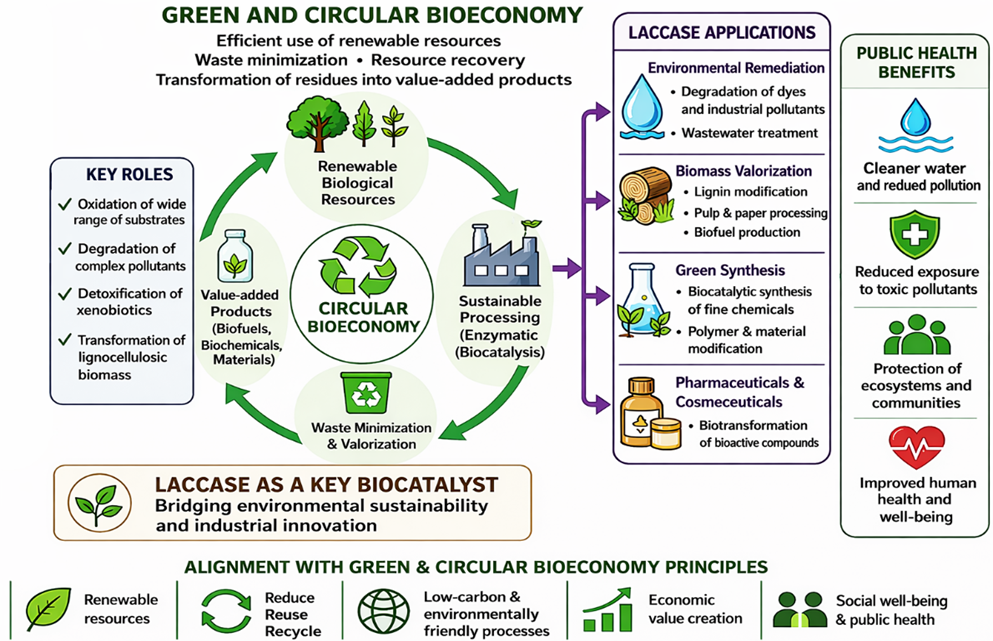
In recent years, growing environmental concerns and the global transition toward sustainable development have intensified interest in laccase-based processes. The concept of a green and circular bioeconomy emphasizes the efficient use of renewable biological resources, waste minimization, and the transformation of residues into value-added products. Within this framework, laccases play a crucial role by enabling the biodegradation of industrial pollutants, detoxification of xenobiotics, and valorization of lignocellulosic biomass [55, 56]. Emerging research also highlights the integration of laccase with mediators and engineered systems (including immobilization on bio-derived supports) to enhance catalytic efficiency, expand substrate range, and improve stability for industrial-scale applications, further strengthening their relevance [57, 58]. As a result, laccases are positioned as key biocatalysts bridging environmental sustainability and industrial innovation, aligning closely with the principles of a green and circular bioeconomy [56, 59]. The integrated outcomes demonstrate significant public health benefits, including improved water quality, reduced exposure to toxic pollutants, ecosystem protection, and enhanced human well-being. Overall, Figure 3 illustrates the alignment of laccase-driven processes with key sustainability principles, including low-carbon technologies, circular resource use, economic value creation, and societal health advancement.  Some of the important applications of laccase have been discussed in next sections.


Figure 3. Role of laccase in advancing a green and circular bioeconomy and its public health implications.

4. LACCASE IN ENVIRONMENTAL BIOREMEDIATION

Laccases have emerged as one of the most promising biocatalysts for environmental remediation owing to their ability to oxidize a wide range of organic and inorganic compounds under mild and eco-friendly conditions. Multiple herbicides and pesticides have been used recently to maximize agricultural yields. However, the downside is the detrimental effect these chemicals have on environmental health. Air, water, and soil resources are their primary targets. Among the numerous pesticides and herbicides, chemicals such as benzene, dichlorodiphenyltrichloroethane, polychlorinated biphenyls, and polycyclic aromatic compounds are the most carcinogenic and mutagenic, causing damage to both environmental and human health [2, 3, 60]. Luckily, laccases are highly effective in inactivating these pollutants. Population growth, bad global management, and inadequate disposal practices have significantly impacted potable water resources in recent decades. Emerging pollutants, such as chemical substances with unrecognized mechanisms that disrupt ecosystems, are significant environmental pollutants [61,  62].  Endocrine disruptors (EDs) constitute another significant subclass of pharmaceutical and personal care products [63]. Specifically, EDs are chemicals that can imitate the hormonal activity in various organisms, causing disruptions in the endocrine system, most notably linked with sexual abnormalities, cancers, and chronic diseases. Laccase-based systems can degrade these chemical disruptors [60,  63].

4.1. Oxidation of phenols 

Phenols are one of the primary substrates for laccase. The reaction involves the oxidation of phenols to quinones, and phenol is oxidized to benzoquinone. Industrial wastewater often contains toxic phenolic compounds (phenol and cresols) from chemical manufacturing, petroleum refining, and the pharmaceutical industry [64]. 

Laccases are now considered versatile biocatalysts in a variety of industrial and environmental applications, especially for the oxidation of phenols, thanks to this environmentally friendly mechanism. Laccases efficiently break down phenolic pollutants in bioremediation, including bisphenol A, chlorophenols, azo dyes, polycyclic aromatic hydrocarbons (PAHs) like anthracene and benzo[α]pyrene, pesticides like atrazine and lindane, xenobiotics like 2,4-dinitrophenol, and polychlorinated biphenyls (PCBs) [65]. Their broad substrate specificity, low toxicity, minimal sludge formation, and high efficiency in mineralizing recalcitrant compounds into CO2 and H2O make them an affordable, mediator-enhanced alternative to conventional chemical treatments [66]. 

4.2. Oxidation of catechols

Catechols are dihydroxy derivatives of benzene that laccase oxidizes to o-quinones. Catechol is oxidized to o-benzoquinone. Catechols and related phenolic compounds in wine contribute to haze formation and affect the color and taste during storage [67]. They catalyze the oxidation of catechols using molecular oxygen as the terminal electron acceptor, producing water as the only by-product. This environmentally benign catalytic mechanism enables radical-mediated reactions that support polymerization, oxidative coupling, and degradation processes under mild conditions [68]. Consequently, laccases have been widely explored in green chemistry and organic synthesis, where they facilitate reactions such as oxidative coupling of phenolic polymers, synthesis of biaryl compounds from substituted catechols, and polymerization of catechols into polycatechols. These reactions are also utilized in the production of synthetic urushi-type polymers and functional phenolic materials [69]. Although high concentrations of organic solvents may destabilize enzymes and mediators can increase costs, laccase-based processes offer advantages including broad substrate specificity, use of atmospheric oxygen, and reduced reliance on toxic oxidants [70].  In addition, laccase-mediated catechol oxidation also has significant applications in pharmaceutical and biomedical synthesis, enabling the production of compounds such as β-lactam–catechol hybrids, 

sulfonamide–catechol derivatives, phenoxazinones, and antioxidant molecules derived from catechin oxidation. These reactions can achieve yields of up to 98% under mild and environmentally friendly conditions [71]. In environmental biotechnology, laccases contribute to the removal of emerging contaminants including triclosan and bisphenol A (BPA) from wastewater. Laccase–mediator systems (LMS) can significantly enhance oxidation efficiency, achieving removal rates approaching 100% within hours under optimal conditions [72, 73]. In cosmetic and textile applications, catechol oxidation contributes to the formation of natural pigments and antimicrobial coatings [74]. Furthermore, laccases have been investigated as cathode catalysts in enzymatic fuel cells, where catechol oxidation supports bioenergy generation under mild conditions [75]. 


4.3. Oxidation of aromatic amines

Laccase can oxidize aromatic amines to form cationic radicals or polymerized products. Through radical formation, laccases facilitate diverse transformations of aromatic amines, including azo coupling reactions, polymerization of anilines to polyanilines, oxidation of ortho-aminophenols to phenoxazinones, and synthesis of heterocyclic compounds such as benzimidazoles and quinoxalines in green organic synthesis [76]. In addition, laccase-mediated oxidation of aromatic amines also has significant applications in pharmaceutical synthesis, where it is used to generate hydroxyindole derivatives, antimicrobial phenoxazinones, actinocin-like antibiotic hybrids, antitumor compounds, and sulfonamide–amine conjugates. These reactions can achieve yields of up to 95% under environmentally friendly conditions, although challenges related to mediator dependency, byproduct toxicity, and enzyme cost remain [66, 71]. 

In environmental remediation, laccases are effective in degrading aromatic amine dyes, azo dyes, aniline derivatives, and polycyclic aromatic amines, contributing to the removal of hazardous contaminants from wastewater and soil. Removal efficiencies can reach up to 90%, although the use of mediators may increase operational costs and potential toxicity [77]. Recent developments include laccase–mediator systems (LMS), nanomaterial immobilization, oxidase combinations, and microbial consortia, which can improve degradation efficiency by 20–50% and enhance applicability in real effluent treatment [78]. Laccase-based technologies have also been explored in biosensing applications for detecting aromatic amines in food and water through electrochemical oxidation [79].

Moreover, in cosmetic formulations, laccases catalyze the oxidation of aromatic amines such as tyramine and p-phenylenediamine, producing melanin-like pigments used in hair coloring with reduced irritation and improved sustainability [80]. In materials science, laccase-catalyzed oxidation of aniline derivatives enables the biodegradable synthesis of conductive polymers, protein cross-linking, and surface functionalization, offering potential applications in bioelectronics, adhesives, and smart textiles [81]. Furthermore, laccases have been investigated in biofuel and bioelectrochemical systems, where oxidation of amine-containing intermediates contributes to improved lignocellulose processing and catalytic reactions in fuel cell cathodes [82].  Overall, Table 4 summarize the ability of laccases for the potential in green synthesis, environmental remediation, biosensing, and advanced materials development with some challenges for broader industrial implementation.


Table 4. Laccase-mediated oxidation of phenols, catechols, and aromatic amines: applications, advantages, and challenges.

Substrate Class

Purpose / 

Sector

Key ExamplesAdvantages

Challenges /

 Disadvantages

 Mediators 

and Substrates

Ref.
PhenolsBioremediation

Degradation of bisphenol A, chlorophenols, 

azo dyes, PAHs, pesticides, xenobiotics

Eco-friendly, O₂ as acceptor, broad range, reduces toxicityToxic byproducts, enzyme inactivation, high costABTS, HBT, phenols, dyes[83]
 

Pulp and

 Paper

Biopulping, biobleaching, delignification, recycled 

paper bleaching

Reduces energy,

improves brightness

Low stability, mediator need, potential fiber strength loss

HBT, lignin, 

N-hydroxy compounds

[84]
 TextileDye decolorization (e.g., Reactive Black 5, indigo, Malachite green), denim finishingLow water/energy use, minimal fabric damage, effective on diverse dyesDye-dependent efficiency, mediator depletionABTS, synthetic dyes, indigo, ionic liquids

[85,

86]

 FoodJuice, wine stabilization, phenolic reduction, dough cross-linkingEnhances shelf life, texture, quality, reduces additives, energy-savingLow stability in matrices, turbidity, variable browning controlPolyphenols, ferulic acid[87]
 Organic SynthesisPolymerization (lignin/phenolic resins, biopolymers)Green/mild conditions, novel compounds, biodegradable catalyst

Scalability limited 

by stability/cost

Catechol, guaiacol, lignin monomers[88]
 PharmaceuticalsAntibiotic degradation (tetracycline), drug synthesis/removal High efficiency, eco-friendly, precursor synthesisByproduct toxicity, mediator/stability issuesABTS, antibiotics, HBT[89]
 CosmeticsHair dyeing, skin lightening

Safer/less irritant, 

natural pigments

Stability/mediator needsCatechol, hydroquinone[90]
 Biosensors

Detection of phenolics 

in food, water 

High sensitivity, real-time, low cost, eco-friendlyInterference, short lifetime, denaturationABTS, phenols, catechols, nanomaterials[89]
 BiofuelCathode in enzymatic fuel cells, lignocellulose pretreatmentClean energy, neutral pH, yield increaseLow power, denaturation, costO₂, phenolics, TEMPO[91]
CatecholsOrganic SynthesisPolycatechol polymerization, biaryls, phenolic polymers, artificial urushiGreen (air/O₂, water byproduct), mild, broad specificityCo-solvent unfolding, mediator toxicity/costABTS, HBT, TEMPO, (acetosyringone), catechols

[92,

93]

 PharmaceuticalsAntimicrobial hybrids, phenoxazinones, antioxidants, drug derivativesHigh yields (≤98%), eco-friendly, enhanced bioactivityMediator dependency, cytotoxicity, cost

HBT, ABTS, natural mediators, catechols, 

β-lactams

[94]
 BioremediationBPA, triclosan, phenolic pollutantsHigh efficiency (≤100%), neutral pH/room tempInstability, cost, mediator dependencyHBT, ABTS, humic acid, BPA/triclosan[95]
 BiosensorsPolycatechol films, functionalization (lignin/wood)Sensitivity/reproducibility, sustainable materials

Interference,  

lifetime issues

ABTS, catechols, nanomaterials[96]
 Cosmetics

Phenoxazinones, antimicrobial surfaces, 

fuel cell cathodes

Safer pigments, antimicrobial, mild energy production

Stability,

mediator needs

Catechol, hydroquinone, TEMPO[97]
Aromatic AminesOrganic SynthesisPhenoxazinones, heterocycles (benzimidazoles), azo compounds, polyanilinesGreen (O₂/water), mild/selective, no toxic reagentsLow potential (mediator need), solvent denaturation

ABTS, HBT, TEMPO, anilines,

aminophenol

[98]
 PharmaceuticalsAntimicrobial,antitumor compoundsHigh yields (≤95%), eco-friendly, anti-resistant activityMediator/byproduct issues, cost

HBT, ABTS, amines,

sulfonamides

[99]
 BioremediationAzo/aniline dyes, amine xenobioticsEfficient (≤90%), ambient, low toxicityInactivation, mediator costABTS, HBT, humic, anilines[100]
 

Biosensors,

Cosmetics

Amine detection, hair dyeing/melanin pigmentsSensitivity/selectivity, safer/natural colorsInterference, stabilityABTS, amines (dopamine, p-phenylenediamine)[101]
 

Materials,

Energy

Conducting polymers, surface modification, 

fuel cells

Enhanced properties, clean energyScalability, recycling, low densityAniline, TEMPO/ABTS[102]


5. BIOCATALYTIC APPLICATION OF LACCASE

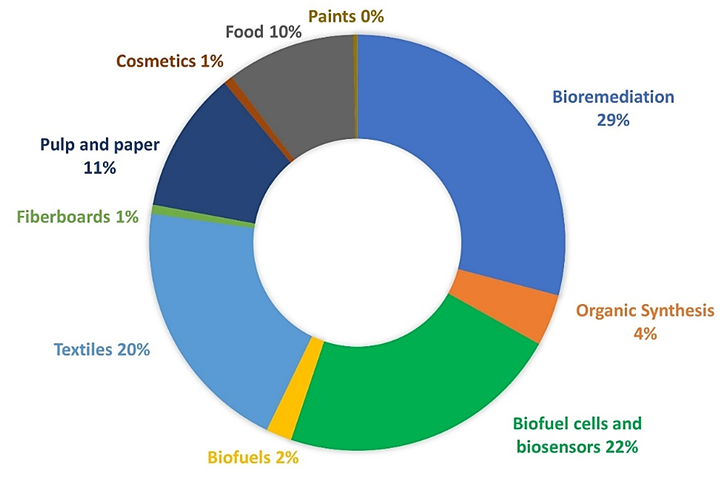
Laccases are excellent biocatalysts with various applications, including nanobiotechnological production, biodegradation, and bioremediation in the food industry, as well as in the woodworking, textile, cosmetics, and pulp/paper industries [103]. As quantitatively summarized in Figure 4, the industrial footprint of laccase is rapidly expanding. Notably, the combined biofuel cell and biosensor sector accounts for 22% of applications, reflecting the growing integration of laccase into nanobiotechnology and renewable energy. Conversely, the minimal allocation to 'Paints' (0%) suggests a shift away from traditional coating applications towards more high-value, eco-innovation sectors.

Figure 4. Global distribution of laccase applications across various industries (estimated market share). The data, synthesized from recent industrial reports and literature (2023–2026), indicates that bioremediation (29%) and bio-electrochemical systems (22%) currently dominate the application landscape. This distribution underscores the enzyme's critical role in sustainable technologies, particularly in wastewater treatment and energy generation, while highlighting the growing demand in the textile (20%) and food (10%) sectors [5, 103].

Industrially, laccase often enhanced by mediators including natural phenolics like syringaldehyde facilitates eco-friendly processes such as pulp delignification and biobleaching, lignocellulosic pretreatment for enhanced biofuel yields, bioremediation of effluents and soils, and valorization of lignin into high-value aromatics. Ongoing advancements in enzyme engineering, immobilization, and mediator optimization continue to address limitations in stability, cost, and scalability, positioning laccase as a cornerstone of green biotechnology. Table 5 provides a concise overview of key biocatalytic and industrial applications of laccase enzymes, with a special focus on uses involving syringaldazine (SGZ) as a direct substrate or mediator, alongside broader environmental and industrial sectors.


Table 5. Biocatalytic and industrial applications of laccase with advantages and challenges.

CategoryPurpose / SectorKey ExamplesAdvantagesChallenges / DisadvantagesMediators / Substrates Ref.
Biocatalytic (Syringaldazine-Focused)Laccase Activity AssaySpectrophotometric quantification in fungal cultures (e.g., Trametes, Pleurotus)Highly specific, sensitive, quantitative for purified enzymesPoor solubility, precipitation of products, unstable expensive, pH 5.5–7.0 limited

Syringaldazine (SGZ; direct substrate), phosphate/

acetate buffers

 [104, 105]
 Antioxidant Activity AssaySGZ radical generation vs. DPPH, reduction by antioxidants (e.g., ascorbic acid, Trolox)

Enzymatic 

fresh radical generation, 

eco-friendly

Limited to phenolics, enzyme activity control needed, interference in complex samplesSGZ radicals, reducing antioxidants [106]
 NAD(P)H Oxidation / Cofactor RegenerationCoupled system for NAD(P)⁺ recycling in biocatalysisEfficient recycling, sustainable (O₂ acceptor), active at pH ~8.0 for some laccasespH/solvent inhibition, variable specificity, scalability issuesSGZ, NAD(P)H [107]
 Detection in Complex MatricesActivity in soils, litter, wastewater; hydrophilic SGZ analoguesFunctional in natural samples, stable analogues reduce underestimation

Original SGZ insoluble interference/

radical side reactions

Modified SGZ, ABTS (comparison) [108]
Industrial / Environmental

Pulp and

 Paper

Delignification/biobleaching of kraft pulp, hardwood/softwoodReduces chlorine/energy use, improves brightness/strength, eco-friendly

Low thermostability/

pH tolerance, mediator need for non-phenolics, slow rates

HBT, ABTS, violuric acid, lignin (guaiacyl/syringyl) [109]
 Biofuel ProductionPretreatment of lignocellulose (wheat straw, corn stover, bagasse) for ethanol/biogasEnhances saccharification (up to 50%), mild/selective lignin removal, no cellulose lossIncomplete degradation, high enzyme/mediator costs, toxicityNatural (acetosyringone, syringaldehyde), synthetic (HBT, TEMPO), lignin subunits [110]
 BioremediationEffluent/soil detoxification (pulp wastewater, lignocellulosic pollutants)Reduces COD/BOD, detoxifies, promotes microbial growthMatrix inhibition (metals/phenols), variable efficiencyABTS, HBT, humic acids, lignin phenolics [111]
 Value-Added CompoundsLignin depolymerization to vanillin, syringic acid, phenolicsSustainable bio-aromatics from waste, mild processLow yields, product inhibition, separation issuesHBT (recalcitrant bonds), kraft/organosolv lignin [112]
 Soil/Compost EnhancementLignin breakdown in residues, humus formationImproves fertility, accelerates composting, reduces accumulationSlow rates, environmental dependencyNatural lignin (straw/wood chips) [113]
 

Textile and

 Dye

Lignin/dye degradation in effluents, biofinishingEco-friendly decolorization, fiber property enhancementVariable efficiency, potential damageABTS, lignin co-substrate [114]
 Pharma/CosmeticsBioactive phenolics/antioxidants from ligninNatural sourcing, anti-inflammatory potentialPurity/low yield issuesFerulic acid, lignin fractions [115]

Some specific industrial applications of laccase have been discussed in the following section.

5.1. In food industries

Laccases are essential in food industry applications such as baking, juice processing, and wastewater treatment [116]. For instance, haze formation during long-term beer storage can make it insoluble, reducing its shelf life and stability. To reverse this effect, laccases are added to eliminate residual oxygen, extending the beer's lifespan [117]. Similarly, during wine making, repeated pressing operations yield polyphenols and phenolic compounds that may lead to color darkening or flavor shifts. Laccases are used in immobilized forms to remove certain phenols and polyphenols [118]. Laccases can also cross-link biopolymers, increasing bread volume, texture, freshness, and flavor. Therefore, it applied to dough stabilize gluten networks during baking [119]. Studies show that laccase from the white-rot fungus Trametes hirsuta increases dough's maximum resistance, decreasing extensibility in flour and dough. In addition, fruit juices contain phenolic compounds and their oxidative derivatives, which impact flavor and color. So, fruit juices are stabilized by removing phenols and enzyme-substrate complexes through the use of laccases, thereby increasing color stability [119]. 

5.2. In textile industries

Laccases are used in the textile industry for denim finishing, indigo bleaching, and the decolorization of dyes such as Reactive Black 5, Malachite green, Reactive Orange 96 etc [120]. Around 1–20% of dyes produced globally are lost during textile industry dyeing processes. Regrettably, these carcinogenic waste textile productions are colored wastewater, which is organic in nature, severely disturbed ecosystems. Various physicochemical and biological treatments are available for removing dyes, but biological processes are more cost-effective and do not produce undesirable by-products [121]. Industrial dyes with tailored structures are stable against light, water, or chemical degradation. Given the limitations of traditional dye-removal processes, employing laccases has proven a viable means of eliminating dyes. Laccases, with the addition of specific stabilizers, are efficiently utilized to decolorize waste materials and also find application in bleaching various cloths and fabrics, one of the major textile applications being the bleaching of denim [122]. Laccases also contribute to color development by oxidizing aromatic compounds to produce dyes such as phenoxazines and azo dyes [123]. Laccases also remove odors during textile production and are therefore of immense value in washing detergents. Therefore, recent research is focused on laccase cocktails and condition tailoring. Biodegradable coatings and ongoing decolorization procedures are examples of emerging applications [124, 125].

5.3. In cosmetics and pharmaceuticals 

The cosmetic industry has recently seen an increase in the number of laccase-related registered patents. Hydrogen peroxide (H2O2) and phenylenediamines, which are highly toxic and carcinogenic compounds, are prevalent in hair-dyeing products and may cause allergic reactions [124]. Consequently, laccases can detoxify these toxic chemicals based on their oxidizing capacity [120]. They are utilized as major biocatalysts in the production of hair dyes, deodorants, perfumes, soaps, and toothpastes [2, 3]. Laccases are also used as hair bleaches in combination with hydroxystilbenes. Notably, laccase-based hair dyes are less irritating and simpler to apply. Protein-based skin whitening creams, newly formulated for dermatological use, contain some laccases [126].

In the pharmaceutical industry, laccases (multi-copper oxidoreductases) serve dual roles as green biocatalysts: they facilitate the synthesis of bioactive anticancer phenolics and degrade antibiotics, such as tetracycline, as well as contaminants such as diclofenac, ibuprofen, carbamazepine, bisphenol A, and triclosan [127-129]. Although byproduct toxicity, mediator dependence, and expenses are problems, they provide effective, environmentally friendly remediation and drug precursors.


Laccases also efficiently degrade a range of emerging contaminants commonly found in pharmaceutical wastewater and hospital effluents. For antibiotics like tetracycline (and related tetracyclines such as oxytetracycline or chlortetracycline), laccase-mediator systems (LMS) achieve high removal efficiencies often >90-100% within hours via ring opening, demethylation, deamination, or hydroxylation pathways, frequently resulting in complete loss of antimicrobial activity in the transformation products [130, 131]. Non-phenolic or recalcitrant pharmaceuticals, including diclofenac (an NSAID), ibuprofen, carbamazepine (an antiepileptic), bisphenol A (an endocrine disruptor), and triclosan (an antimicrobial), are similarly transformed [132, 133]. Phenolic compounds such as bisphenol A and triclosan undergo direct oxidation by laccase, whereas mediators (e.g., ABTS, syringaldehyde, or natural polyphenols) extend the substrate range to non-phenolics like carbamazepine, diclofenac, and ibuprofen by generating diffusible radicals, leading to reported removals frequently exceeding 80–100% under optimized conditions in batch or immobilized systems [134].


5.4. Laccase in woodworking and paper industries

Laccases bind lignin-derived material to create medium-density fine tiles, an affordable alternative to natural wood [135]. In addition, sawdust or wood shavings use to make noncircular (glueless, synthetic) woods, which is a potential application [136]. Therefore, it can help limit deforestation, a pressing environmental challenge, given that forests serve as the planet's lungs. So, laccases can accelerate the drying of painted surfaces, which is an odor-free, faster, and less toxic option for property owners [2, 3].

Paper manufacturing involves numerous processes, ranging from pulp manufacture and bleaching to the final production of paper. Paper is manufactured from wood-based and non-wood-based pulps, with eucalyptus as the primary source for commercial production due to its low-cost cultivation and high yield potential. Laccases play a significant role in the biological bleaching of kraft pulp from eucalyptus [137]. In recent era, laccases have transformed the paper industry and the pulping process in improving pulp brightness. It also facilitates the removal of lipophilic compounds from wood- and non-wood-based paper pulps, enhance the physicochemical and mechanical properties of pulp [138]. Another possible application is laccase mediator systems (LMS) confer energy-saving and high-yield pulp characteristics [139]. Lignocellulosic biomass is the primary raw material base for the pulp and paper industry. This energy-intensive sector focuses on separating lignin and the cellulosic fraction from biomass. Laccases have proved to be an incredibly potent reagent for delignification and detoxification of the pretreated lignocellulosic substrates, and subsequent saccharification and fermentation processes are significantly improved [140]. In addition, they detoxify paper and pulp mill effluents [141]. Such versatile applications have made laccase one of the most powerful enzymes used in both present and future trends in industrial papermaking.

5.6. Laccase in green synthesis in nanobiotechnology

Laccases are used as biodegradable catalysts in organic synthesis to polymerize lignin monomers, create phenolic resins, polyphenols, biopolymers include nanobiotechnology, adhesives, and biobased plastics [142]. However, fabricating biofuel cells as pollution-free energy generators is a prominent nanobiotechnological innovation [143]. Entrapment of laccases on the cathode of miniature biofuel cells offers a more environmentally friendly power source [144]. However, fabricating biofuel cells as pollution-free energy generators is a prominent nanobiotechnological innovation [143]. Entrapment of laccases on the cathode of miniature biofuel cells offers a more environmentally friendly power source [144].  It is reported that laccases have been used to detect various molecules and compounds, such as phenols, oxygen, opioids (including morphine and codeine), and plant flavonoids, as well as for biosensor technology [145]. Laccase-based biosensors identify phenolic indices in juices, olive oil, honey, and beer; catechols in tea; polyphenols in wine; and lignins and phenols in water. They 4ffer low cost, miniaturization, reproducibility, real-time monitoring, and high sensitivity, IoT integration and wearable sensors [146]. In addition, laccases are utilized as cathode catalysts in microbial and enzymatic biofuel cells to produce bioethanol at neutral pH with high selectivity, increase biogas yields by 25–46% [147]. These applications are significant in enhancing human health and well-being [148].

6. CHALLENGES OF APPLICATIONS OF LACCASE IN INDUSTRIAL SECTORS

Despite significant advances in laccase production, translating laboratory success into industrial-scale applications remains challenging due to cost, stability, and process robustness. To support non-specialist stakeholders like process engineers, investors, and sustainability officers, Table 6 outline a strategic roadmap based on current evidence and emerging solutions.


Table 6. Key industrial barriers in laccase applications and actionable solutions.

BarrierEvidence from LiteratureRecommended ActionRef.
High production cost of recombinant strainsP. pastoris and A. oryzae show high yields (Table 9), but fermentation media and purification are expensive.Shift to low-cost substrates: Use agro-industrial waste (olive mill waste, wheat bran) in solid-state fermentation (SSF). Studies report yields of 50,000–300,000 U/kg using SSF with minimal input cost[149, 150]
Enzyme instability under industrial conditionsLaccases degrades at high temperature, extreme pH, or in the presence of inhibitors (heavy metals, halides)Adopt enzyme immobilization: Use magnetic nanoparticles, CNTs, or biopolymers to immobilize laccase. This enhances thermal/pH stability, allows reuse (>5 cycles), and enables easy recovery from effluents[151, 152]
High cost and toxicity of synthetic mediatorsHBT increases decolorization efficiency but is expensive and potentially toxic.Transition to natural mediators: Use non-toxic, low-cost alternatives like syringaldehyde, acetosyringone, or vanillin. Though slightly less efficient (60–90% vs. HBT), they are sustainable and safe for food/textile effluents[153, 154]
Inhibitor sensitivity in real wastewaterHeavy metals (Hg²⁺, Pb²⁺), chelators (EDTA), and high salinity reduce activity.Implement pre-treatment or enzyme engineering: For complex effluents, combine laccase with a pre-treatment step (pH adjustment, metal precipitation). Alternatively, engineer inhibitor-resistant mutants (directed evolution) or use robust fungal laccases (e.g., Trametes spp.).[155]


7. FUTURE TRENDS OF APPLICATIONS OF LACCASE

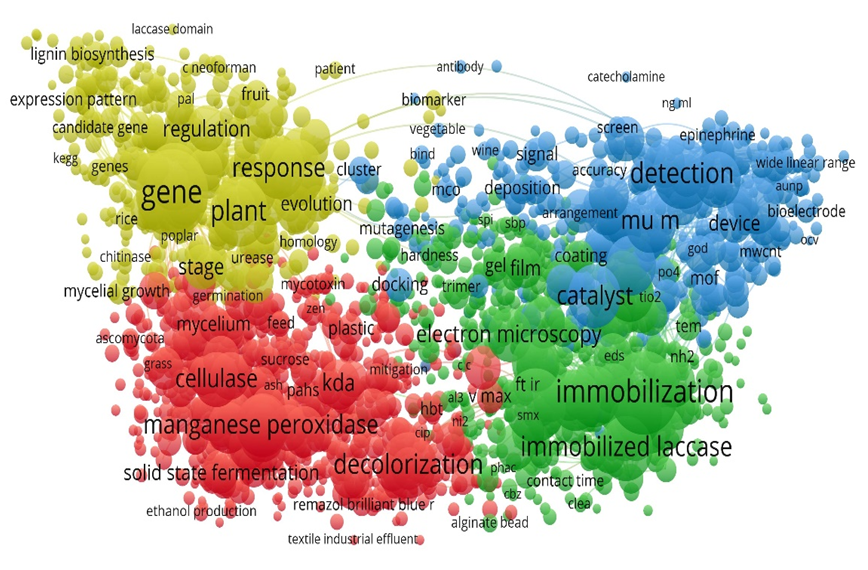
As visualized in Figure 5, the keyword analysis highlights a clear transition in the field: recent research (indicated by yellow nodes) is increasingly converging on industrial scalability and novel materials, moving beyond traditional descriptive studies on enzyme kinetics.

Figure 5. Science-mapping visualization of laccase research trends (2018–2025) generated using VOSviewer (Version 1.6.20). The network illustrates keyword co-occurrence, where node size corresponds to citation frequency. Color gradients indicate temporal shifts, with red nodes representing foundational studies (2018–2020) and yellow nodes highlighting emerging frontiers (2023–2025). The analysis reveals a significant shift from basic enzymology ('gene', 'expression') towards applied biotechnology, particularly in 'nanobiotechnology', 'waste-derived production', and 'laccase-like nanozymes.

The transition of laccase technology from laboratory to industrial application continues to evolve, driven by advancements in enzyme engineering, immobilization strategies, and integration with sustainable processes [156, 157]. Recent developments emphasize metagenomic discovery of extremophilic laccases for enhanced stability under harsh conditions (e.g., high temperature, pH, or salinity) [158, 159], molecular modifications via directed evolution and site-directed mutagenesis to improve redox potential and inhibitor resistance [157], and hybridization with advanced nanomaterials (e.g., metal-organic frameworks (MOFs), graphene, carbon nanotubes) for superior reusability, electron transfer, and catalytic efficiency in wastewater treatment [160, 161]. These innovations address longstanding barriers such as cost, operational stability, and scalability, positioning laccase as a key player in circular bioeconomy initiatives, including lignin valorization for bio-aromatics, biofuel pretreatment, and micropollutant removal (e.g., pharmaceuticals, dyes) [162, 163]. Emerging applications extend to sustainable food packaging (biodegradable active films) [164], biosensors, and pharmaceutical degradation, while market projections indicate steady growth fueled by green chemistry demands, with the global laccase market expected to expand significantly through 2030–2034 at CAGRs of approximately 4–7% [165, 166]. However, successful scale-up remains contingent on co-development with process-specific conditions, robust piloting, and economic modeling to mitigate risks in complex matrices. These trends underscore laccase's potential as a cornerstone of eco-friendly industrial biotechnology, with phased implementation and interdisciplinary collaboration critical for widespread adoption.

In addition, future research should focus on microcredential based education for facilizing engineering microbial strains using tools like CRISPR to boost laccase yields in bacteria, yeasts, and fungi, enabling cost-effective production for bioremediation, biofuels and wellbeing of public health [167]. Developing low-toxicity natural mediators and Cu-based nanozymes could expand applications by improving stability across wider pH and temperature ranges, reducing environmental risks. Standardizing kinetic assays for optimal pH (3–9) and temperature (25–90°C) with substrates like ABTS is essential to resolve discrepancies and enhance enzyme tailoring for industrial use. Utilizing agro-industrial wastes, such as olive mill wastewater or grape marc, in solid-state fermentation promotes sustainable, low-cost laccase production through circular economy models.

8. CONCLUSIONS

Laccases exhibit diverse characteristics and are produced by a wide range of bacteria, fungi, and plants. The catalytic activities of laccases differ among microorganisms. The catalytic activity of laccase has found multiple applications, including the paper and pulp industries, industrial wastewater treatment, enzymatic bleaching, and bioremediation. Typically, parameters such as environmental conditions, culture conditions, and bioreactor dimensions must be optimized to maximize laccase production. Recently, emphasis has been given to expressing heterologous laccases to achieve large-scale production and enhance their catalytic activity and stability. Given the significant role of laccases in modern applications, it is not surprising that the enzyme remains a fascinating subject of global research, with further studies needed to fully explore its intricate biological character. These analytical insights and recent developments position laccase as a truly sustainable industrial biocatalyst in the 2025–2030 horizon.

ACKNOWLEDGEMENTS

The authors gratefully acknowledge the contributions of all co-authors to the conceptualization, drafting, and revising of this study. Thankful to the authority of the university for supporting the conducting of this study. The authors also note that limited AI-assisted tools (about 9%) were used primarily for language editing and creating diagrams, in accordance with the journal’s editorial policy.

FUNDING SOURCES

There were no funding sources available for this study.

CONFLICTS OF INTEREST

The authors declare no competing interests.

ETHICS STATEMENT

This study did not involve any experiments on human participants or animals.

References

  1. Rochefort D, Kouisni L, Gendron K. Physical immobilization of laccase on an electrode by means of poly(ethyleneimine) microcapsules. J Electroanal Chem. 2008;617(1):53-63. doi: 10.1016/j.jelechem.2008.01.028 
  2. Khatami SH, Vakili O, Khatami M, et al. Laccase: various types and applications. Biotechnol Appl Biochem. 2022;69(6):2658-2672. doi:10.1002/bab.2310 
  3. Paraschiv G, Paraschiv D, Voicu M, et al. Laccases versatile enzymes used to reduce environmental pollution. Energies. 2022; 15:1835. doi:10.3390/en15051835 
  4. Dwivedi UN, Singh P, Pandey VP, Kumar A. Structure–function relationship among bacterial, fungal and plant laccases. J Mol Catal B Enzym. 2011;68(2):117-128. doi: 10.1016/j.molcatb.2010.11.002 
  5. Fernández-Fernández M, Sanromán MÁ, Moldes D. Recent developments and applications of immobilized laccase. Biotechnol Adv. 2013;31(8):1808-1825. doi: 10.1016/j.biotechadv.2013.02.013 
  6. Sharma A, Jain KK, Jain A, et al. Bifunctional in vivo role of laccase exploited in multiple biotechnological applications. Appl Microbiol Biotechnol. 2018;102(24):10327-10343. doi:10.1007/s00253-018-9404-3 
  7. Riva S. Laccases: blue enzymes for green chemistry. Trends Biotechnol. 2006;24(5):219-226. doi: 10.1016/j.tibtech.2006.03.006 
  8. Dubé E, Shareck F, Hurtubise Y, et al. Decolourization of recalcitrant dyes with a laccase from Streptomyces coelicolor under alkaline conditions. J Ind Microbiol Biotechnol. 2008;35(10):1123-1129. doi:10.1007/s10295-008-0393-7 
  9. Ali M, Sreekrishnan TR. Aquatic toxicity from pulp and paper mill effluents: a review. Adv Environ Res. 2001;5(2):175-196. doi:10.1016/S1093-0191(00)00064-7 
  10. Husain Q. Potential applications of the oxidoreductive enzymes in the decolorization and detoxification of textile and other synthetic dyes from polluted water: a review. Crit Rev Biotechnol. 2006;26(4):201-221. doi:10.1080/07388550600969936 
  11. Antošová Z, Sychrová H. Yeast hosts for the production of recombinant laccases: a review. Mol Biotechnol. 2016;58(2):93-116. doi:10.1007/s12033-015-9903-3 
  12. Jaiswal N, Pandey VP, Dwivedi UN. Purification of a thermostable alkaline laccase from papaya (Carica papaya) using affinity chromatography. Int J Biol Macromol. 2015; 72:326-332. doi: 10.1016/j.ijbiomac.2014.08.034 
  13.  Solomon EI, Augustine AJ, Yoon J. O₂ reduction to H₂O by multicopper oxidases. Dalton Trans. 2008;(30):3921-3932. doi:10.1039/B800743G     
  14.  He F, Machemer-Noonan K, Golfier P, et al. The in vivo impact of MsLAC1, a Miscanthus laccase isoform, on lignification and lignin composition contrasts with its in vitro substrate preference. BMC Plant Biol. 2019; 19:552. doi:10.1186/s12870-019-2137-8 
  15.  Shraddha, Shekher R, Sehgal S, et al. Laccase: microbial sources, production, purification, and potential biotechnological applications. Enzyme Res. 2011; 2011:217861. doi:10.4061/2011/217861 
  16. Singh D, Gupta N. Microbial laccase: a robust enzyme and its industrial applications. Biologia. 2020;75(8):1183-1193. doi:10.2478/s11756-020-00492-1 
  17.  Kilaru S, Hoegger PJ, Kües U. The laccase multi-gene family in Coprinopsis cinerea has seventeen members that divide into two subfamilies. Curr Genet. 2006;50(1):45-60. doi:10.1007/s00294-006-0074-2 
  18.  Desai SS, Nityanand C. Microbial laccases and their applications: a review. Asian J Biotechnol. 2011;3(2):98-124. doi:10.3923/ajbkr.2011.98.124  
  19. Ramayanam BM. Laccase enzyme production from Trametes versicolor: a sustainable approach to treat raw dye bath textile effluent. Essential Chem. 2025;2(1):2527045. doi: 10.1016/j.esschem.2025.2527045 
  20. Oztat K, Yavuz AA, Işçen CF. Optimization studies on laccase activity of Proteus mirabilis isolated from textile sludge. Braz J Microbiol. 2024;55(2):1231-1241. doi:10.1007/s42770-023-01074-4 
  21. Renfeld ZV, Kolesnikova SA, et al. Unusual oligomeric laccase-like oxidases from Curvularia geniculata. Microorganisms. 2023; 11:2698. doi:10.3390/microorganisms11112698 
  22. Cheng Z, Liu Y, Wang X, et al. Cu–Fe₃O₄ nanozyme reverses age-impaired alveolar healing via ROS/RNS scavenging. Langmuir. 2025;41(49):33293-33305. doi: 10.1021/acs.langmuir.5c03021 
  23. Sharma Y, Tiwari A, Singh R, et al. Nanotechnology as a vital science in accelerating biofuel production: boon or bane. Biofuels Bioprod Biorefin. 2023;17(3):616-663. doi:10.1002/bbb.2445 
  24. Akter R, Rahman MS, Islam MS, et al. Hydrobiology of saline agriculture ecosystem in southwest Bangladesh. Hydrobiology. 2023; 2:162-180. doi:10.3390/hydrobiology2010011 
  25. Mate DM, García-Burgos C, García-Ruiz E, et al. Functional expression of a blood tolerant laccase in Pichia pastoris. BMC Biotechnol. 2013; 13:38. doi:10.1186/1472-6750-13-38 
  26. Asaduzzaman D. Cost-benefit analysis of fire safety systems in ready-made garment industry: a case study. Ann Burns Fire Disasters. 2022;35(2):137-142. 
  27. Fang X, Liu Y, Zhang H, et al. Enhanced laccase production by Aspergillus oryzae from lignocellulosic wastes through solid-state fermentation: cytotoxicity, anticancer activity, and 4-chlorophenol degradation. Int J Biol Macromol. 2025; 316:144450. doi: 10.1016/j.ijbiomac.2025.144450
  28. Hasan S, Rahman MM, Islam MA, et al. Laccase production from local biomass using solid-state fermentation. Fermentation. 2023; 9:179. doi:10.3390/fermentation9020179
  29. Chaoua S, El Modafar C, Moumni M, et al. Yellow laccase produced by Trametes versicolor K1 on tomato waste: a comparative study with blue laccase. J Biotechnol. 2023; 361:99-109. doi: 10.1016/j.jbiotec.2022.12.010
  30. Contreras E, Téllez-Jurado A, Rodríguez A, et al. Agro-industrial wastes revalorization as feedstock for lignin-modifying enzyme production by white-rot fungi. Prep Biochem Biotechnol. 2023;53(5):488-499. doi:10.1080/10826068.2022.2098123
  31. França ED, Silva LF, Souza AF, et al. Valorization of spent coffee grounds as substrate for fungal laccase production and biosorbents for dye decolorization. Fermentation. 2025; 11:396. doi:10.3390/fermentation11070396
  32. Rezaei S, Shahverdi AR, Faramarzi MA. Isolation, purification, and characterization of a polyextremotolerant laccase from Aquisalibacillus elongatus. Bioresour Technol. 2017; 230:67-75. doi: 10.1016/j.biortech.2017.01.041
  33. Gupta C, Chauhan SB. Engineered fungal cell factories: pioneering sustainable protein and peptide production. In: Gupta A, ed. Prospects of Fungal Biotechnologies for Livestock. Vol 2. Springer Nature Switzerland; 2026:233-262. 
  34. Pathania AS, Thakur N, Sharma M, et al. Biopharmaceuticals from filamentous fungi. In: Singh RS, Bhari R, eds. Fungal Biotechnology. Academic Press; 2025:253-290. 
  35. Teo HL, Lee CK, Ooi CW, et al. Statistically assisted optimisation for simultaneous enzyme production. Biomass Convers Biorefin. 2025;15(3):3827-3843. doi:10.1007/s13399-023-04025-0
  36. Mohanty S, Behera SS, Ray RC, et al. Designing a scalable expression platform for recombinant enzyme production in E. coli. Process Biochem. 2025; 150:21-32. doi: 10.1016/j.procbio.2024.11.005
  37. de Marco A. Recent advances in recombinant production of soluble proteins in E. coli. Microb Cell Fact. 2025; 24:21. doi:10.1186/s12934-025-02234-5
  38. Mejia-Otalvaro F, López-Gallego F, Rocha-Martin J, et al. Sustainable natural product glycosylation. ChemSusChem. 2025;18(20): e202501094. doi:10.1002/cssc.202501094
  39. Akher SA, Rahman MS, Islam MA, et al. Harnessing transient expression systems in Nicotiana benthamiana. Int J Mol Sci. 2025; 26:5510. doi:10.3390/ijms26125510
  40. Ghose S, Banerjee S, Chakraborty R, et al. Pesticides and allergens. In: Pharmacognosy and Phytochemistry. 2025:315-334. 
  41. Ahmad T, Zhang Y, Li X, et al. Processing and bioprocessing developments in alternative proteins. Food Bioprocess Technol. 2025;19(2):54. doi:10.1007/s11947-024-03521-7
  42. Guo Y, Li X, Zhang H, et al. Development and challenges of forest food resources. Foods. 2025; 14:3503. doi:10.3390/foods14203503
  43. Günal-Köroğlu D, Demirhan E, Yilmaz MT, et al. Allergenicity of alternative proteins. J Agric Food Chem. 2025;73(13):7522-7546. 
  44. Taheri-Anganeh M, et al. In silico analysis of signal peptides for recombinant enzyme secretion. Mol Biol Res Commun. 2019;8(1):17-26. 
  45. Taheri-Anganeh M, et al. LytU-SH3b fusion protein as enzybiotic against MRSA. Mol Biol Res Commun. 2019;8(4):151-158. 
  46. Taheri-Anganeh M, et al. In silico evaluation of PLAC1-fliC vaccine. Iran Biomed J. 2020;24(3):173-182. doi:10.29252/ibj.24.3.173
  47. Khatami SH, et al. Signal peptide analysis for recombinant antigen B8/1. Mol Biol Res Commun. 2020;9(1):1-10. 
  48. Taheri-Anganeh M, et al. PRAME+FliCΔD2D3 vaccine design. Iran J Med Sci. 2021;46(1):52-60. (No DOI)
  49. Dubé E, Shareck F, Hurtubise Y, et al. Cloning and characterization of laccase from Streptomyces coelicolor. Appl Microbiol Biotechnol. 2008;79(4):597-603. doi:10.1007/s00253-008-1454-5
  50. Bertrand B, Martínez-Morales F, Trejo-Hernández MR. Upgrading laccase production: strategies and challenges. Biotechnol Prog. 2017;33(4):1015-1034. doi:10.1002/btpr.2473
  51. Nevalainen KMH, Te’o VSJ, Bergquist PL. Heterologous protein expression in filamentous fungi. Trends Biotechnol. 2005;23(9):468-474. doi: 10.1016/j.tibtech.2005.06.002
  52. Gellissen G, Hollenberg CP. Yeast expression systems: a comparative review. Gene. 1997;190(1):87-97. doi:10.1016/S0378-1119(97)00010-7
  53. Dittmer NT, Gorman MJ, Kanost MR. Characterization of laccase-2 in Manduca sexta. Insect Biochem Mol Biol. 2009;39(9):596-606. doi: 10.1016/j.ibmb.2009.06.004
  54. Li L, Steffens JC. Overexpression of polyphenol oxidase enhances disease resistance. Planta. 2002;215(2):239-247. doi:10.1007/s00425-002-0750-2
  55. Haq I, Saleem A, Chaudhary R, et al. Role of microbial laccases in biomass valorization. Front Bioeng Biotechnol. 2024; 12:1441075. doi:10.3389/fbioe.2024.1441075
  56. Tiwari A, Singh R, Kumar V, et al. Laccase in biorefinery of lignocellulosic biomass. Appl Sci. 2023;13(8):4673. doi:10.3390/app13084673
  57. Serbent MP, et al. Immobilizing laccase for organochlorine removal. Biotechnol Bioeng. 2024. doi:10.1002/bit.28591
  58. Li Z, Wang X, Zhang Y, et al. Co-immobilization of laccase enhances pollutant degradation. Molecules. 2024;29(2):307. doi:10.3390/molecules29020307
  59. Sharma N, Basera P. Green chemistry strategies in biomass valorization. Front Chem. 2025; 13:1724324. doi:10.3389/fchem.2025.1724324
  60. Rajendran S, Kalairaj A, Senthilvelan T. Enzymatic decolorization of azo dyes using laccase. Biomass Convers Biorefin. 2025;15(9):13079-13101. doi:10.1007/s13399-023-04321-9
  61. Mithu, M.M.U., Shormela, S.A., Abdullah, A.T.M. et al. Exploring Heavy Metal Bioaccumulation in Vegetables: Unraveling Environmental Pollutants' Impact on Agricultural Produce and Human Health. Biol Trace Elem Res (2025). https://doi.org/10.1007/s12011-025-04871-z
  62. Jacob J, Krishnani K. Dehalococcoides-assisted reductive dechlorination. Curr Sci. 2024;127(10). (No DOI)
  63. Santos MS, et al. Removal of endocrine disruptors using photocatalysis. Int J Environ Res Public Health. 2025;22(3). 
  64. Salehi S, et al. Biocatalysts for oxidation of phenolic pollutants. Sustainability. 2021;13. doi:10.3390/su13158620
  65. Nunes CS, Malmlöf K. Enzymatic decontamination of pollutants. In: Enzymes in Human and Animal Nutrition. Elsevier; 2018:331-359.
  66. Padhye LP, Tezel U. Fate of environmental pollutants. Water Environ Res. 2014;86(10):1714-1773. doi:10.2175/106143014X13975035526133
  67. Lund MN. Reactions of plant polyphenols in foods. Trends Food Sci Technol. 2021; 112:241-251. doi: 10.1016/j.tifs.2021.03.039
  68. Pillar-Little EA, Zhou R, Guzman MI. Heterogeneous oxidation of catechol. J Phys Chem A. 2015;119(41):10349-10359. doi: 10.1021/acs.jpca.5b07977
  69. Uyama H, Kobayashi S. Enzymatic synthesis of polymers from polyphenols. In: Kobayashi S, Ritter H, Kaplan D, eds. Enzyme-Catalyzed Synthesis of Polymers. Springer; 2006:51-67. doi:10.1007/3-540-26497-2_3
  70. Akkineni S, Rawas-Qalaji M, Kouzi SA, Chbib C, Uddin MN. Exploring the Biological Activities of Ionic Liquids and Their Potential to Develop Novel Vaccine Adjuvants. Vaccines. 2025; 13(4):365. https://doi.org/10.3390/vaccines13040365
  71. Pinar O, Rodríguez-Couto S. Secondary metabolites from white-rot fungi. Front Chem. 2024;12. 
  72. Ren D, et al. Immobilized laccase: environmental applications. Biotechnol Genet Eng Rev. 2020;36(2):81-131. doi:10.1080/02648725.2020.1780141
  73. Wan Mohtar WHM, et al. Role of fungi in sustainability. Bioengineered. 2022; 13:14903-14935. doi:10.1080/21655979.2022.2091234
  74. Gholami-Shabani M, Shams-Ghahfarokhi M, Razzaghi-Abyaneh M. Natural product synthesis by fungi. In: Yadav AN, et al., eds. Recent Advancement in White Biotechnology Through Fungi. Springer; 2019:195-228. 
  75. Ferdeș M, et al. Microorganisms and enzymes in biogas pretreatment. Sustainability. 2020;12. doi:10.3390/su12177205
  76. Sousa AC, Martins LO, Robalo MP. Laccases: versatile biocatalysts for the synthesis of heterocyclic cores. Molecules. 2021; 26:3719. doi:10.3390/molecules26123719
  77. Nunes CS, Malmlöf K. Enzymatic decontamination of antimicrobials, phenols, heavy metals, pesticides, polycyclic aromatic hydrocarbons, dyes, and animal waste. In: Nunes CS, Kumar V, eds. Enzymes in Human and Animal Nutrition. Academic Press; 2018:331-359.
  78. Gupta S, Verma A, Sharma P, et al. Microbial laccases: structure, function, and applications. In: Microbial Enzymes. 2025:665-695. (DOI to verify)
  79. Della Pelle F, Compagnone D. Nanomaterial-based sensing of phenolic compounds and antioxidant capacity in food. Sensors. 2018; 18:462. doi:10.3390/s18020462
  80. Singh Arora D, Sharma RK. Ligninolytic fungal laccases and their biotechnological applications. Appl Biochem Biotechnol. 2010;160(6):1760-1788. doi:10.1007/s12010-009-8676-y
  81. Reis GCL, Silva TM, Carvalho AM, et al. Biologically active amines in edible mushrooms. J Food Compos Anal. 2020; 86:103375. doi: 10.1016/j.jfca.2019.103375
  82. Gangwar R, Singh P, Yadav S, et al. Bioactive proteins from Pleurotus ostreatus: antibiofilm potential. Front Microbiol. 2024;15. 
  83. Al-Maqdi KA, Alshammari AA, et al. Enzyme-mediated wastewater remediation: recent advances. Nanomaterials. 2021; 11:3124. doi:10.3390/nano11113124
  84. Strong PJ, Claus H. Laccase: past and future in bioremediation. Crit Rev Environ Sci Technol. 2011;41(4):373-434. doi:10.1080/10643380902945706
  85. Benali J, Ben Atitallah I, Ghariani B, Mechichi T, Hadrich B, Zouari-Mechichi H. Optimized decolorization of azo dyes using laccase mediator system. 3 Biotech. 2024;14(3):93. doi:10.1007/s13205-024-03937-4
  86. Egbewale SO, Adekunle AA, et al. ABTS-mediated fluoranthene biotransformation by fungal laccases. Int Biodeterior Biodegradation. 2025; 196:105946. doi: 10.1016/j.ibiod.2025.105946
  87. Viswanath B, Rajesh B, Janardhan A, et al. Fungal laccases in bioremediation. Enzyme Res. 2014; 2014:163242. doi:10.1155/2014/163242
  88. Rafeeq H, Afsheen N, Rafique S, Arshad A, Intisar M, Hussain A, Bilal M, Iqbal HMN. Genetically engineered microorganisms for environmental remediation. Chemosphere. 2023; 310:136751. doi: 10.1016/j.chemosphere.2022.136751
  89. Eira A, Gonçalves MBS, Fongang YSF, Domingues C, Jarak I, Mascarenhas-Melo F, Figueiras A. Ganoderma lucidum: therapeutic and nanotechnological advances. Pharmaceutics. 2025;17(4):422. doi:10.3390/pharmaceutics17040422
  90. Giraldo LDR, Baez PVX, Forero CZJ, Arango WM. Exopolysaccharide production in agaricomycetes. Bio Protoc. 2023;13(19): e4841. doi:10.21769/BioProtoc.4841
  91. Sekan AS, Myronycheva OS, Karlsson O, Gryganskyi AP, Blume Y. Green potential of Pleurotus spp. in biotechnology. PeerJ. 2019 Mar 29;7: e6664. doi: 10.7717/peerj.6664.
  92. Wawoczny A, Przypis M, Gillner D. Enzymatic valorization of lignocellulosic biomass. Sustainability. 2023;15(24):16726. doi:10.3390/su152416726
  93. Nawafleh N, Al-Oqla FM. Applications of bio-composites in electronics. Polymers. 2024;9(12):3601-3620. 
  94. Kumar V, Pallavi P, Sen SK, Raut S. Textile dye degradation by white rot fungi. Water Environ Res. 2024;96(1): e10959. doi:10.1002/wer.10959
  95. Aghaee M, et al. Laccase-MOF composites for pollutant remediation. Bioresour Technol. 2024. doi: 10.1016/j.biortech.2024.131072
  96. Das J, Badak M, Singh RK. White rot fungi-derived laccase innovations. In: Gupta J, Verma A, eds. Microbiology-2.0. Springer; 2024:285-306.
  97. Wang H, et al. Laccase immobilization for emerging pollutant degradation. J Environ Manage. 2024. doi: 10.1016/j.jenvman.2024.120984
  98. Akram F, Ashraf S, Haq IU, Shah FI, Aqeel A. Industrial applications of bacterial laccases. Appl Biochem Biotechnol. 2022;194(5):2336-2356. doi:10.1007/s12010-021-03781-9
  99. T E, et al. Free and immobilized biocatalysts in paper effluent treatment. Sep Purif Rev. 2024. doi:10.1080/15422119.2024.2382313
  100. Wijerathna P, Chen X, Qiu R, et al. Natural products from mangrove fungi. Molecules. 2026;31(2):261. doi:10.3390/molecules31020261
  101. Garkani Nejad F, Tajik S, Beitollahi H, Sheikhshoaie I. Magnetic nanomaterial-based biosensors. Talanta. 2021; 228:122075. doi: 10.1016/j.talanta.2020.122075
  102. Ogunsile A, Songnaka N, Sawatdee S, et al. Anti-MRSA peptides from Brevibacillus. PeerJ. 2023;11:e16143. doi:10.7717/peerj.16143
  103. Mate DM, Alcalde M. Laccase as a multi-purpose biocatalyst. Microb Biotechnol. 2017;10(6):1457-1467. doi:10.1111/1751-7915.12724
  104. Hossain, M.S., Alam, S., Mwamburi, L., Rahman, A., Binduraz, B., Roy, S., Sultana, M.T., Ghosh, S., & Haque, M.A. (2025). Decoding genome, phylogenetic insights, plant-beneficial genetic repertoire, and in silico pesticide biodegradation pathways of endophytic strain serratia sp hstu abk35. J. Biosci. Public Health, 2(1), 30-54. https://doi.org/10.5455/JBPH.2025.20
  105. Sharma K, Singh R, Yadav P, et al. Bacterial laccase-mediated dye biodegradation. Biologia. 2025;80(8):2145-2157. 
  106. Beltrán-Flores E, et al. Effect of oxygen on white-rot fungi degradation. J Water Process Eng. 2023; 55:104105. doi: 10.1016/j.jwpe.2023.104105
  107. Singha S, Panda T. Optimization of laccase fermentation. Prep Biochem Biotechnol. 2015;45(4):307-335. doi:10.1080/10826068.2014.923453
  108. Enaime G, et al. Olive mill wastes: from waste to resources. Environ Sci Pollut Res. 2024;31(14):20853-20880. 
  109. Rodríguez-Couto S. Fungal laccase applications. In: Yadav AN, et al., eds. White Biotechnology Through Fungi. Springer; 2019:429-457.
  110. Cheute VM, et al. Biotransformation by Pycnoporus spp. Biomass. 2024; 4:313-328. doi:10.3390/biomass4020015
  111. Baghel S, Sahariah BP, Anandkumar J. Bioremediation of pulp industry effluent. In: Shah M, Banerjee A, eds. Industrial Effluent Treatment. Springer; 2020:261-278.
  112. Khatua S. Myco-enzymes for xenobiotic degradation. In: Roy S, Mandal V, eds. Plant-Microbe Interaction. Springer; 2025:549-584.
  113. Borah M, et al. Microbial strategies for agricultural waste remediation. In: Shah MP, ed. Waste Water Treatment Research. Elsevier; 2025:297-321.
  114. Knežević A, Stajić M, et al. Bioactivity of Trametes species. PLoS One. 2018;13(8):e0203064. doi: 10.1371/journal.pone.0203064
  115. Vasile C, Baican M. Lignins as renewable biopolymers. Polymers. 2023;15. doi:10.3390/polym15153177
  116. Mayolo-Deloisa K, González-González M, Rito-Palomares M. Laccases in food industry. Front Bioeng Biotechnol. 2020;8. doi:10.3389/fbioe.2020.000XX (verify)
  117. Nunes CS, Kunamneni A. Laccases: properties and applications. In: Nunes CS, Kumar V, eds. Enzymes in Human and Animal Nutrition. Academic Press; 2018:133-161.
  118. Servili M, Selvaggini R, et al. Removal of phenols from grape must. Am J Enol Vitic. 2000;51(4):357-361. 
  119. Minussi RC, Pastore GM, Durán N. Applications of laccase in food industry. Trends Food Sci Technol. 2002;13(6):205-216. doi:10.1016/S0924-2244(02)00125-3
  120. Sugano Y, Yoshida T. DyP-type peroxidases: advances and perspectives. Int J Mol Sci. 2021; 22:5556. doi:10.3390/ijms22115556 
  121. Konstantinou IK, Albanis TA. TiO₂-assisted photocatalytic degradation of azo dyes in aqueous solution: kinetic and mechanistic investigations: a review. Appl Catal B Environ. 2004;49(1):1-14.
  122. Catucci G, et al. Biochemical features of dye-decolorizing peroxidases: current impact on lignin degradation. Biotechnol Appl Biochem. 2020;67(5):751-759.
  123. Sousa AC, Martins LO, Robalo MP. Laccase-catalysed homocoupling of primary aromatic amines towards the biosynthesis of dyes. Adv Synth Catal. 2013;355(14-15):2908-2917.
  124. Zerva A, et al. Applications of microbial laccases: patent review of the past decade (2009–2019). Catalysts. 2019; 9:1023. doi:10.3390/catal9121023
  125. Egbewale SO, Kumar A, Mokoena MP, et al. Purification, characterization and three-dimensional structure prediction of multicopper oxidase laccases from Trichoderma lixii FLU1 and Talaromyces pinophilus FLU12. Sci Rep. 2024; 14:13371. doi:10.1038/s41598-024-63959-z
  126. Iqbal M, Farooq S, Hussain A. Advances in protein- and lipid-based materials for cosmetic applications. In: Bandara N, Ullah A, eds. Functional Materials from Lipids and Proteins. Royal Society of Chemistry; 2024.
  127. Cardullo N, Muccilli V, Tringali C. Laccase-mediated synthesis of bioactive natural products and their analogues. ChemBioChem. 2022;23(12): e202100700. doi:10.1002/cbic.202100700
  128. Hahn V, Davids T, Lalk M, et al. Potential of the enzyme laccase for the synthesis and derivatization of antimicrobial compounds. World J Microbiol Biotechnol. 2023;39(4):98. doi:10.1007/s11274-023-03539-x
  129. Singh AK, Bilal M, Iqbal HMN, et al. Laccase-based biocatalytic systems application in sustainable degradation of pharmaceutically active contaminants. J Hazard Mater. 2025; 484:136384. doi: 10.1016/j.jhazmat.2024.136384
  130. Xu L, Wang Y, Zhang Z, et al. Degradation of tetracycline by laccase–mediator system using tea polyphenols as mediator. Catalysts. 2025;15(10):952. doi:10.3390/catal15100952
  131. Chmelová D, Ondrejovič M. Laccases as effective tools in the removal of pharmaceutical micropollutants from wastewater. Life (Basel). 2024;14(2):230. doi:10.3390/life14020230
  132. Ouyang B, Zhang X, Guo Y, et al. Efficient removal of sulfonamides and tetracyclines by a laccase from Lysinibacillus fusiformisJ Environ Chem Eng. 2022;10(6):108682. doi: 10.1016/j.jece.2022.108682
  133. Zdarta J, Jankowska K, Bachosz K, et al. Degradation of tetracyclines and sulfonamides by immobilized laccase and the effect on residual antibiotic activity. J Chem Technol Biotechnol. 2018;93(12):3415-3424. doi:10.1002/jctb.5697
  134. Hahn V, Sayer C, et al. Enhanced laccase-mediated transformation of diclofenac and other non-phenolic pollutants. Environ Sci Pollut Res. 2018;25(36):36088-36099.
  135. Roy MK, Roy S, Binduraz B, Afrin L, Haque MA. Pesticide-associated health and environmental risks and the role of biofertilizers in sustainable agriculture. J. Biosci. Public Health. 2025;1(3):16-27. doi:10.5455/JBPH.2025.12
  136. Pezzella C, Guarino L, Piscitelli A. How to enjoy laccases. Cell Mol Life Sci. 2015;72(5):923-940.
  137. Oudia A, Queiroz J, Simões R. The influence of operating parameters on the biodelignification of Eucalyptus globulus kraft pulps in a laccase–violuric acid system. Appl Biochem Biotechnol. 2008;149(1):23-32.
  138. Gutiérrez A, del Río JC, Rencoret J, Ibarra D, Martínez AT. Main lipophilic extractives in different paper pulp types can be removed using the laccase-mediator system. Appl Microbiol Biotechnol. 2006;72(4):845-851. doi:10.1007/s00253-006-0346-1
  139. Rodríguez-Couto S, Toca Herrera JL. Industrial and biotechnological applications of laccases: a review. Biotechnol Adv. 2006;24(5):500-513.
  140. Fillat Ú, et al. Laccases as a potential tool for the efficient conversion of lignocellulosic biomass: a review. Fermentation. 2017; 3:17. doi:10.3390/fermentation3020017
  141. Justino C, et al. Evaluation of tertiary treatment by fungi, enzymatic and photo-Fenton oxidation on the removal of phenols from a kraft pulp mill effluent: a comparative study. Biodegradation. 2011;22(2):267-274.
  142. Sobti R, Sharma A, Soni SK. Applications of biotechnological techniques in mitigating environmental concerns. In: Genomic, Proteomics, and Biotechnology. CRC Press; 2022:249-312.
  143. MacVittie K, Conlon T, Katz E. A wireless transmission system powered by an enzyme biofuel cell implanted in an orange. Bioelectrochemistry. 2015; 106:28-33.
  144. Chen T, et al. A miniature biofuel cell. J Am Chem Soc. 2001;123(35):8630-8631.
  145. Ellouze M, Sayadi S. White-rot fungi and their enzymes as a biotechnological tool for xenobiotic bioremediation. In: Management of Hazardous Wastes. 2016:103-120.
  146. Asad S, et al. Biotechnological potential of Ganoderma species: current progress and future prospects. N Z J Bot. 2025;63(5):2410-2469.
  147. El-Ramady H, et al. Green biotechnology of oyster mushroom (Pleurotus ostreatus L.): a sustainable strategy for myco-remediation and bio-fermentation. Sustainability. 2022; 14:3667. doi:10.3390/su14063667
  148. Zhang Y, et al. Application of eukaryotic and prokaryotic laccases in biosensor and biofuel cells: recent advances and electrochemical aspects. Appl Microbiol Biotechnol. 2018;102(24):10409-10423.
  149. Asaduzzaman M, et al. Degradation kinetics of lycopene from red amaranth and preparation of winter melon jelly using this lycopene and comparison with commercial jelly. Heliyon. 2024;10(10).
  150. Begum K, et al. Potential allelopathic candidates for land use and possible sustainable weed management in South Asian ecosystem. Sustainability. 2019; 11:2649. doi:10.3390/su11092649
  151. Gan J, et al. Upgrading recalcitrant lignocellulosic biomass hydrolysis by immobilized cellulolytic enzyme-based nanobiocatalytic systems: a review. Biomass Convers Biorefin. 2024;14(4):4485-4509.
  152. Aggarwal S, Ikram S. A comprehensive review on bio-mimicked multimolecular frameworks and supramolecules as scaffolds for enzyme immobilization. Biotechnol Bioeng. 2023;120(2):352-398.
  153. Rath S, et al. Transforming lignin into value-added products: perspectives on lignin chemistry, lignin-based biocomposites, and pathways for augmenting ligninolytic enzyme production. Adv Compos Hybrid Mater. 2024;7(1):27.
  154. Bera K, Bhattacharya D, Mukhopadhyay M. Leveraging bacterial laccases to facilitate the decomposition of xenobiotic compounds: a review. 3 Biotech. 2024;14(12):317.
  155. Raheja Y, et al. Advancement in lignocellulolytic enzyme production: tailored strategies to overcome challenges in biomass hydrolysis. Syst Microbiol Biomanuf. 2025;5(3):948-968.
  156. Jiao M, Chen W, Jiang X, Huang D, Jiang Y. Recent advances in laccase production: challenges and future perspectives. J Microbiol Biotechnol. 2025;35: e240521. doi:10.4014/jmb.2410.10021
  157. Ndochinwa O, Wang Y, et al. Current status and emerging frontiers in enzyme engineering: an industrial perspective. Heliyon. 2024;10(11): e32673. doi: 10.1016/j.heliyon. 2024.e32673
  158. Farhan M, Hasani IW, Khafaga DSR, Ragab WM, Ahmed Kazi RN, Aatif M, Muteeb G, Fahim YA. Enzymes as Catalysts in Industrial Biocatalysis: Advances in Engineering, Applications, and Sustainable Integration. Catalysts. 2025; 15(9):891. https://doi.org/10.3390/catal15090891
  159. Jahanshahi DA, Tiyoula FN, Kavousi K, Beh-Afarin SR, Ariaeenejad S. Sustainable solutions through metagenomic laccases: industrial and environmental perspectives. Environ Technol Innov. 2025; 40:104568. doi: 10.1016/j.eti.2025.104568
  160. Haq IU, Saleem A, Chaudhary R, et al. Role of microbial laccases in valorization of lignocellulosic biomass to bioethanol. Front Bioeng Biotechnol. 2024; 12:1441075. doi:10.3389/fbioe.2024.1441075
  161. Ma Y, et al. Advances in immobilized enzyme systems for enhanced microplastic biodegradation: a review. Int J Biol Macromol. 2025;328(Pt 2):147656. doi: 10.1016/j.ijbiomac.2025.147656
  162. Adamian YA, et al. Recent developments in the immobilization of laccase on carbonaceous supports for environmental applications—a critical review. Front Bioeng Biotechnol. 2021; 9:778239. doi:10.3389/fbioe.2021.778239
  163. Amponsah L, Labus K, et al. Advancing enzyme immobilization for wastewater remediation: laccase-MOF-hydrogel biocatalyst system for sustainable dye decolorization. Mater Today Sustain. 2025. doi: 10.1016/j.mtsust.2025.100492
  164. Chen X, Mosier NS, et al. Valorization of lignin from aqueous-based lignocellulosic biorefineries. Trends Biotechnol. 2024;42(11):1348-1362. doi: 10.1016/j.tibtech.2024.07.001
  165. Lin C-X, Hsu H-H, Chang Y-H, Chen S-H, Lin S-B, Lou S-N, Chen H-H. Expanding the Applicability of an Innovative Laccase TTI in Intelligent Packaging by Adding an Enzyme Inhibitor to Change Its Coloration Kinetics. Polymers. 2021; 13(21):3646. https://doi.org/10.3390/polym13213646
  166. Global Laccase Market Analysis and Forecast 2026-2032. Published Jan 02, 2026. Accessed; April 12, 2026.  https://www.marketresearch.com/APO-Research-Inc-v4273/Global-Laccase-Forecast-43749055
  167. Islam MS. The Emerging Role of Microcredentials in Higher Education: Advancing Public Health Learning and Beyond. J Biosci Public Health. 2025;1(1):43-54. doi: 10.5455/JBPH.2025.04