J. Biosci. Public Health. 2026; 2(4)

First Author
https://orcid.org/ 0009-0005-9589-9454
Affiliations:
Department of Community Medicine, Delta State University, Abraka, Nigeria
Coauthor
https://orcid.org/ 0000-0002-0665-6524
Affiliations:
Department of Community Medicine, Delta State University, Abraka, Nigeria
Coauthor
https://orcid.org/ 0000-0001-7622-3882
Affiliations:
Department of Community Medicine, Delta State University, Abraka, Nigeria
Coauthor
https://orcid.org/ 0009-0004-1464-0399
Affiliations:
Department of Community Medicine, Delta State University, Abraka, Nigeria
Corresponding Author *
https://orcid.org/ 0009-0007-2133-9563
Affiliations:
Department of Community Medicine, Delta State University, Abraka, Nigeria
Corresponding Author *
https://orcid.org/ 0009-0007-2133-9563
Affiliations:
Department of Community Medicine, Delta State University, Abraka, Nigeria
Background: Sexually transmitted infections (STIs) constitute a significant public health challenge globally, with substantial medical, social, and economic consequences, particularly among pregnant women. Infections such as human immunodeficiency virus (HIV), hepatitis B virus (HBV), hepatitis C virus (HCV), and syphilis may result in significant maternal and neonatal morbidity and mortality. Objective: This study aimed to determine the seroprevalence of HIV, HBV, HCV, and syphilis, as well as their co-infections, among pregnant women attending the antenatal clinic at Delta State University Teaching Hospital (DELSUTH), Oghara. Methods: A five-year retrospective study was conducted among pregnant women who attended the antenatal clinic at DELSUTH, Oghara, from January 2017 to December 2021. Data on socio-demographic characteristics and screening test results were extracted from antenatal records using a pretested data extraction form. Data were analyzed using SPSS version 20.0. Chi-square test was used to assess associations between categorical variables, while binary logistic regression was used to identify predictors of HIV infection. Statistical significance was set at p < .05. Results: A total of 515 antenatal records were reviewed. The seroprevalence of HIV, HBV, HCV, and syphilis was 9.5% (29/305), 3.0% (9/305), 1.3% (4/305), and 0.0% (0/305), respectively. HIV/HCV co-infection occurred in 0.3% (1/305) of the women. Educational level and occupation were identified as significant determinants of HIV infection. Conclusion: HIV had the highest seroprevalence among the infections investigated, while syphilis was not detected among the women studied. The findings highlight the importance of continued routine screening for STIs during antenatal care and targeted interventions for pregnant women at increased risk of HIV infection.
Sexually transmitted infections (STIs) like Human immunodeficiency virus (HIV), hepatitis B virus (HBV), hepatitis C virus (HCV) and syphilis are remain a persistent public health concern, especially in pregnancy. When left untreated they can cause stillbirth, restricted fetal growth, preterm birth, low birth weight, congenital infection and higher rates of newborn illness and death [1, 2]. Beyond the medical effects, these infections often bring stigma and, in some communities, are linked to gender-based violence.
HIV continues to claim the lives of many women of reproductive age in sub-Saharan Africa and is still responsible for a large share of new infections in children through mother-to-child transmission (MTCT) [3, 4]. HBV and HCV are frequently silent during pregnancy yet can damage the mother’s liver and be passed to the baby [5, 6]. Syphilis, although both preventable and treatable, still accounts for a worrying number of stillbirths and neonatal deaths in low- and middle-income countries [7, 8]. However, Nigeria carries a substantial share of this burden. National adult HIV prevalence has moved up and down over the years. It was last estimated between 1.4% and 2.9%, with higher figures often seen among pregnant women in certain regions [9, 3]. HBV is considered highly endemic, while HCV occurs at moderate but clinically important levels [10]. Antenatal clinics have long been used to track these infections because the pattern among pregnant women usually mirrors what is happening in the wider population [11].
A number of studies across Nigeria have already reported the seroprevalence of HIV, HBV, HCV and syphilis in pregnant women [12–15]. Yet reliable statistics from Oghara and the surrounding communities in Ethiope West Local Government Area of Delta State are still hard to find. Local data matter because infection rates can differ sharply from one place to another depending on geography, living conditions and access to care.
This study therefore provides local data on the seroprevalence of HIV, HBV, HCV, syphilis and their co-infections among pregnant women receiving antenatal care at DELSUTH, Oghara. The findings of this study may provide useful evidence for policymakers and healthcare providers in planning targeted interventions, strengthening screening and prevention programs. Moreover, may enhance improving of antenatal care services, particularly for women from rural communities.
2.1. Area of the study
The research was carried out at Delta State University Teaching Hospital (DELSUTH), Oghara, Delta State, South-South Nigeria. Oghara is the headquarters of Ethiope West Local Government Area and serves as a referral center for the three senatorial districts of Delta State and neighboring Edo State. DELSUTH provides antenatal care services from Monday to Thursday. Delta State University Teaching Hospital is a tertiary health facility. DELSUTH serves as a referral center for the three Senatorial districts of Delta State and the neighboring Edo state.
2.2. Study design
This is a descriptive cross-sectional study using a retrospective record review. Therefore, all the data of pregnant women that attended the antenatal clinic of DELSUTH, Oghara from January 2017 to December 2021 were collated and used for the research.
2.3. Study population and eligibility criteria
All the pregnant women that attended antenatal clinic within the study period were included in the study.
Records of pregnant women who attended the antenatal clinic at DELSUTH, Oghara, between January 2017 and December 2021 were eligible for inclusion. Records were included if they contained complete sociodemographic information and documented screening results for HIV, HBV, HCV and syphilis. Records with incomplete sociodemographic information or missing screening results for any of the four infections were excluded. Of the 515 antenatal records reviewed, 305 met the inclusion criteria and were included in the final analysis, while 210 records were excluded because they contained incomplete information and/or missing HIV, HBV, HCV or syphilis screening results.
2.4. Sample size and sampling procedure
All available antenatal records within the study period were reviewed. No separate prospective sample-size calculation was performed because this was a retrospective record-review study in which all available records meeting the predefined eligibility criteria were considered for inclusion. As illustrates in Figure 1, of the 515 records reviewed, 305 contained complete information and the required screening results and were therefore included in the final analysis.
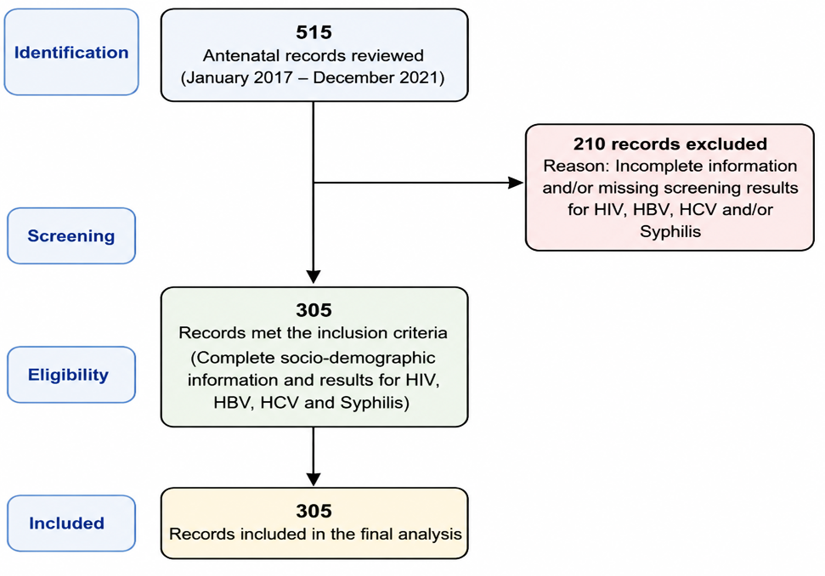
Figure 1. Flow diagram showing selection of antenatal records included in this study.
2.5. Data collection
Pretested data extraction form was used to obtain information on the social demographic status and screening for HIV, HBV, HCV and Syphilis from the antenatal records A total of 515 pregnant women attended the antenatal clinic within that set data collection period. All the antenatal data were completely reviewed and 305 of them met the inclusion criteria while 210 of them did not. The data were extracted by two trained and experienced Data Officers who double-checked each other’s work to ensure collation of reliable, high quality and accurate data
2.6. Laboratory investigations
2.6.1. HIV serology
HIV screening was carried out using the HIV rapid test kits and following the national HIV serial testing algorithm (Federal Ministry of Health, 2010). Samples were first tested using Determine HIV kit (Alere Medical Co.,Japan), Only reactive samples were further tested using Uni-gold HIV kit (Trinity Biotech Plc, Ireland) and those found reactive, were presumptively considered as positive. If the second line test using Unigold is nonreactive, then a tie breaker using Stat pak HIV kit (CHEMBIO, USA) was used. Sensitivity of test kits used is 100% with specificity of 99.5%. All test kits procedures were done according to their respective manufacturer’s instructions.
2.6.2. Syphilis serology
Test for treponema antibodies was done using rapid immunochromatographic VDRL (ACON Laboratories, Inc., San Diego, CA, USA) test kits.
2.6.3. Hepatitis B and C serology
Hepatitis B virus infection was detected using the commercially available rapid test strip which is a qualitative lateral flow immunoassay kit for testing HBsAg in serum and plasma (Acon Laboratories, Inc., San Diego, USA). Similarly, Hepatitis C virus infection was tested using the commercially available rapid test strip which is a qualitative, membrane (coated with recombinant HCV antigen on the test line region of the strip) based immunoassay for the detection of HCV antibodies in serum and plasma (Acon Laboratories, Inc., San Diego, USA).
2.7. Data analysis
Data collected was analyzed using SPSS version 20 (Chicago II USA), chi-square analysis was used for discrete variables and P<0.05 was considered statistically significant. Binary logistic analysis was used to determine the predators of HIV infections. The result was presented in tables.
Variables that showed evidence of association with HIV infection in the bivariate analysis were considered for inclusion in the binary logistic regression model. Adjusted odds ratios (aORs), 95% confidence intervals (CIs) and corresponding P-values were reported, with P<0.05 considered statistically significant.
3.1. Socio-demographic characteristics of cases of participants
Table 1 presenting socio-demographic characterises of the participants. The mean age of participants in was 31.5 ± 4.9, with 100 (32.8%) being in the age range of 20 – 29 years, 185 (60.7%) 30 – 39 years, and 20 (6.5%) 40 years and above. Eighteen (5.9%) were single, 284 (93.1%) married, 3 (1.0%) divorced. Nearly all, 298 (97.7%) were Christians, 7 (2.3%) were Muslims. Two (0.7%) had no level of education, 6 (2.0%) primary, 80 (26.2%) secondary and 217 (71.1%) had obtained tertiary level of education. With regards to occupation, 21 (6.9%) were Artisans, 51 (16.7%) Business/Traders, 182 (59.7%) civil servant, 51 (16.7%) unemployed. Fifteen (4.9%) of the participants were of Edo ethnic group, 5 (1.6%) Hausa, 40 (13.1%) Ibo, 13 (4.3%) Ijaw, 13 (4.3%) Ika, 13 (4.3%) Isoko, 3 (1.0%) Itsekiri, 198 (64.9%) Urhobo, and 5 (1.6%) were from Yoruba ethnic group.
Table 1. Socio-demographic characteristics of participants (N = 305).
| Variable | Frequency | Percentage |
| Age (in years) | ||
| 20 – 29 | 100 | 32.8 |
| 30 – 39 | 185 | 60.7 |
| ≥ 40 | 20 | 6.5 |
| Mean age | 31.5 ± 4.9 | |
| Marital Status | ||
| Single | 18 | 5.9 |
| Married | 284 | 93.1 |
| Divorced | 3 | 1.0 |
| Religion | ||
| Christian | 298 | 97.7 |
| Muslim | 7 | 2.3 |
| Level of Education | ||
| None | 2 | 0.7 |
| Primary | 6 | 2.0 |
| Secondary | 80 | 26.2 |
| Tertiary | 217 | 71.1 |
| Occupation | ||
| Artisan | 21 | 6.9 |
| Business/Trader | 51 | 16.7 |
| Civil Servant | 182 | 59.7 |
| Unemployed | 51 | 16.7 |
| Ethnicity | ||
| Edo | 15 | 4.9 |
| Hausa | 5 | 1.6 |
| Ibo | 40 | 13.1 |
| Ijaw | 13 | 4.3 |
| Ika | 13 | 4.3 |
| Isoko | 13 | 4.3 |
| Itsekiri | 3 | 1.0 |
| Urhobo | 198 | 64.9 |
| Yoruba | 5 | 1.6 |
3.2. Seroprevalence of HIV, HBV, HCV, syphilis and co-infections
As shown in Table 2, Out of the 305 pregnant women that attended ANC. 29 (9.5%) were HIV positive, while 276 (90.5%) were negative,9(3.0%) were HBV positive, while 296 (97.0%) were negative.4 (1.3%) were HCV positive, while 301 (98.7%) were negative,0(0.0%) were infected with syphilis (positive), while 305 (100%) were not infected with syphilis (negative). Moreover, the pattern of co-morbid condition. Only one (0.3%) had a co-morbid condition of HIV and HCV infection. while there was no co-infection between most of the infections.
Table 2. Seroprevalence of sexually transmitted infections and co-infections among pregnant women attending antenatal care (N = 305).
| Infection / Co-infection | Positive n (%) | Negative n (%) |
| Single infections | ||
| HIV | 29 (9.5) | 276 (90.5) |
| HBsAg (Hepatitis B) | 9 (3.0) | 296 (97.0) |
| HCV (Hepatitis C) | 4 (1.3) | 301 (98.7) |
| Syphilis | 0 (0.0) | 305 (100.0) |
| Co-infections | ||
| HIV + HBV | 0 (0.0) | — |
| HIV + HCV | 1 (0.3) | — |
| HIV + Syphilis | 0 (0.0) | — |
Note. HIV = human immunodeficiency virus; HBsAg = hepatitis B surface antigen; HCV = hepatitis C virus.
3.3. Socio-demographic factors associated with HIV infection
Table 3 shows the association between socio-demographic characteristics and prevalence of HIV A higher proportion of those who were positive of HIV were between 20 –29 years of age, however, there was no statistically significant association between age and prevalence of HIV. A higher proportion of those who were HIV positive were single and there was a statistically significant association between marital status and prevalence of HIV (p-value = 0.006). A higher proportion of Muslims were positive, however, there was no statistically significant association between religion and prevalence of HIV. The prevalence of HIV was higher among those with lower level of formal education and there was statistically significant association between level of education and prevalence of HIV (p = <0.001). A higher proportion of housewives were found to be positive for HIV and this was statistically significant (p = <0.001).
Table 3. Socio-demographic factors associated with prevalence of HIV.
| Variable | Prevalence of HIV | ||
| Positive | Negative | Test statistics | |
| Age (in years) | |||
| 20 – 29 | 12 (12.0) | 88 (88.0) | χ2 = 1.353; |
| 30 – 39 | 16 (8.6) | 169 (91.4) | p-value = 0.507 |
| ≥ 40 | 1 (5.0) | 19 (95.0) | |
| Marital Status | |||
| Single | 6 (33.3) | 12 (66.7) | *p-value = 0.006 |
| Married | 23 (8.1) | 261 (91.9) | |
| Divorced | 0 (0.0) | 3 (100.0) | |
| Religion | |||
| Christian | 27 (9.1) | 271 (90.9) | χ2 = 3.026 |
| Muslim | 2 (28.6) | 5 (71.4) | p-value = 0.081 |
| Level of Education | |||
| None | 2 (100.0) | 0 (0.0) | *p-value = <0.001 |
| Primary | 3 (50.0) | 3 (50.0) | |
| Secondary | 19 (23.8) | 61 (76.2) | |
| Tertiary | 5 (2.3) | 212 (97.7) | |
| Occupation | |||
| Artisan | 8 (38.1) | 13 (61.9) | *p-value = <0.001 |
| Business | 6 (11.8) | 45 (88.2) | |
| Civil Servant | 2 (1.1) | 180 (98.9) | |
| Unemployed | 13 (25.5) | 38 (74.5) | |
X2 = chi-square test; * = Fisher’s exact test
3.4. Independent predictors of HIV infection
The Table 4 demonstrations the likely predictors of HIV infection. Possible predictors of HIV infection include primary and secondary level of education. Individuals with primary education are 16 times more likely to be infected with HIV (aOR = 16.102; 1.55 – 171.177 CI; p-value = 0.021), while those with secondary education are 3 times more likely to be infected with HIV (aOR = 3.891; 1.168 – 12.961 CI; p-value = 0.027) than other educational level. Civil servants were about 0.1 times more likely to infected with HIV than other occupation group (aOR = 0.112; 0.020 – 0.633 CI; p-value = 0.013).
Table 4. Binary logistic regression showing possible predictors of HIV infection.
| Variable | aOR | 95 % CI | p-value | |
| Lower | Upper | |||
| Marital Status | ||||
| Divorced | 0.000 | 0.000 | - | 0.999 |
| Married | 0.490 | 0.110 | 2.178 | 0.349 |
| Single | Ref | |||
| Level of Education | ||||
| None | 1.529 | 0.000 | - | 0.999 |
| Primary | 16.102 | 1.55 | 171.177 | 0.021 |
| Secondary | 3.891 | 1.168 | 12.961 | 0.027 |
| Tertiary | Ref | |||
| Occupation | ||||
| Artisan | 2.896 | 0.720 | 11.650 | 0.134 |
| Business/Trading | 0.627 | 0.159 | 2.469 | 0.504 |
| Civil Servant | 0.112 | 0.020 | 0.633 | 0.013 |
| Unemployed | Ref | |||
Note. aOR = adjusted odds ratio; CI = confidence interval; Ref = reference category. Bold p-values indicate statistical significance (p < 0.05).
This study demonstrated a seroprevalence of 9.5% for HIV, 3.0% for HBV, 1.3% for HCV and 0.0% for syphilis, with a 0.3% co-infection rate of HIV/HCV. The HIV seroprevalence of 9.5% is higher than recent national estimates for pregnant women in Nigeria [3, 9]. It is, however, comparable to rates reported among antenatal women in Cameroon and northwest Ethiopia [16], but substantially lower than the 26% previously documented in Swaziland. Direct comparisons should be interpreted with caution because of differences in study design, population characteristics and laboratory methods. The relatively high prevalence observed in this facility-based study may partly reflect referral patterns, as tertiary centers often attract women with higher-risk profiles or those already known to be living with HIV seeking specialized care. Nevertheless, the finding reinforces the continued need for robust prevention of mother-to-child transmission (PMTCT) programs in the region [4,11].
In addition, the HBV prevalence of 3.0% is consistent with earlier reports from Benin City (2.2%) [12] and lower than rates recorded in the Niger Delta (5%), Abakaliki (5.33%), Edo State (5.6%), Jos (7%) and Yola (8.2%) [13, 15, 17–19]. It is also lower than figures reported from Uganda (11.8%) and parts of Ethiopia [16, 20, 21]. Differences in assay sensitivity (rapid tests versus ELISA or PCR) and sociodemographic characteristics of the study populations may partly explain these variations.
The HCV prevalence of 1.3% is comparable to previous findings from Edo State (0.8–1.1%) [17] and Cameroon (0.8%) [22], but lower than rates reported from Enugu (2.6%), Abuja (4.7%) and western Ethiopia (8.1%) [14, 23, 24]. The relatively low prevalence may reflect reduced exposure to traditional risk factors such as unsafe injections and unscreened blood transfusion in the study population.
Syphilis was not detected in this cohort (0.0%). This is lower than the national estimate of 0.8% and rates reported from Enugu (0.08%), Abakaliki (0.33%), Cameroon (1.7%) and Gondar, Ethiopia (1%) [13–15]. The complete absence of reactive cases should be interpreted cautiously. The study relied on routine VDRL screening without documented confirmatory treponemal testing (TPPA or FTA-ABS), which may have led to under-detection [7, 25]. Further studies employing both non-treponemal and treponemal assays are needed to establish the true burden of syphilis in this setting.
However, co-infection was uncommon. The single case of HIV/HCV dual infection (0.3%) is slightly higher than the 0.23% reported from Anyigba, Kogi State [26], while no HIV/HBV or HIV/syphilis co-infections were identified. Although dual infection was rare, concurrent screening remains clinically important because of the potential for synergistic adverse maternal and neonatal outcomes [6].
Educational attainment and occupation were independently associated with HIV infection. Women with primary or secondary education had significantly higher odds of infection compared with those who had tertiary education, while civil servants had markedly lower odds. These findings align with earlier observations that lower socioeconomic status and limited formal education are associated with increased vulnerability to HIV [4, 27]. In addition, beyond individual sociodemographic characteristics, broader social and structural factors may shape maternal health practices and access to supportive environments. Evidence highlights the role of workplace policies, maternity leave, and institutional support in influencing breastfeeding practices among employed mothers [28]. Therefore, targeted health education and empowerment programs directed at women with lower educational levels and those in informal or unemployed categories may therefore yield particular benefit.
This study has several limitations. First, its retrospective design depended on the completeness and accuracy of information documented in the antenatal records. Of the 515 records reviewed, 210 were excluded because of incomplete sociodemographic information and/or missing screening results. The characteristics of the excluded women could not be fully assessed, and selection bias cannot be completely ruled out. Second, the study relied on documented routine serological screening results rather than independent repeat testing; this may have influenced the observed prevalence, particularly for infections with low prevalence. In addition, no confirmatory treponemal test was documented for the syphilis results. Finally, the retrospective records did not provide complete information on behavioral and clinical risk factors that could have helped explain the observed associations.
Despite these limitations, the results highlight that STIs, particularly HIV, remain an important concern among pregnant women in this locality. Sustained routine antenatal screening, strengthened PMTCT services, and context-specific prevention strategies focused on educationally and occupationally disadvantaged women are essential to reduce maternal and neonatal morbidity associated with these infections.
This study found a relatively high seroprevalence of HIV (9.5%) among pregnant women attending antenatal care at DELSUTH, Oghara, while the prevalences of HBV (3.0%) and HCV (1.3%) were moderate, and syphilis was not detected. Co-infection was rare, occurring in only 0.3% of participants (HIV/HCV). Educational level and occupation were significant predictors of HIV infection. These findings underscore the continued importance of routine antenatal screening for STIs and the need for targeted prevention and intervention strategies, particularly among women with lower educational attainment and those in higher-risk occupational groups.
The authors sincerely appreciate the Management and staff of Delta State University Teaching Hospital (DELSUTH), Oghara, for granting access to the antenatal records used for this study. We also acknowledge the Medical Records Department and the Research Ethics Committee for their support during data collection.
This research received no specific grant from any funding agency in the public, commercial or not-for-profit sectors.
The authors declare that they have no conflicts of interest.
Ethical approval was obtained from the Ethics and Research Committee of Delta State University Teaching Hospital (DELSUTH), Oghara, with ethical approval number HREC/2023/042/0569. Administrative permission to conduct the study was also obtained from the Chief Medical Director of DELSUTH, Oghara. As this was a retrospective review of existing antenatal records, no direct contact with participants was required during data collection.
Donatus Igabari: Conceptualization, Methodology, Investigation, Data curation, Writing original draft. Maureen Iru Ntaji: Conceptualization, Methodology, writing review and editing, Supervision. Simeon Nyemike Awunor: Methodology, Formal analysis, writing review and editing. Ibobo Mike Enemuwe: Investigation, Data curation, writing review and editing. Ikenna Williams Isibor: Conceptualization, Methodology, Formal analysis, writing original draft, Writing review and editing, Supervision, Project administration. All authors have read and approved the final version of the manuscript and agree to be accountable for all aspects of the work.
The data that support the findings of this study are available in the article. Further details may be obtained from the corresponding author upon request.
The AI tools were not used to generate scientific content, interpret data, or draw conclusions. The authors acknowledge that artificial intelligence (AI) tools were used solely for text editing and reference formatting, in accordance with the journal's editorial policies.

This work is licensed under a
Creative Commons Attribution 4.0 International License
.
You are free to share and adapt this material for any purpose, even commercially, as long as you give appropriate credit.
 access