J. Biosci. Public Health. 2026; 2(3)

First Author
https://orcid.org/0009-0002-2642-2765
Affiliations:
Department of Biochemistry and Biotechnology, University of Barishal, Barishal-8254, Bangladesh
Joinly First Author
https://orcid.org/0009-0004-3053-967X
Affiliations:
Department of Biochemistry and Biotechnology, University of Barishal, Barishal-8254, Bangladesh
Coauthor
https://orcid.org/0009-0004-8605-4962
Affiliations:
Department of Chemistry, University of Barishal, Barishal-8254, Bangladesh
Coauthor
https://orcid.org/0000-0003-0607-6009
Affiliations:
Department of Microbiology, University of Dhaka, Dhaka-1000, Bangladesh
Coauthor
https://orcid.org/0000-0002-1572-0452
Affiliations:
Department of Biochemistry and Biotechnology, University of Barishal, Barishal-8254, Bangladesh
Coauthor
https://orcid.org/0000-0002-8575-4930
Affiliations:
Department of Biochemistry and Biotechnology, University of Barishal, Barishal-8254, Bangladesh
Corresponding Author *
https://orcid.org/0000-0002-4450-605X
Affiliations:
Department of Biochemistry and Biotechnology, University of Barishal, Barishal-8254, Bangladesh
Corresponding Author *
https://orcid.org/0000-0002-4450-605X
Affiliations:
Department of Biochemistry and Biotechnology, University of Barishal, Barishal-8254, Bangladesh
Skin cancer is a global health threat with significant international implications and a major concern in countries like Bangladesh, where population awareness, preventive behavior, and correct sunscreen application are staggeringly low. This investigation was designed to accomplish two objectives: (i) to evaluate the ultraviolet B radiation (UVB) protection efficacy of commercially available sunscreens (n = 30) in vitro using the Mansur spectrophotometric method, and (ii) to assess sunscreen awareness and usage patterns among 222 university students. University students represent the educated segment of society; if a noticeable lack of awareness about sunscreen use is observed in this group, it strongly indicates lower awareness among uneducated and marginalized populations. In vitro analyses revealed that 93.3% of products exhibited measured SPF values substantially lower than their labeled claims (mean measured SPF: 15.2 ± 12.4 vs. mean labeled SPF: 45.0 ± 20.1) under UVB wavelengths (290–320 nm). The cross-sectional survey indicated that 58.56% of participants (Male: 50.77%; Female: 49.23%) did not regularly apply sunscreen, with male students exhibiting lower usage. These results suggest discrepancies between the UVB protection labeled and the UVB protection measured, as well as gaps in sunscreen knowledge and usage practices. The results underscore the necessity of enhanced quality control, more explicit product labeling, regulatory monitoring, and targeted educational initiatives, rather than concluding that prevention of skin cancer or broad-spectrum protection is achieved.
Non-melanoma skin cancer is the fifth most common cancer worldwide [1], while melanoma is the seventeenth most prevalent cancer [2]. The incidence rate of skin malignancies continued to climb due to lifestyle alterations and widespread exposure to ultraviolet (UV) radiation. According to World Life Expectancy, while the incidence of skin malignancies in Bangladesh is significantly lower than in Europe and Oceania, rising ultraviolet exposure, and insufficient public understanding, are making it a growing concern across nations [3]. The major external factor causing skin malignancies is ultraviolet radiation, which may originate from the sun or artificial sources [4, 5].
UV radiation emitted by the sun is classified into three categories according to wavelength: ultraviolet A (UVA, 320–400 nm), ultraviolet B (UVB, 280–320 nm), and ultraviolet C (UVC, 100–280 nm). UVA constitutes the largest proportion of solar UV radiation reaching the Earth's surface because it is only minimally absorbed by the atmospheric ozone layer [6]. Due to its longer wavelength, UVA penetrates deeply into both the epidermis and dermis, contributing to photoaging, hyperpigmentation, oxidative stress, and indirect DNA damage contribute to the initiation and progression of skin malignancies. Molecular evidence indicates that dysregulation of epidermal signaling networks plays an important role in skin tumorigenesis following chronic ultraviolet exposure [7]. In contrast, UVB primarily affects the epidermis and is responsible for erythema (sunburn). UVC radiation possesses the shortest wavelength and highest energy among the three UV categories and is potentially the most harmful; however, it is almost absorbed by atmospheric oxygen and ozone and therefore does not normally reach the Earth's surface [8]. Consequently, under natural environmental conditions, human exposure is largely limited to UVA and UVB radiation, both of which exert significant biological effects on the skin and contribute to the global burden of UV-induced skin damage and malignancies [9, 10].
Sunscreens provide photoprotection by physical and chemical mechanisms [11]. Physical (mineral) sunscreens, made with ingredients like zinc oxide or titanium dioxide, work by bouncing and dispersing UV rays away from the surface of your skin, so they can’t get in [12]. In contrast, organic sunscreens comprise organic compounds (such as avobenzone, octinoxate, octocrylene, etc.) that can absorb the UV and then tend to undergo a chemical transformation, dissipating the incoming UV as safe heat radiation shielding underlying skin from UV damage [11, 12]. Figure 1 shows how UV light interacts with naked skin and physical and chemical sunscreens.
Sunscreens are a desirable commodity in Bangladesh’s competitive cosmetics industry due to their proven efficacy in protecting skin from harmful ultraviolet radiation [13, 14]. Nevertheless, it is difficult to obtain the level of assurance that consumers are adequately safeguarded from public health and safety risks [15]. A recent clinical data-based cross-sectional study reported that awareness regarding UVB-related health issues and preventive practices differed according to demographic and educational characteristics, highlighting the need for targeted public health education concerning safe sun exposure and photoprotection strategies [16].Bangladesh’s cosmetics market is tainted by counterfeit products [17]. Recent test results have shown that nearly 70% of skincare products available for purchase in the country do not meet quality and efficacy requirements, posing a significant risk to public health and safety [18]. Sunscreen formulas fall into one of two categories: chemical sunscreens that absorb UV and convert it to heat through a redox reaction with skin conductors, and physical sunscreens that reflect radiation using a reflective barrier on the skin surface [11, 19].
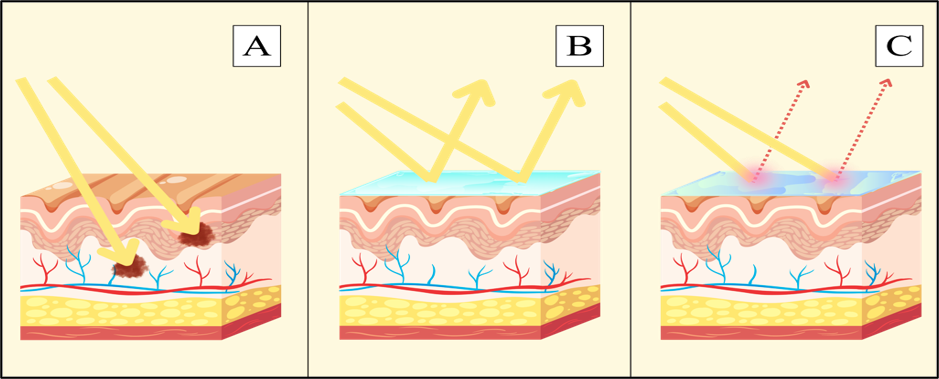
Figure 1. UV Protection Mechanisms: (A) Using no sunscreen, the damage done to skin by UV. (B) Défense with physical (mineral) sunscreen that reflects and scatters UV rays via a surface shield. (C) Protection by chemical sunscreen, which absorbs the UV rays and converts them into heat through a photochemical reaction, which is then emitted from the skin.
Testing a sunscreen’s efficacy entails determining its Sun Protection Factor (SPF), which may be determined in vitro or spectrophotometrically using the Mansur method [20-22]. A popular in vitro technique for determining SPF is the Mansur spectrophotometric method, which measures only UVB protection in the 290–320 nm range. Because of scattering effects, this approach may not be accurate for formulations containing inorganic UV filters and does not evaluate UVA protection. Consequently, inferences from this approach must be limited to UVB protection alone. The Mansur equation accurately measures the amount of radiation absorbed by a lotion at 5 nm intervals between 290 and 320 nm [20]. From numerous consumers’ continuous claim notes of sunburn experience after applying the sunscreen and skin reddening, we hypothesize that the available sunscreens do not provide the SPF promised value [23]. Therefore, sunscreens in Bangladesh ought to be thoroughly examined for authenticity to ensure the instillation of confidence in the users.
This paper assesses the efficacy of some commercial sunscreens from the market, which were collected from various local pharmaceutical shops and cosmetic shops around Dhaka and through multiple online retailers. This research aims to determine the value of the various commercialized skin products that have a direct impact on the lives and public health globally.
2.1. Materials
Analytical-grade ethanol and thirty (30) commercially available sunscreen products of various brands with SPF levels labeled between 25 and 90 were randomly purchased from various places, including Barishal’s local markets, superstores, and leading online platforms in Bangladesh. Supplementary Table 1 provides more information about the ingredients used in the formulation of the sunscreen.
2.2. Sample preparation
Since sunscreen formulations are not fully soluble in hydrophilic solvents, 1.0 g of sunscreen was weighed and partially dissolved in 100 mL of ethanol. The mixture was sonicated for 5 minutes to enhance dispersion, then filtered using Whatman filter paper no. 1. The first 10 mL of filtrate was discarded. Now, 5 mL of the filtrate were diluted to 50 mL in another volumetric flask, and ethanol was added to reach the final volume.
2.3. SPF determination
SPF was determined using a high-performance double-beam UV-Vis spectrophotometer (Shimadzu UV-1900i). Absorbance of the sample solution, with ethanol as a blank in a 1-cm quartz cell cuvette, was measured at 5 nm intervals across 290-320 nm. SPF was calculated using Mansur’s equation:

Where:
EE(λ), erythemal effect spectrum
I(λ), solar intensity spectrum
Abs(λ), absorbance of the sunscreen product
CF, correction factor 10
The fixed values for (EE × I) are listed in Table 1, were calculated as described by Sayre et al., [24].
Table 1. Normalized erythemal effect × solar intensity (EE×I) values for UVB SPF calculation.
| Wavelength (λ nm) | EE x I (normalized) |
| 290 | 0.0150 |
| 295 | 0.0817 |
| 300 | 0.2874 |
| 305 | 0.3278 |
| 310 | 0.1864 |
| 315 | 0.0839 |
| 320 | 0.0180 |
2.4. Stability assessment of sunscreen over storage time
To evaluate the effect of storage and usage duration on SPF, two identical sunscreen products from the same batch were compared: Sample 29 (freshly purchased, unopened) and Sample 30 (same product used intermittently for 12 months after opening, stored at ambient temperature in a bathroom cabinet). Both samples were subjected to the same sample preparation and SPF measurement protocol. Additionally, to assess the dispersion efficiency of active ingredients, each sample was sonicated for increasing durations (2, 5, 10 and 15 min) until no further increase in absorbance was observed. The optimal sonication time was recorded as the minimum time required to reach maximum SPF.
2.5. Cross-sectional survey
A cross-sectional survey was conducted on 222 university students at the University of Barishal from various faculties and departments. Participants were recruited from all disciplines using stratified random sampling. The questionnaire collected data on demographics, sunscreen usage frequency, knowledge of UV radiation and skin cancer, reasons for non‑use, purchasing sources, and willingness to pay for quality‑assured products.
2.6. Statistical analysis
Analysis and description of the data were conducted with SPSS version 26.0. Statistical associations of variables were assessed via regression analysis, with results reported as 95% confidence intervals (CI).
2.7. Quality control and method validation considerations
Throughout this study, the following quality measures were implemented: (i) each sample was measured in triplicate from independently prepared solutions; (ii) a reference sunscreen with known SPF (SPF 30, commercially certified) was tested weekly as an internal control; (iii) the spectrophotometer was calibrated daily using a holmium oxide filter and ethanol blank; (iv) Mansur equation calculations were performed using a dedicated spreadsheet with double‑entry verification.
3.1. Sunscreen product analysis
In vitro determination of SPF using the Mansur spectrophotometric method demonstrated marked discrepancies between measured and labeled values for the majority of the 30 commercially available sunscreens tested. Twenty-eight (28) samples (93.3%) exhibited measured SPF values substantially lower than the manufacturers’ claims. The overall mean measured SPF was 15.2 ± 12.4, compared with a mean labeled SPF of 45.0 ± 20. and no inferential tests were performed. Supplementary Table 1 provides the SPF measurements. Commercial sunscreens obtained from Bangladesh’s markets and online platforms exhibit significant variation in labeled SPF values and active ingredients. The INCI Decoder data presents different ingredient profiles. However, laboratory testing of the products indicated that most sunscreens did not meet their advertised SPF under the test conditions. Samples 1 and 2 perform as labeled, but others show extreme deviation, especially the imported ones. For instance, Sample 3 was calculated to have an SPF of 25.25, while the manufacturer indicates an SPF of 50+. The absorbance curve of sample 2 vs. sample 3 is shown in Figure 2. This indicates a strong comparison between the working efficacy of sample 2 and sample 3.
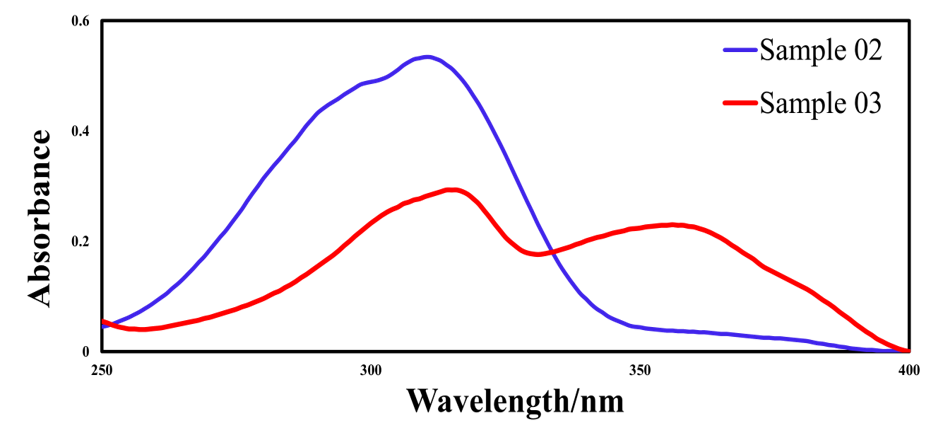
Figure 2. Absorbance Curve illustrating the difference between an SPF 50.315 Sunscreen (Sample 2) and an SPF 25.25 Sunscreen (Sample 3). Both were labeled as SPF over 50 on the package.
In addition, samples 3, 4, 7, 8, 27, 29, and 30 show moderate SPFs; thus, they could be improved. Samples 18, 17, 19, and 20 showed minimal or baseline UV absorption during the absorbance test; thus, they could not achieve high SPFs. The absorbance curve of samples 17, 18, 19, and 20 is shown in Figure 3. Moreover, some SPFs close to zero were also recorded for samples 11, 12, 15, 16, 19, 20, 22, 23, 24, and 25.
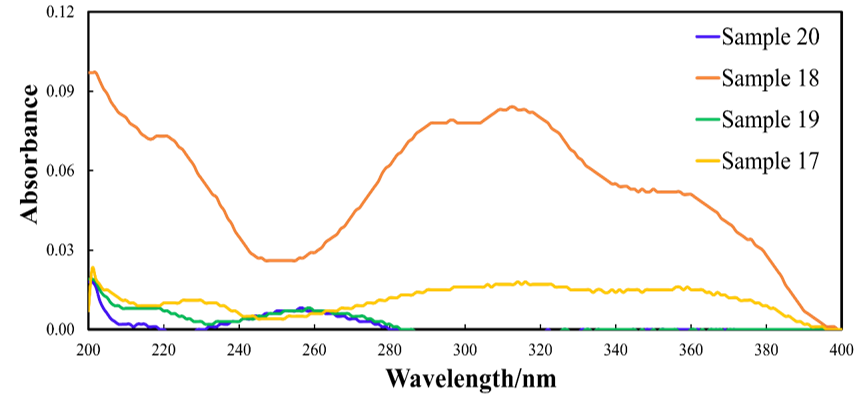
Figure 3. Absorbance data revealed that samples 18 and 17 barely absorbed UV, resulting in minimal SPF 1.62 and SPF 7.97, respectively, while samples 19 and 20 showed absorbance close to baseline.
Furthermore, to facilitate interpretation of sunscreen performance, products were categorized according to their measured SPF values and corresponding UV-absorption profiles. Products showing substantial UV absorption and comparatively high measured SPF values were classified as good quality, whereas those demonstrating moderate UV absorption and intermediate SPF values were categorized as moderate quality. Sunscreens with very low measured SPF values and limited UV absorption were classified as providing minimal protection, while products exhibiting negligible UV absorption and SPF values approaching zero were categorized as having no meaningful protection. Based on this classification, only 2 of the 30 tested products (6.67%) were considered good quality, 7 (23.33%) were moderate quality, 11 (36.67%) provided minimal protection, and 10 (33.33%) exhibited no meaningful UVB protection (Figure 4).
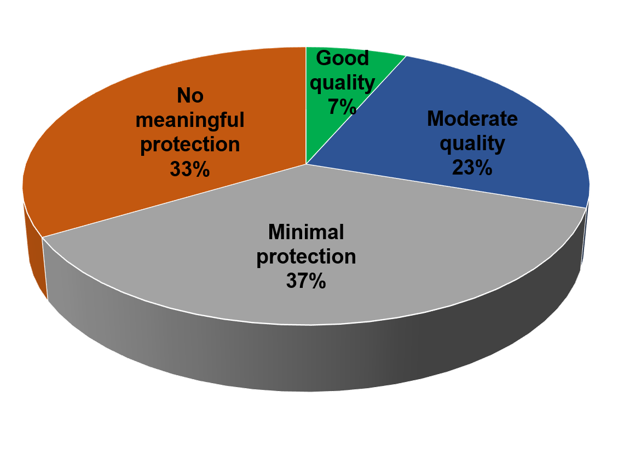
Figure 4. A pie chart representing good, moderate, minimal, and very low-quality sunscreen based on the UV-absorption analysis.
3.2 Stability assessment
Distinct factors may influence the variation in SPF, including storage time and temperature. Therefore, some factors have been checked. Physical stability and sun SPF efficacy of two identical sunscreen products, similar in formulation, were examined to determine the physical changes over storage time and on application. Sample 29 was the product purchased freshly and remained unused, while Sample 30 was the same product used on a daily basis for 1 year after opening its fresh pack. SPF was determined for both samples after sonication (to disperse active materials for maximum UV protection). The freshly purchased (sample 29) required a sonication time of 10 minutes to reach a maximum SPF value of 24.74, but the one-year-old used one (sample 30) was found to require only a sonication time of 5 minutes, observed with little decrement in the value, i.e., 23.65 was measured (Table 2). This finding indicates that long-term storage and reuse of the product over time harm the physical stability of the sunscreen product. Samples 29 and 30 were focused on stability assessment because they represented the same product from identical batches but differed in storage duration and usage, allowing controlled comparison of ageing effects.
Table 2. SPF comparison of identical sunscreen types over one year.
| Sample | Sonication time (min) | Measured SPF |
|---|---|---|
| 29 (fresh) | 10 | 24.74 |
30 (12 months used) | 5 | 23.65 |
The UV-absorbance curve for both samples is shown in Figure 5. Both of them absorbed UV in almost the same manner, with a slightly better quality in the newer sample.

Figure 5. Absorbance data revealed that samples 29 and 30 absorbed UV in almost the same manner, resulting in SPF 24.74 and SPF 23.65, respectively, which demonstrates no remarkable difference in quality in the newer sample.
3.3. Sunscreen user awareness and usage patterns
A total of 222 university students participated in the survey. Figure 6 illustrates the distribution of sunscreen users and non-users according to sex. Overall, 92 participants (41.44%) reported using sunscreen, whereas 130 participants (58.56%) reported not using sunscreen. Among sunscreen users, females represented the majority 89 (96.74%), while only 3 (3.26%) of users were male. In contrast, the proportion of males and females among non-users was relatively balanced (50.77% and 49.23%, respectively), indicating substantially lower sunscreen utilization among male students.
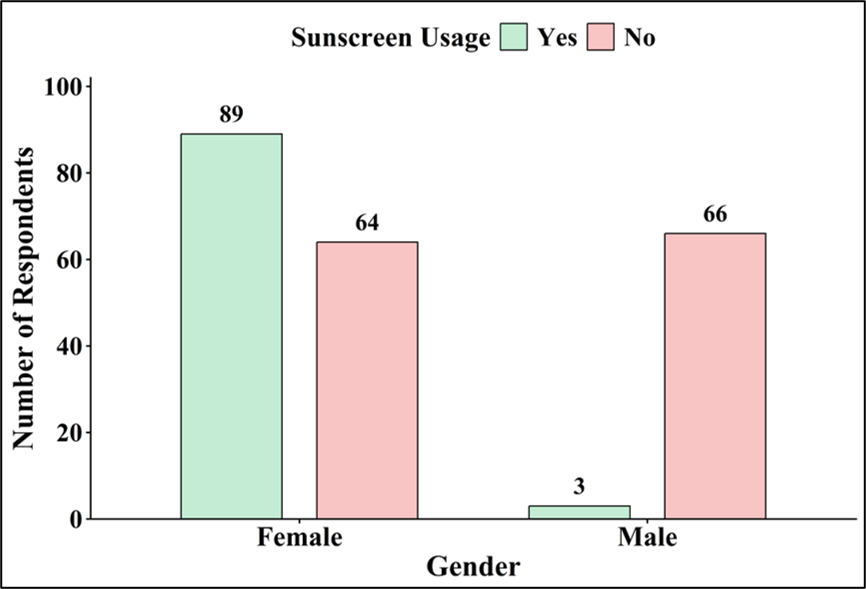
Figure 6. Graphical representation of sunscreen users and non-users among 222 students at the University of Barishal. Males are comparatively less interested in using sunscreen than females.
Awareness of the relationship between sunscreen use and skin cancer differed according to sunscreen usage status (Table 3). Among sunscreen users (n = 92), 61 participants (66.3%) were aware of the protective role of sunscreen against skin cancer, whereas 31 participants (33.7%) were unaware. Among non-users (n = 130), four respondents did not answer the awareness question. Based on the 126 valid responses, 55 participants (43.65%) reported awareness of the relationship between sunscreen use and skin cancer, while 71 participants (56.35%) were unaware. Overall, 116 respondents were aware of the association between sunscreen use and skin cancer prevention, whereas 102 respondents lacked such awareness.
Participants reported multiple reasons for not using sunscreen, including high cost, limited knowledge, lack of perceived necessity, discomfort associated with product application, concerns regarding adverse skin effects, sociocultural perceptions, difficulty accessing authentic products, inconvenience of reapplication, and concerns regarding product ingredients.
Table 3. Awareness of the relationship between sunscreen use and skin cancer according to sunscreen usage status (N = 222).
| Sunscreen Usage | Aware of Link n (%) | Not Aware n (%) | No Response n (%) | Total |
Sunscreen Users (n = 92) | 61 (66.3) | 31 (33.7) | 0 (0.0) | 92 |
Non-Sunscreen Users (n = 130) | 55 (43.65) * | 71 (56.35) * | 4 (3.08) | 130 |
| Total (N = 222) | 116 | 102 | 4 | 222 |
*Percentages were calculated from the 126 valid responses among non-sunscreen users after excluding 4 missing responses.
This study identifies notable discrepancies between labeled SPF values and laboratory-determined SPF in sunscreens sold in Bangladesh. The evidence points to limitations in quality control, formulation stability, and oversight of legitimate markets. In vitro tests revealed 93.33% (n = 30) of samples had lower SPF than their labels claimed, indicating inadequate product quality regulation for local sunscreen. The '50' label may give users false confidence in protection. Some samples tested near zero SPF, suggesting counterfeit products [17, 18]. Products from reputable sources also showed lower SPF, possibly due to formulation instability in Bangladesh’s tropical climate [25].
The spectrophotometric Mansur method was used to determine SPF [20, 24]. Due to laboratory resource limitations, full ICH validation (specificity, linearity, precision, recovery) was not conducted. This in vitro method needs improved regulatory control. Human in vivo testing remains the gold standard, but our in vitro findings show poor product performance. This suggests UV filters are insufficient, unstable, or poorly formulated. Effectiveness decreased in samples older than 12 months indicating reduced physical stability over time [26]. Shorter sonication times for maximum SPF in older samples suggest changes like ingredient separation or particle size differences. Loss of SPF matches previous reports that UV filter stability may decrease due to exposure to oxidation, light, air, and temperature changes [27]. These changes can reduce overall sun protection performance. Measured SPF levels confirm whether the cosmetic industry meets fair protection standards, especially in areas with high sunlight. User questionnaires showed great concern about knowledge and promotion of sunscreen use. Extra claims and authors benefit consumers, but many feel they cannot afford or do not need these products. Cultural practices also deter regular use. Making sunscreen available alone does not ensure effective or safe skin care.
The study found that only 41.44% of students use sunscreen. Skin cancer awareness and prevention dominated responses. Although 66.3% of users knew that a lack of protection could cause skin cancer, 56.35% of non-users were unaware. There is a significant health education gap. The reasons cited for non-use highlight the multifactorial nature of sunscreen-related behaviors. Economic concerns, perceived inconvenience, product discomfort, limited availability of trusted products, and sociocultural attitudes, particularly the perception that sunscreen is primarily intended for women, appear to contribute to low utilization [28, 29]. Similar barriers have been reported in studies conducted among young adults and university populations in other low- and middle-income countries, where preventive skin-health practices remain underutilized despite increasing awareness of UV-related health risks [13]. The findings are particularly important in the context of Bangladesh, where prolonged sun exposure is common because of climatic conditions and outdoor activities. Therefore, competency-based educational approaches may provide improved public health awareness and preventive health behaviors among university students and others for widespread use of sunscreens [30]. In addition, stronger market surveillance, improved SPF labelling consistency, SPF comprehension, and container identification can help people use sunscreen correctly from an early age, leading to proper long-term use and improved safety from risk of skin cancer.
This study has several limitations that should be considered when interpreting the results. First, SPF determination was performed solely using the in vitro Mansur spectrophotometric method, which primarily assesses UVB protection and may underestimate the efficacy of sunscreens containing inorganic filters (e.g., ZnO or TiO₂) due to light scattering effects. Broad-spectrum (UVA) protection was not evaluated. Second, although samples were tested in triplicate, full analytical method validation according to ICH guidelines was not conducted due to resource constraints. Third, the 30 commercial sunscreens tested, while randomly selected from local markets and online sources, may not fully represent the entire range of products available across Bangladesh. Finally, the cross-sectional survey was limited to students from a single public university, which restricts the generalizability of the awareness and usage findings to the broader population. Future studies incorporating in vivo SPF testing, larger and more diverse sampling, and multi-center surveys would strengthen these findings.
This study demonstrates substantial mismatches between manufacturer-labeled and laboratory-measured SPF values in commercially available sunscreens in Bangladesh, with 93.3% of tested products failing to deliver the claimed UVB protection. Concurrently, a cross-sectional survey of university students revealed low adoption rates (41.4%) and notable gaps in knowledge regarding sunscreen efficacy and skin cancer prevention, particularly among male participants. These dual findings underscore systemic issues in product quality, regulatory enforcement, and public health education in a high-UV environment. Addressing these challenges through rigorous market surveillance, standardized testing protocols, transparent labeling, and culturally tailored awareness initiatives is essential to enhance photoprotection practices and reduce the long-term burden of UV-associated skin damage and malignancies in Bangladesh and similar settings.
The authors thank the Department of Biochemistry and Biotechnology, Department of Chemistry, University of Barishal, and Department of Microbiology, University of Dhaka, for their cooperation. The authors also appreciate Fatema Tuz Zohora (Department of Biochemistry and Biotechnology, University of Barishal) and Md. Al Muid Khan (Department of Microbiology, University of Dhaka) for their assistance with methodology optimization, analysis standardization, and standardization throughout this research.
The in vitro SPF analysis was carried out using standard spectrophotometric techniques, with financial support from the University Grants Commission (UGC), Bangladesh (University of Barishal research grant, fiscal year 2023–2024).
The authors report no commercial or non-financial conflicts of interest.
Ethical approval for this study was granted by the Institutional Ethical Review Committee of the University of Barishal (Ref. No. Bu/Ethical Review/1001). Participation was voluntary, and electronic informed consent was obtained from all participants prior to enrollment.
The authors used Grammarly solely for language editing. The authors reviewed and approved all content and remain fully responsible for the manuscript.

This work is licensed under a
Creative Commons Attribution 4.0 International License
.
You are free to share and adapt this material for any purpose, even commercially, as long as you give appropriate credit.
 access