J. Biosci. Public Health. 2026; 2(4)

First Author
https://orcid.org/0009-0006-5743-1954
Affiliations:
Department of Public Health, State University of Bangladesh, Dhaka, Bangladesh
Coauthor
https://orcid.org/ 0009-0004-7813-3476
Affiliations:
Department of Public Health, State University of Bangladesh, Dhaka, Bangladesh
Coauthor
https://orcid.org/ 0009-0005-3269-1007
Affiliations:
Department of Environment Science, State University of Bangladesh, Dhaka, Bangladesh
Coauthor
https://orcid.org/ 0009-0005-2297-8207
Affiliations:
Department of Non-Communicable Disease, National Institute of Preventive and Social Medicine (NIPSOM), Dhaka, Bangladesh
Coauthor
https://orcid.org/ 0009-0000-6127-3908
Affiliations:
Department of Surgery, Dhaka Community Medical College Hospital, Dhaka, Bangladesh
Coauthor
https://orcid.org/ 0009-0007-1614-9052
Affiliations:
Department of Biochemistry and Molecular Biology, Hajee Mohammad Danesh Science and Technology University, Dinajpur 5200, Bangladesh
Corresponding Author *
https://orcid.org/ 0000-0002-9788-0766
Affiliations:
Department of Biochemistry and Molecular Biology, Hajee Mohammad Danesh Science and Technology University, Dinajpur 5200, Bangladesh
Corresponding Author *
https://orcid.org/ 0000-0002-9788-0766
Affiliations:
Department of Biochemistry and Molecular Biology, Hajee Mohammad Danesh Science and Technology University, Dinajpur 5200, Bangladesh
Breastfeeding is critical for infant health, yet working mothers face significant workplace barriers. This cross-sectional study investigated breastfeeding barriers among 152 working mothers in private sector organizations in Dhaka city, Bangladesh (May–August 2022). Data were collected via a validated semi-structured questionnaire from purposively selected participants across 18 areas of Dhaka. Binary logistic regression was used to identify independent predictors of exclusive breastfeeding (EBF). Prevalence of EBF was 52.6% and early initiation of breastfeeding within one hour was 61.2%. Most organizations lacked breastfeeding support: 67.8% had no written breastfeeding policy, 95.4% had no crèche, 82.2% had no breast milk storage, and 65.8% offered no nursing breaks. Only 29.6% of mothers received maternity leave of ≥ 6 months. In multivariable logistic regression, maternity leave of ≥ 6 months was the only independent predictor of EBF (AOR = 2.43, 95% CI: 1.10–5.33, p = 0.028). Structural workplace barriers, particularly inadequate maternity leave, are the primary determinants of exclusive breastfeeding among private sector working mothers. Urgent policy reform extending maternity leave to at least six months, alongside provision of nursing breaks, private lactation spaces, breast milk storage, and crèche facilities, is recommended.
Breastfeeding is normal human behavior. It is defined as the method of feeding a baby with milk directly from the mother’s breast [1]. Breastfeeding has benefits for overall health, growth, and development, according to the American Academy of Pediatrics [2]. Breastmilk contains all forms of antibodies and thus provides protection to children against the attack of various infectious agents, as children's immune response is not fully developed until the age of 5 years. Infections such as polio, staphylococcus infections, infectious diarrhea, respiratory syncytial virus (RSV), pneumonia, sudden infant death syndrome (SIDS), necrotizing enterocolitis, otitis media (OM), urinary tract infection (UTI), and neonatal septicemia are all prevented by breast milk [3]. According to the American Academy of Pediatrics (AAP), the World Health Organization (WHO), and the United Nations Children's Emergency Fund (UNICEF), infants should be exclusively breastfed for at least 6 months [4-7]. In other words, in the first six months after birth, infants receive only breast milk from their mothers or a wet nurse or expressed breast milk, and no other liquids or solids, except oral rehydration solution, drops, or syrups comprising vitamins, minerals, supplements, or medicines [4]. According to the 2008 Lancet Series on Maternal and Child Undernutrition, suboptimal breastfeeding, particularly not exclusively breastfeeding a child for the first six months of life, causes 1.4 million deaths and 10% of the disease burden in children under the age of five in low- and middle-income countries [8]. Breastfeeding is recommended by the WHO and UNICEF for all breastfeeding mothers up to the age of two years [9]. Despite the benefits of breastfeeding, approximately 41% of children under the age of six months are exclusively breastfed globally; in Bangladesh, the figure is 65% [10]. Females are now working in many developing nations, such as Bangladesh, due to increased family financial requirements and as a form of female empowerment [11]. A working mother is a woman who has the ability to combine a career with the added responsibility of raising a child [12]. Breastfeeding contributes to the well-being of both mother and child. But, for employed women, who have to get back to work, breastfeeding becomes a challenging task after the end of maternity leave. Participation of women in different sectors is remarkable though has been associated with a negative impact on the continuation and duration of breastfeeding rates. It is proved from different studies that maternal employment is associated with a decrease in the length of time a mother continues to breastfeed [13-16]. The rate of continuation of breastfeeding gradually falls, studies show the breastfeeding initiation rate was found to be 44 to 70%, which declines to 13% by 6 months of age [17,18]. Moreover, evidence suggests that the sooner a mother returns to her work, the earlier cessation of breastfeeding occurs. The more the work hours, the more the rate of stoppage of lactation [19]. Mothers themselves report multiple barriers to breastfeeding once returning to work, such as a lack of flexibility within the work schedule to permit milk expression; lack of accommodations to express and/or store human milk; and considerations about support from supervisors and colleagues [20, 21]. A woman’s breastfeeding period is additionally influenced by the existence and quality of maternity leave as well as its length, paid or unpaid status, and also the attitudes, policies, and practices at her place of employment [22]. Social support and negative societal perception about breastfeeding in public is also a structural barrier to breastfeeding. In low-income countries, limited social support, mother’s time constraints, household food insecurity, and poverty often make breastfeeding difficult [9]. Crèches are a good option to increase the lactation rate high if the employers provide these facilities with a nurse who will take care of the baby, a good nursing room with proper privacy, and milk expression facilities like a breast pump, and refrigerator to store the milk. This will assure the mother about their child, and they can concentrate fully on work, which will improve the organization's work quality and reduce employee absenteeism. If these are not provided, then the mother will have to find some alternative caregiver, and she will not feel secure, which will cause a lack of concentration to work, ultimately affecting productivity [23-25]. That is why public health campaigns aimed at promoting breastfeeding for mothers returning to work advocate breastfeeding support at the workplace and emphasize two important potential benefits to employers e.g., Breastfeeding mothers may be absent from work less because their babies suffer from fewer illnesses, and employers who support breastfeeding at work may be more successful in retaining their employees [26]. The Bangladesh Labor Act stipulates 4 months of paid maternity leave for women working in formal industries to help create a supportive workplace [27]. Understanding the prevalence of exclusive breastfeeding, early initiation, and the independent contribution of workplace factors particularly maternity leave duration in this population is essential for informing targeted policy and workplace interventions [28].
Therefore, this study aimed to assess breastfeeding practices and identify workplace-related challenges and predictors of exclusive breastfeeding among working mothers employed in the private sector in Dhaka City, Bangladesh.
2.1. Study design and setting
A cross-sectional analytical study was conducted to assess breastfeeding challenges and practices among working mothers employed in the private sector in Dhaka City, Bangladesh. Data were collected from 1 May to 31 August 2024 across private-sector organizations located in 18 areas of Dhaka City. The participating organizations represented diverse private-sector settings, including educational institutions, hospitals and clinics, financial institutions, pharmaceutical companies, and development-sector organizations.
2.2. Study population and eligibility criteria
The target population comprised working mothers employed in the private sector in Dhaka city who had experienced at least one pregnancy and delivery. Inclusion criteria: Working mothers with experience of at least one pregnancy and delivery, whose last child was aged 3-60 months at the time of data collection, and who had delivered either vaginally or by cesarean section without major complications.
Exclusion criteria: Mothers who had never breastfed their baby even for a single day.
2.3. Sample size determination
The minimum required sample size was calculated using the standard formula for estimating a single population proportion:

where:
 (Corresponding to 95% confidence level)
(Proportion of working mothers who reported short maternity leave as a barrier to exclusive breastfeeding, based on Ashoka et al., [29]
(Absolute precision / margin of error)
Calculation:

Thus, the minimum required sample size was 138.
To account for a potential 10% non-response rate:
Thus:
Allowing 10% for non-response:

Therefore, accounting for a 10% non-response rate, the final sample size was 152.
2.4. Sampling technique
Purposive sampling was employed. From each administrative area of Dhaka city, organizations were purposively selected to represent diverse sectors. Although probability sampling would have been methodologically preferable, it was not feasible due to the absence of a comprehensive sampling frame of all working mothers in private organizations in Dhaka. Purposive sampling allowed targeted recruitment of eligible participants across varied workplace settings. This approach may introduce selection bias, which is acknowledged as a limitation.
2.5. Data collection instrument and method
A self-administered semi-structured questionnaire was developed in English and translated into Bengali. The questionnaire was pre-tested on 10 working mothers from a similar population outside the study area to identify ambiguities and improve clarity. Necessary modifications were made prior to finalization. The questionnaire comprised five sections covering: (i) sociodemographic characteristics; (ii) obstetric and child-related information; (iii) breastfeeding practices; (iv) work-related characteristics; and (v) workplace breastfeeding support facilities.
2.6. Statistical analysis
Data were entered and analyzed using IBM SPSS Statistics (Version 26). Descriptive statistics (frequencies, percentages, means, and standard deviations) were computed for all variables. Chi-square tests were used to examine bivariate associations between independent variables and breastfeeding outcomes. Multivariable binary logistic regression was performed to identify independent predictors of exclusive breastfeeding (EBF), adjusting for all workplace-related variables simultaneously. Crude odds ratios (COR) and adjusted odds ratios (AOR) with 95% confidence intervals (CI) were reported. Model discrimination was assessed using the area under the ROC curve (AUC). Statistical significance was set at p < 0.05.
The sociodemographic and other characteristics of the respondents have been stated in Table 1. More than half (56.6%) of mothers were aged ≤30 years, with a mean (±SD) age of 30.8 (±3.8) years. In regard to occupation, the majority were physicians (36.2%), 24.3% of respondents were teachers, 9.2% were bankers, 2.6% were pharmacists, 3.9% were nurses, and 23.7% were service holders. 35.5% of respondents worked in hospitals, 13.2%, 7.2%, 0.7% of respondents worked in school, college, and university respectively., 7.9% worked in pharmaceuticals companies, 9.2% of respondents worked in banks, 16.4% worked in different NGOs and 3.9% in different international NGOs, 5.9% of respondents worked in other sectors like RMG factory, medical colleges, etc. The majority of the respondents were graduates (45.3%), 50.7% had completed their postgraduation. The majority (29.6%) of respondents’ husbands were physicians, and 66.4% had completed their postgraduation. Most of the respondents (61.2%) had a monthly family income less than or equal to BDT 100000, 27.6% had between BDT 100000 to BDT 200000, and 11.2% had more than BDT 200000. In addition, 60.5% had a family consisting of less than or equal to 4 members.
Table 1. Distribution of respondents according to sociodemographic characteristics (n= 152).
| Characteristic | Category | Frequency (n) | Percentage (%) |
| Age (years) | ≤30 | 86 | 56.6 |
| >30 | 66 | 43.4 | |
| Respondent occupation | Teacher | 37 | 24.3 |
| Physician | 55 | 36.2 | |
| Banker | 14 | 9.2 | |
| Pharmacist | 4 | 2.6 | |
| Service holder | 36 | 23.7 | |
| Nurse | 6 | 3.9 | |
| Type of organization | School | 20 | 13.2 |
| College | 11 | 7.2 | |
| University | 1 | 0.7 | |
| Hospital | 44 | 28.9 | |
| Clinic | 10 | 6.6 | |
| Pharmaceutical company | 12 | 7.9 | |
| Bank | 14 | 9.2 | |
| Non-governmental organization | 25 | 16.4 | |
| International non-governmental organization | 6 | 3.9 | |
| Others | 9 | 5.9 | |
| Educational qualification | Up to Higher Secondary Certificate | 3 | 2.0 |
| Graduate | 69 | 45.3 | |
| Postgraduate | 77 | 50.7 | |
| Diploma | 3 | 2.0 | |
| Husband's occupation | Teacher | 17 | 11.2 |
| Physician | 45 | 29.6 | |
| Banker | 22 | 14.5 | |
| Engineer | 20 | 13.2 | |
| Pharmacist | 5 | 3.3 | |
| Service holder | 29 | 19.1 | |
| Business | 14 | 9.2 | |
| Husband's educational qualification | Up to HSC | 2 | 1.3 |
| Graduate | 49 | 32.2 | |
| Postgraduate | 101 | 66.4 | |
| Monthly family income (BDT) | ≤100,000 | 93 | 61.2 |
| 100,001–200,000 | 42 | 27.6 | |
| >200,000 | 17 | 11.2 | |
Number of family members | ≤4 | 92 | 60.5 |
| >4 | 60 | 39.5 |
Table 2 shows the distribution of respondents according to delivery, where it shows 71.7% of respondents had a single child, and 52% of respondents’ children's age was less than or equal to 24 months (Mean ± SD: 24.5 ± 2.5; range: 18–31 months). The majority (52.6%) of respondents’ last child was a female baby. The majority 75.7% of respondents, had their baby at the age of 25 years (Mean ± SD: 27.1 ± 2.8; range: 20–31 years). Most of the respondents (73.7%) had their last delivery by cesarean section. Among 152 respondents 94.1% were in antenatal visits, and 82.2% attended postnatal visits.
Table 2. Distribution of respondents according to delivery-related and maternal healthcare characteristics (N = 152).
| Characteristic | Category | Frequency (n) | Percentage (%) |
| Number of children | 1 | 109 | 71.7 |
| 2 | 36 | 23.7 | |
| 3 | 7 | 4.6 | |
| Sex of last child | Male | 72 | 47.4 |
| Female | 80 | 52.6 | |
| Age of last child (months) | ≤24 | 79 | 52.0 |
| >24 | 73 | 48.0 | |
| Maternal age at first birth (years) | ≤25 | 37 | 24.3 |
| >25 | 115 | 75.7 | |
| Antenatal care visits | Yes | 143 | 94.1 |
| No | 9 | 5.9 | |
| Postnatal care visits | Yes | 125 | 82.2 |
| No | 27 | 17.8 | |
| Mode of delivery | Vaginal (normal) delivery | 40 | 26.3 |
| Cesarean section | 112 | 73.7 |
Table 3 shows 61.2% of respondents had initiated breastfeeding within 1 hour of their delivery. 52.6% of respondents had practiced exclusive breastfeeding. 42.8% of respondents was continuing their breastfeeding during the data collection period and 57.2% had stopped breastfeeding. Among those 57.2% of respondents, 86.2% had children of more than 2 years and 11.5% stopped breastfeeding due to their job and heavy workload. 62.5% of respondents had practiced formula feeding. The majority of respondents (90.1%) found breastfeeding as the most beneficial method whereas 54.6% of respondents found formula milk comfortable over breastfeeding. 71.7% of respondents practiced milk expression and 61.2% found it beneficial for work-life maintenance. 86.2% of respondents practiced complementary feeding after 6 months.
Table-3. Breastfeeding and infant feeding practices among respondents (N = 152).
| Characteristic | Category | Frequency (n) | Percentage (%) |
| Initiation of breastfeeding | Within 1 hour of birth | 93 | 61.2 |
| More than 1 hour after birth | 59 | 38.8 | |
| Exclusive breastfeeding practice | Yes | 80 | 52.6 |
| No | 72 | 47.4 | |
| Currently continuing breastfeeding | Yes | 65 | 42.8 |
| No | 87 | 57.2 | |
| †Reason for discontinuing breastfeeding | Child was older than 2 years | 75 | 86.2 |
| Employment and heavy workload | 10 | 11.5 | |
| Maternal physical problems‡ | 2 | 2.3 | |
| Formula feeding practice | Yes | 95 | 62.5 |
| No | 57 | 37.5 | |
| Perceived most beneficial feeding method | Breastfeeding | 137 | 90.1 |
| Formula feeding | 15 | 9.9 | |
| Perceived most convenient feeding method | Breastfeeding | 69 | 45.4 |
| Formula feeding | 83 | 54.6 | |
| Practice of expressed breast milk feeding | Yes | 109 | 71.7 |
| No | 43 | 28.3 | |
| Perceived benefit of expressed breast milk for work–life balance | Yes | 93 | 61.2 |
| No | 47 | 30.9 | |
| Not applicable | 12 | 7.9 | |
| Complementary feeding practice | Yes | 146 | 96.1 |
| No | 6 | 3.9 | |
| Timing of complementary feeding initiation | Before 6 months | 15 | 9.9 |
| At/after 6 months | 131 | 86.2 | |
| Not applicable (child aged <6 months) | 6 | 3.9 |
†Percentages for reasons for discontinuing breastfeeding were calculated among respondents who had discontinued breastfeeding (n = 87).
Table 4 shows more than half of the respondents (56.6%) reported that their workplace was located far from home, while the majority were engaged in office-based work (85.5%) and worked ≥8 hours per day (76.3%). Nearly one-third (32.2%) reported shift- or roster-based work. Most respondents had maternity leave of <6 months (70.4%), and 68.4% were dissatisfied with its duration. A substantial proportion (88.2%) reported that maternity leave affected their breastfeeding practices, with difficulty balancing work duties and breastfeeding being the most frequently reported effect (48.5%). Most respondents (93.4%) expressed a preference for longer maternity leave. Support was reported from colleagues (76.3%), supervisors (73.7%), and family members (85.5%). Among those reporting inadequate supervisor support, non-cooperative attitudes were the most commonly reported negative experience (80.0%). During working hours, most children stayed at home (72.4%), with grandmothers being the most common caregivers (42.8%).
Table 4. Distribution of respondents according to the work-related characteristics (n=152).
| Characteristic | Category | Frequency (n) | Percentage (%) |
|---|---|---|---|
| Workplace located far from home | Yes | 86 | 56.6 |
| No | 66 | 43.4 | |
| Work arrangement | Office-based | 130 | 85.5 |
| Field/visit-based | 3 | 2.0 | |
| Both office- and field-based | 19 | 12.5 | |
| Shift/roster-based work | Yes | 49 | 32.2 |
| No | 103 | 67.8 | |
| Daily working hours | <8 hours | 36 | 23.7 |
| ≥8 hours | 116 | 76.3 | |
| Duration of maternity leave | <6 months | 107 | 70.4 |
| ≥6 months | 45 | 29.6 | |
| Satisfied with maternity leave duration | Yes | 48 | 31.6 |
| No | 104 | 68.4 | |
| Maternity leave affected breastfeeding | Yes | 134 | 88.2 |
| No | 18 | 11.8 | |
| Reported effects of maternity leave on breastfeeding† | Short leave duration made exclusive breastfeeding difficult | 14 | 10.4 |
| Unable to practice exclusive breastfeeding | 19 | 14.2 | |
| Introduced complementary food before 6 months | 3 | 2.2 | |
| Introduced formula feeding because breastfeeding was difficult to maintain | 16 | 11.9 | |
| Had to quit employment | 4 | 2.9 | |
| Discontinued breastfeeding because balancing work and breastfeeding was difficult | 8 | 5.9 | |
| Balancing work duties and breastfeeding was very difficult | 65 | 48.5 | |
| Expressing breast milk was uncomfortable or painful | 5 | 3.7 | |
| Would prefer a longer maternity leave | Yes | 142 | 93.4 |
| No | 10 | 6.6 | |
| Support from colleagues | Yes | 116 | 76.3 |
| No | 36 | 23.7 | |
| Support from supervisor | Yes | 112 | 73.7 |
| No | 40 | 26.3 | |
| Negative experience with supervisor‡ | Lack of consideration for infant/breastfeeding needs | 5 | 12.5 |
| Non-cooperative attitude | 32 | 80.0 | |
| Rude attitude | 3 | 7.5 | |
| Place where child stayed during working hours | Home | 110 | 72.4 |
| Relative's home | 33 | 21.7 | |
| Daycare | 4 | 2.6 | |
| Workplace | 3 | 2.0 | |
| Neighbor's home | 2 | 1.3 | |
| Primary caregiver during working hours | Grandmother | 65 | 42.8 |
| Domestic helper | 35 | 23.0 | |
| Family member | 32 | 21.1 | |
| Nanny | 8 | 5.3 | |
| Father | 3 | 2.0 | |
| Neighbor | 3 | 2.0 | |
| Attendant at workplace | 3 | 2.0 | |
| Professional caregiver at daycare | 3 | 2.0 | |
| Family support for breastfeeding | Yes | 130 | 85.5 |
| No | 22 | 14.5 |
†Multiple responses were allowed; percentages are based on respondents affected by maternity leave (n = 134). ‡Based on respondents who reported no support from their supervisor (n = 40).
Table 5 shows the distribution of respondents according to the workplace facilities. It shows 67.8% of respondents’ organizations had no written policy, 21.7% did not know if they had any written policy for breastfeeding. 57.2% of respondents’ organizations did not allow flexible working hours. 61.8% claimed their organizations did not allow babies to come. 95.4% of respondents said that their organization had no crèches available to keep babies during working hours. 96.1% of respondents’ organizations had no professional caregivers to look after babies at the workplace. 67.8% of respondents had no private space for breastfeeding or milk expression purposes. 82.2% of organizations had no storage to store breastmilk after expression. 73% of respondents’ organizations did not give flexible time for breastmilk expression and 65.8% claimed that they did not get any nursing breaks.
Table-5. Distribution of respondents according to the workplace facilities (n= 152).
| Workplace facility/policy | Response | Frequency (n) | Percentage (%) |
|---|---|---|---|
| Written breastfeeding policy | Yes | 16 | 10.5 |
| No | 103 | 67.8 | |
| Don't know | 33 | 21.7 | |
| Flexible working hours | Yes | 38 | 25.0 |
| No | 87 | 57.2 | |
| Sometimes | 27 | 17.8 | |
Allows infants to come to the workplace for breastfeeding | Yes | 58 | 38.2 |
| No | 94 | 61.8 | |
| Crèche/daycare facility available | Yes | 7 | 4.6 |
| No | 145 | 95.4 | |
| Professional caregiver available | Yes | 6 | 3.9 |
| No | 146 | 96.1 | |
| Private space for breastfeeding/expressing milk | Yes | 49 | 32.2 |
| No | 103 | 67.8 | |
| Breast milk storage facility available | Yes | 27 | 17.8 |
| No | 125 | 82.2 | |
| Flexible time for breast milk expression | Yes | 41 | 27.0 |
| No | 111 | 73.0 | |
| Nursing breaks available | Yes | 52 | 34.2 |
| No | 100 | 65.8 |
Table 6 shows a relationship between the practice of exclusive breastfeeding with different factors, like flexible working hours, acceptance of babies coming for breastfeeding to the workplace, duration of maternity leave, and nursing breaks have significant associations (p <0.05). Results illustrate exclusive breastfeeding was significantly associated with flexible working hours (p = 0.031), permission to bring infants to the workplace for breastfeeding (p = 0.005), longer maternity leave (p = 0.003), and availability of nursing breaks (p = 0.001*).
Table 6. Effect of sociodemographic and other characteristics on practice of exclusive breastfeeding.
| Factor | Category | Exclusive breastfeeding, n (%) | χ² | p-value |
|---|---|---|---|---|
| Flexible working hours | Yes | 27 (71.1) | 6.96 | 0.031 |
| No | 41 (47.1) | |||
| Sometimes | 12 (44.4) | |||
| Infants allowed at workplace for breastfeeding | Yes | 39 (67.2) | 8.03 | 0.005 |
| No | 41 (43.6) | |||
| Duration of maternity leave | <6 months | 48 (44.9) | 8.76 | 0.003 |
| ≥6 months | 32 (71.1) | |||
| Nursing breaks | Yes | 37 (71.2) | 10.89 | 0.001 |
| No | 43 (43.0) |
Table 7 presents the results of multivariable binary logistic regression analysis. In the multivariable analysis, maternity leave of ≥6 months remained significantly associated with exclusive breastfeeding after adjustment for other workplace factors. Respondents with ≥6 months of maternity leave had 2.43 times higher odds of practicing exclusive breastfeeding than those with <6 months of leave (AOR 2.43, 95% CI 1.10–5.33; p = 0.028). Although nursing breaks, flexible working hours, and permission to bring infants to the workplace were significantly associated with exclusive breastfeeding in crude analyses, these associations did not remain statistically significant after adjustment. The model demonstrated moderate discrimination (AUC = 0.688).
Table 7. Multivariable logistic Regression analysis of workplace factors associated with exclusive breastfeeding (n=152).
| Variable | COR (95% CI) | p-value | AOR (95% CI) | p-value |
|---|---|---|---|---|
| Maternity leave ≥6 months (vs <6 months) | 3.04 (1.44–6.41) | 0.003 | 2.43 (1.10–5.33) | 0.028 |
| Nursing breaks: Yes (vs No) | 3.26 (1.59–6.68) | <0.001 | 2.55 (0.95–6.84) | 0.063 |
| Flexible working hours: Yes (vs No) | 2.75 (1.19–6.35) | 0.018 | 1.53 (0.57–4.10) | 0.401 |
| Flexible working hours: Sometimes (vs No) | 0.87 (0.36–2.12) | 0.762 | 0.77 (0.28–2.11) | 0.609 |
| Infants allowed at workplace for breastfeeding: Yes (vs No) | 2.65 (1.33–5.28) | 0.005 | 0.94 (0.31–2.84) | 0.912 |
COR = Crude Odds Ratio; AOR = Adjusted Odds Ratio; CI = Confidence Interval; BF = Breastfeeding. *p < 0.05. Model discrimination: AUC = 0.688.
Figure 1 displays the prevalence of exclusive breastfeeding across the four workplace factors examined. A consistent gradient is evident: EBF prevalence was 71.1% among mothers with flexible working hours compared with 47.1% among those without and 44.4% among those with only occasional flexibility; 67.2% where infants were permitted at the workplace versus 43.6% where they were not; 71.1% among mothers with maternity leave of at least six months versus 44.9% among those with shorter leave; and 71.2% where nursing breaks were available versus 43.0% where they were not. In every comparison the presence of workplace support was associated with an EBF prevalence approximately 25 percentage points higher, and the four supported groups converge on a similar ceiling of roughly 70%.
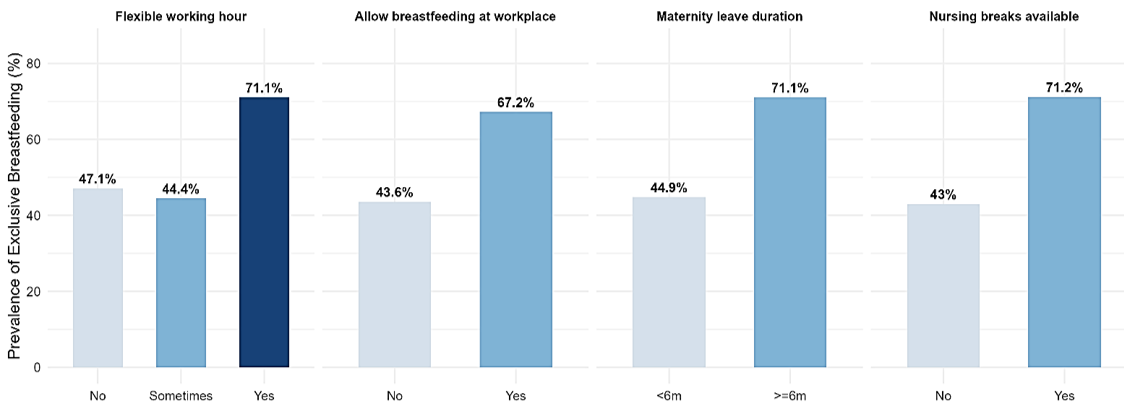
Figure 1. Prevalence of exclusive breastfeeding by workplace-related factors (n=152).
Figure 2 presents the adjusted odds ratios from the multivariable model as a forest plot, with the significant predictor distinguished from the non-significant ones. Maternity leave of at least six months is the only estimate whose 95% confidence interval lies entirely to the right of the null line (AOR = 2.43, 95% CI: 1.10–5.33). Nursing break availability shows the largest point estimate (AOR = 2.55) but its interval crosses unity and extends to 6.84, reflecting imprecision rather than absence of effect. Flexible working hours (AOR = 1.53), workplace breastfeeding permission (AOR = 0.94) and occasional flexibility (AOR = 0.77) all have intervals spanning the null. The width of these intervals is a direct consequence of the sample size and should be read as limited precision rather than as demonstrated null effects.
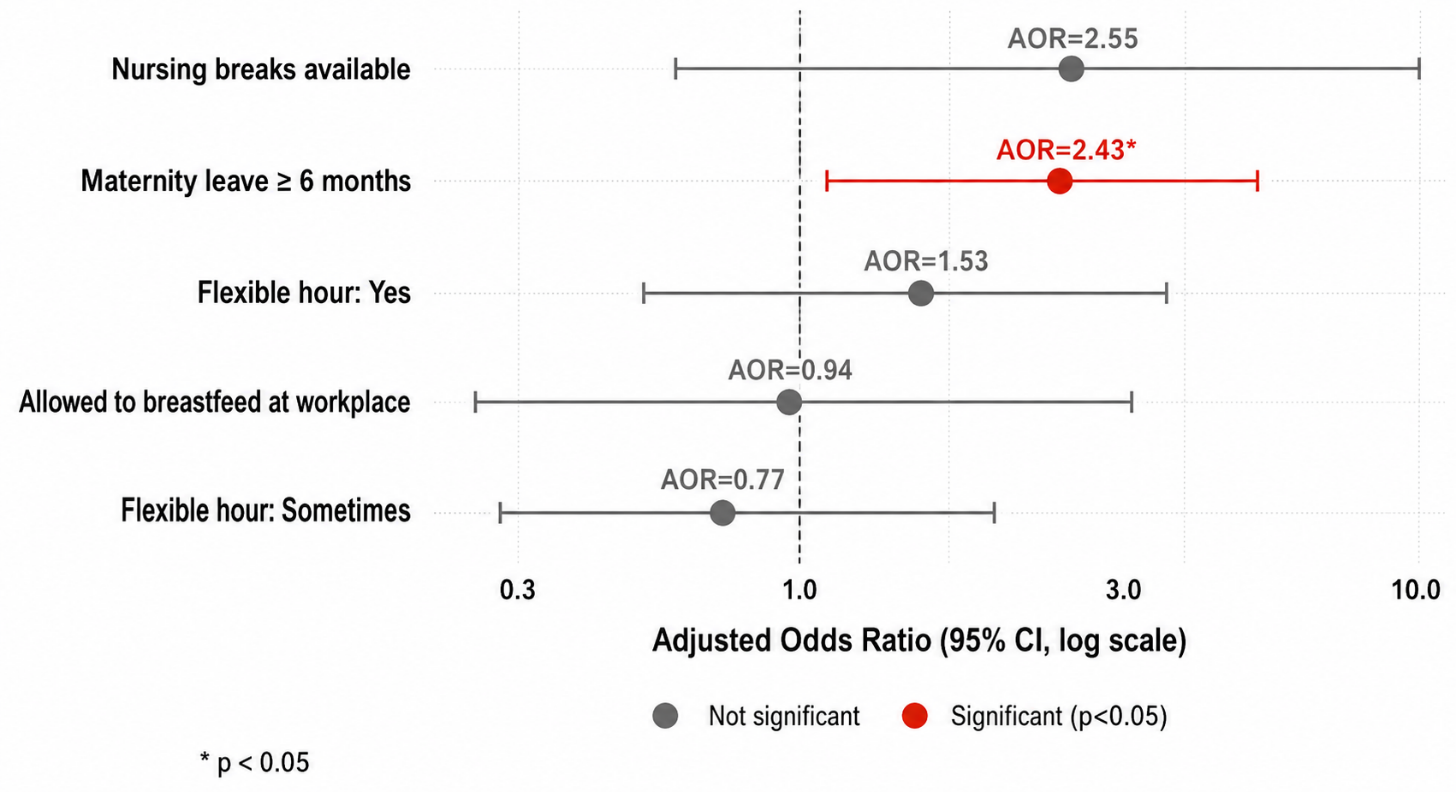
Figure 2. Significant vs. non-significant predictors of exclusive breastfeeding multivariable logistic regression forest plot (n=152). Maternity leave ≥ 6 months was the only statistically significant independent predictor (AOR = 2.43, 95% CI: 1.10–5.33, p = 0.028).
Figure 3 shows the receiver operating characteristic curve for the multivariable model. The area under the curve was 0.688, indicating acceptable but modest discrimination: the model correctly ranks a randomly selected exclusively breastfeeding mother above a randomly selected non-exclusively breastfeeding mother approximately 69% of the time. This value is consistent with the expectation that workplace factors explain only part of the variation in breastfeeding behavior, with maternal, infant, cultural and household determinants not captured in this model accounting for the remainder.
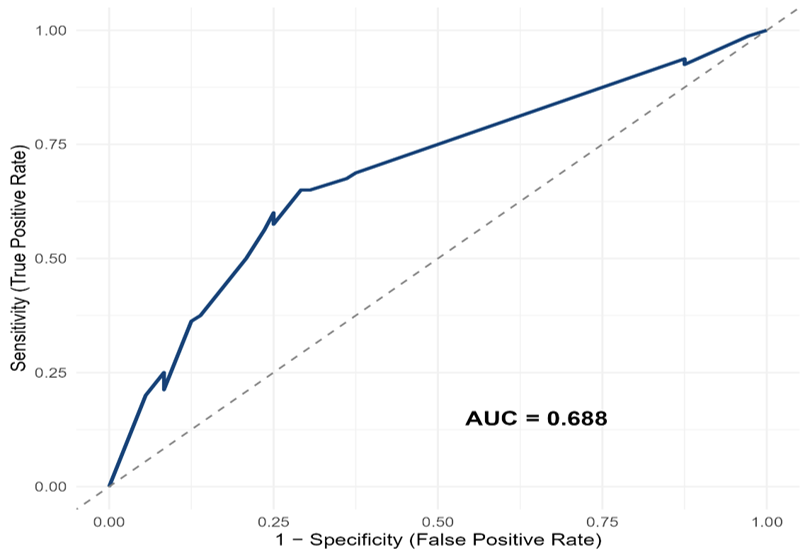
Figure 3. ROC curve for multivariable logistic regression model predicting exclusive breastfeeding (AUC = 0.688, n=152), indicating acceptable model discrimination.
Table 8 shows significant associations between selected occupational, delivery, and breastfeeding characteristics. Respondents' occupation was significantly associated with formula-feeding practice (χ² = 6.47, p = 0.039), with formula feeding more frequently reported among service holders (75.9%) than teachers (54.1%) and health professionals (55.7%). Occupation was also marginally associated with the mode of delivery of the last child (χ² = 5.94, p = 0.050), with cesarean delivery most common among health professionals (83.6%). Furthermore, the initiation of breastfeeding was significantly associated with the mode of delivery (χ² = 6.09, p = 0.014). Breastfeeding within the first hour was more common following vaginal delivery (77.5%) than cesarean delivery (66.7%).
Table 8. Associations between selected sociodemographic, delivery, and breastfeeding characteristics among respondents.
Independent variable | Outcome variable | Category | Normal vaginal delivery, n (%) | Cesarean section, n (%) | χ² | p-value |
|---|---|---|---|---|---|---|
| Occupation | Formula feeding | Teacher | 20 (54.1) | 17 (45.9) | 6.47 | 0.039 |
| Service holder | 41 (75.9) | 13 (24.1) | ||||
| Health professional | 34 (55.7) | 27 (44.3) | ||||
| Occupation | Mode of delivery of last child | Teacher | 14 (37.8) | 23 (62.2) | 5.94 | 0.050 |
| Service holder | 16 (29.6) | 38 (70.4) | ||||
| Health professional | 10 (16.4) | 51 (83.6) | ||||
| Initiation of breastfeeding | Mode of delivery of last child | Within 1 hour | 31 (77.5) | 62 (66.7) | 6.09 | 0.014 |
| >1 hour | 9 (22.5) | 50 (44.6) |
The findings of this study including sociodemographic profile of participants aligns with previous reports among employed women in South Asia [29-36]. The maternal age and high rate of cesarean delivery observed here is consistent with reported tertiary-care data [37]. Compare to the RMG workers, formally employed, highly educated women have greater antenatal care healthcare access and health literacy [24, 38]. The rate of early initiation of breastfeeding (60.8%) within one hour is higher than of Ethiopia [39] and Nepal [33], however remained lower than countries like Egyptian figures [40]. In addition, the association between vaginal delivery and earlier breastfeeding initiation is consistent with previous studies from South Asia [30–35], which showed that cesarean delivery can delay breastfeeding initiation. In case of exclusive breastfeeding, prevalence was higher among Bangladeshi garment workers [41].
Moreover, among mothers who had stopped breastfeeding, some reported that heavy workloads and employment made it difficult to continue breastfeeding before the child reached two years of age. A similar pattern has been reported among privately employed mothers [42]. In addition, complementary feeding practices were generally good, as most mothers started complementary foods at or after six months. This rate was higher than those reported in rural Bangladesh [38], previous hospital-based studies [37], and rural Ethiopia [39].
Furthermore, workplace conditions appeared to be important factors affecting breastfeeding continuation. Only a small proportion of mothers received maternity leave for at least six months, similar to findings from Ethiopia [43]. Most mothers preferred a longer maternity leave, which is consistent with studies from Saudi Arabia [44] and Davangere, India [29], where short maternity leave and early return to work were major barriers to breastfeeding. Similarly, a study from Vietnam found that returning to work increased the likelihood of stopping exclusive breastfeeding [45]. Moreover, most participants worked for at least eight hours per day, which may make breastfeeding more difficult, although the working hours were somewhat lower than those reported among formally employed mothers in Kenya [46].
In addition, bivariate analysis showed that exclusive breastfeeding was associated with flexible working hours, permission to bring infants to the workplace, nursing breaks, and longer maternity leave. However, after adjustment for other factors, only maternity leave of ≥6 months remained significantly associated with exclusive breastfeeding. The weaker effects of the other workplace factors may be because these supports often occur together. For example, workplaces offering longer maternity leave may also provide nursing breaks and flexible working hours. Moreover, the findings support previous studies showing that early return to work is an important barrier to continued breastfeeding [43, 44].
In addition, workplace support for breastfeeding was generally limited. Written breastfeeding policies were uncommon, most workplaces did not provide nursing breaks, and private spaces for expressing milk were unavailable in many organizations. These findings were less favorable than those reported in some U.S. studies [47], however were similar to findings from Saudi Arabia [44], Pakistan [48], and India [29, 49].
Despite these limitations, most mothers considered breastfeeding the most beneficial feeding method. However, many found formula feeding more convenient for balancing work and childcare, similar to findings among employed mothers in Bangladesh [24]. In addition, childcare was mainly provided informally, with most children cared for by grandmothers or other family members at home.
Collectively, the findings indicate that privately employed mothers in Dhaka hold favorable attitudes toward breastfeeding yet operate within organizational environments that supply almost none of the structural supports required to translate those attitudes into sustained practice. Extending paid maternity leave to a minimum of six months therefore constitutes the most evidence-based policy priority, with nursing breaks, private lactation space, milk storage facilities, and workplace crèche provision as essential complementary measures.
This study had some limitations. Due to time and resource constraints, the study included only 152 respondents from Dhaka, which may limit the generalizability of the findings to working mothers in the private sector across Bangladesh. Therefore, larger multicenter studies involving diverse workplaces and populations across the country are recommended. Moreover, employers should promote breastfeeding-friendly workplaces by providing suitable private spaces for breastfeeding or expressing milk, workplace daycare facilities, nursing breaks, and flexible working arrangements. Such supportive measures may help mothers continue breastfeeding, reduce work-related stress, and potentially improve employee well-being and productivity.
Working mothers employed in the private sector in Dhaka city face multiple workplace barriers to breastfeeding. In this study, the prevalence of exclusive breastfeeding (EBF) was 52.6% and early initiation of breastfeeding within one hour of delivery was 61.2%. Multivariable logistic regression identified maternity leave of ≥ 6 months as the only independent predictor of EBF (AOR = 2.43, 95% CI: 1.10–5.33, p = 0.028), with mothers receiving adequate leave being 2.43 times more likely to practice EBF. The overwhelming majority of organizations lacked basic breastfeeding support: 95.4% had no crèche facilities, 82.2% had no breast milk storage, and 65.8% provided no nursing breaks. Major structural barriers include short maternity leave (70.4% received < 6 months), absence of nursing breaks, lack of private breastfeeding space, and no daycare facilities. Implementation of extended paid maternity leave of at least six months, provision of nursing breaks and private lactation rooms, and establishment of workplace crèche or daycare facilities are urgently needed to support breastfeeding continuation among working mothers in Bangladesh.
The authors would like to express their sincere gratitude to all employed mothers for participated in this study. The authors also extend their appreciation to the university authority, NIPSOME for allowing to carry out this work. Finally, the authors gratefully acknowledge all members of the research team and everyone who contributed to the development of the application, data collection, and the successful completion of this research.
This research received no specific grant from any funding agency, commercial, or not-for-profit sectors.
The authors declare that there are no conflicts of interest related to this manuscript.
The study was conducted in accordance with the Declaration of Helsinki. Ethical approval was obtained from the Institutional Review Board (IRB) of State University of Bangladesh (IRB approval number: SUB/PH/H-ERC/2022/030). Informed written consent was obtained from all participants prior to data collection. Participation was voluntary and confidentiality of all data was maintained throughout the study.
Kulsuma Parveen: Conceptualization, methodology, investigation, data collection, data curation, formal analysis, writing original draft, and project administration. Nuhad Raisa Seoty: Methodology, investigation, data collection. Md. Shamiul Alim Shah: Investigation, data collection, validation, and writing. Jui Akter Moni: Investigation, data collection. Toky Islam Shohan: Investigation, data collection. Monish Kumar Roy: Formal analysis, validation, and writing. Md. Azizul Haque: supervision, formal analysis, writing – review & editing, and corresponding author. All authors have read and approved the final manuscript and agree to be accountable for all aspects of the work
During the preparation of this manuscript, the authors used artificial intelligence (AI)-assisted language tools solely to improve grammar, language clarity, and readability. The AI tools were not used to generate scientific content, interpret data, or draw conclusions. All literature selection, data interpretation, and final manuscript preparation were performed entirely by the authors, who accept full responsibility for the accuracy and integrity of the work.

This work is licensed under a
Creative Commons Attribution 4.0 International License
.
You are free to share and adapt this material for any purpose, even commercially, as long as you give appropriate credit.
 access